四大时态温习1
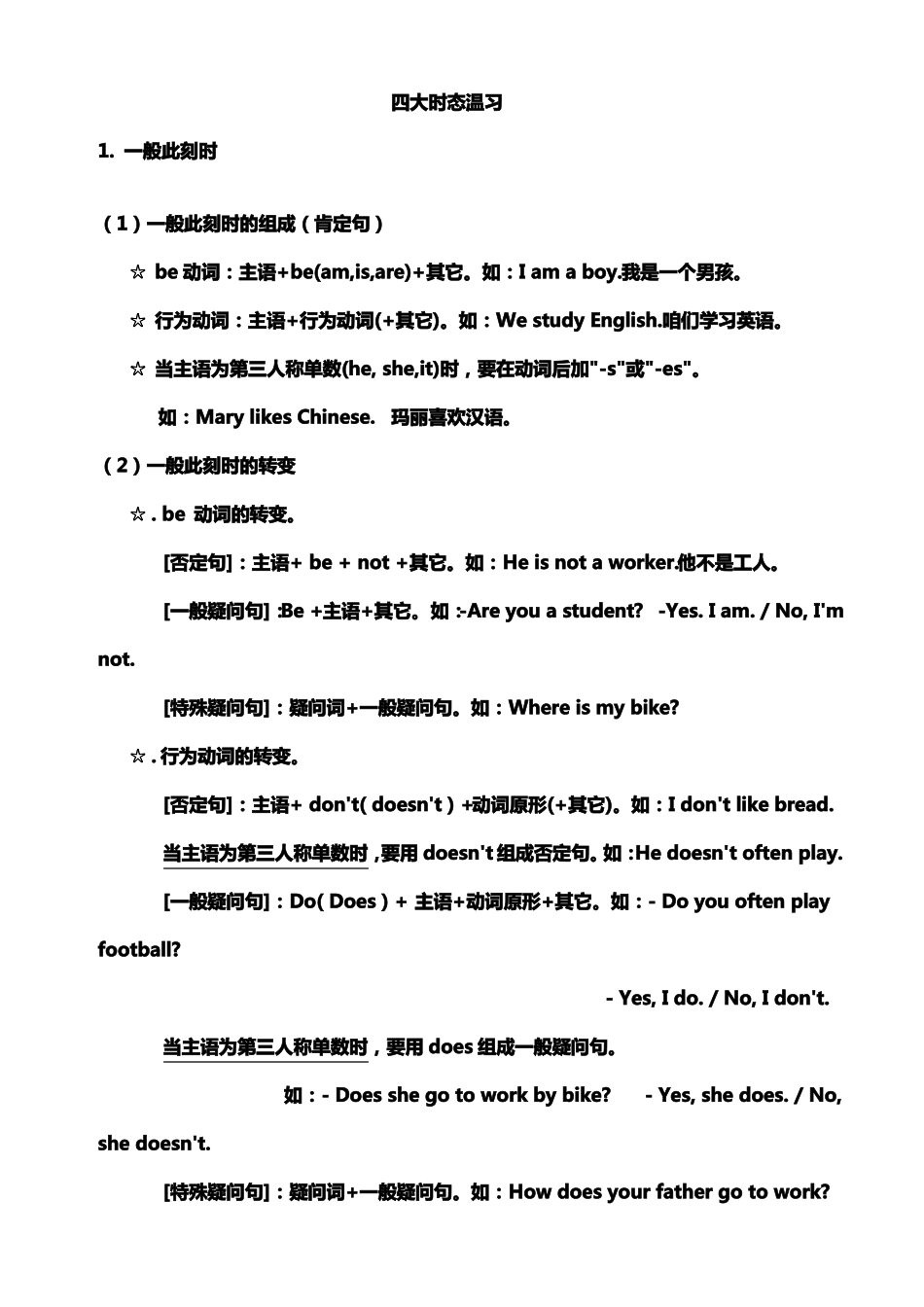
一般此刻时(1)一般此刻时的组成(肯定句)☆be动词:主语+be(am,is,are)+其它
如:Iamaboy
我是一个男孩
☆行为动词:主语+行为动词(+其它)
如:WestudyEnglish
咱们学习英语
☆当主语为第三人称单数(he,she,it)时,要在动词后加"-s"或"-es"
如:MarylikesChinese
玛丽喜欢汉语
(2)一般此刻时的转变☆
be动词的转变
[否定句]:主语+be+not+其它
如:Heisnotaworker
[一般疑问句]:Be+主语+其它
如:-Areyouastudent
/No,I'mnot
[特殊疑问句]:疑问词+一般疑问句
如:Whereismybike
行为动词的转变
[否定句]:主语+don't(doesn't)+动词原形(+其它)
如:Idon'tlikebread
当主语为第三人称单数时,要用doesn't组成否定句
如:Hedoesn'toftenplay
[一般疑问句]:Do(Does)+主语+动词原形+其它
如:-Doyouoftenplayfootball
-Yes,Ido
/No,Idon't
当主语为第三人称单数时,要用does组成一般疑问句
如:-Doesshegotoworkbybike
-Yes,shedoes
/No,shedoesn't
[特殊疑问句]:疑问词+一般疑问句
如:Howdoesyourfathergotowork
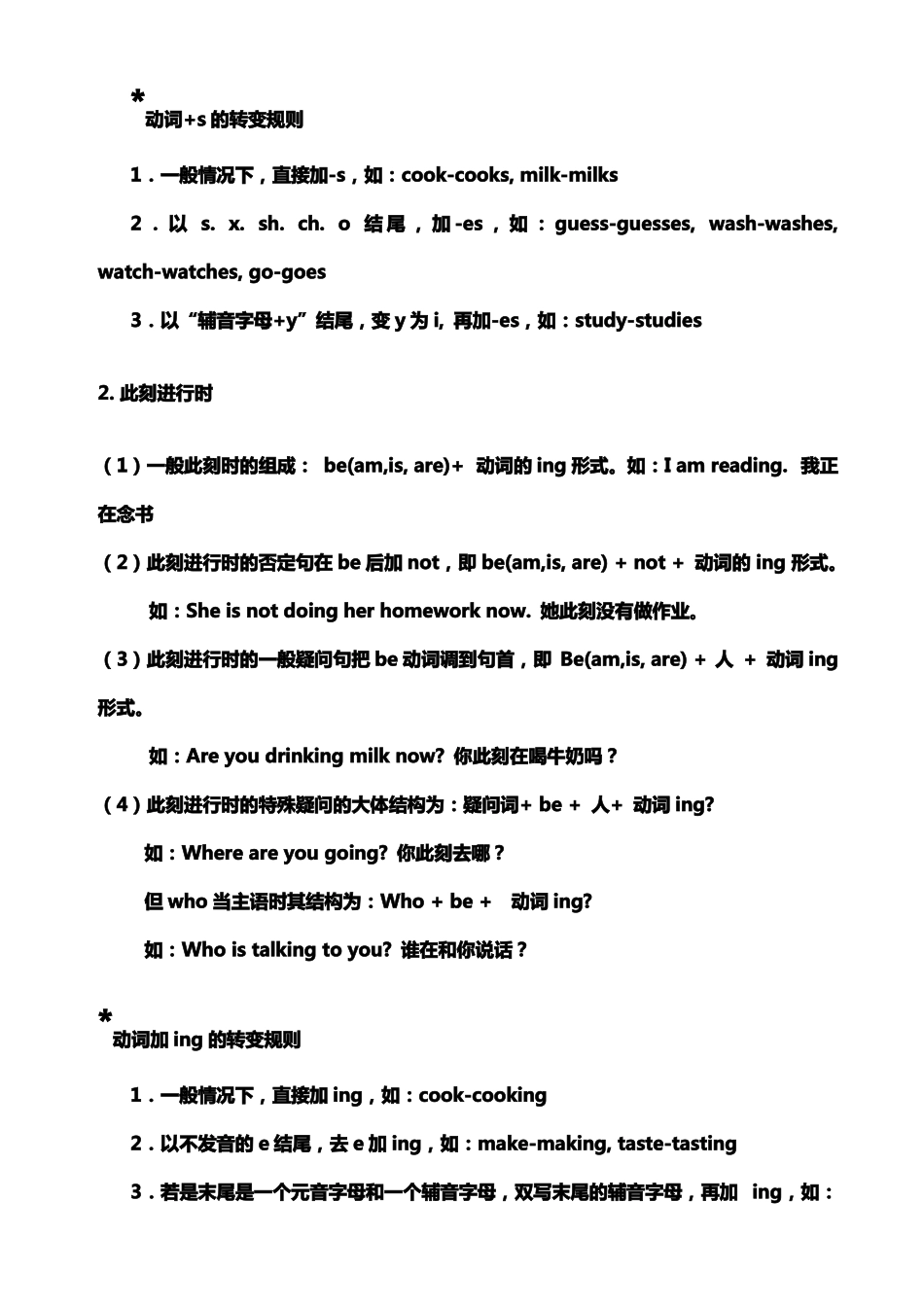
*动词+s的转变规则1.一般情况下,直接加-s,如:cook-cooks,milk-milks2.以s
o结尾,加-es,如:guess-guesses,wash-washes,watch-watches,go-goe