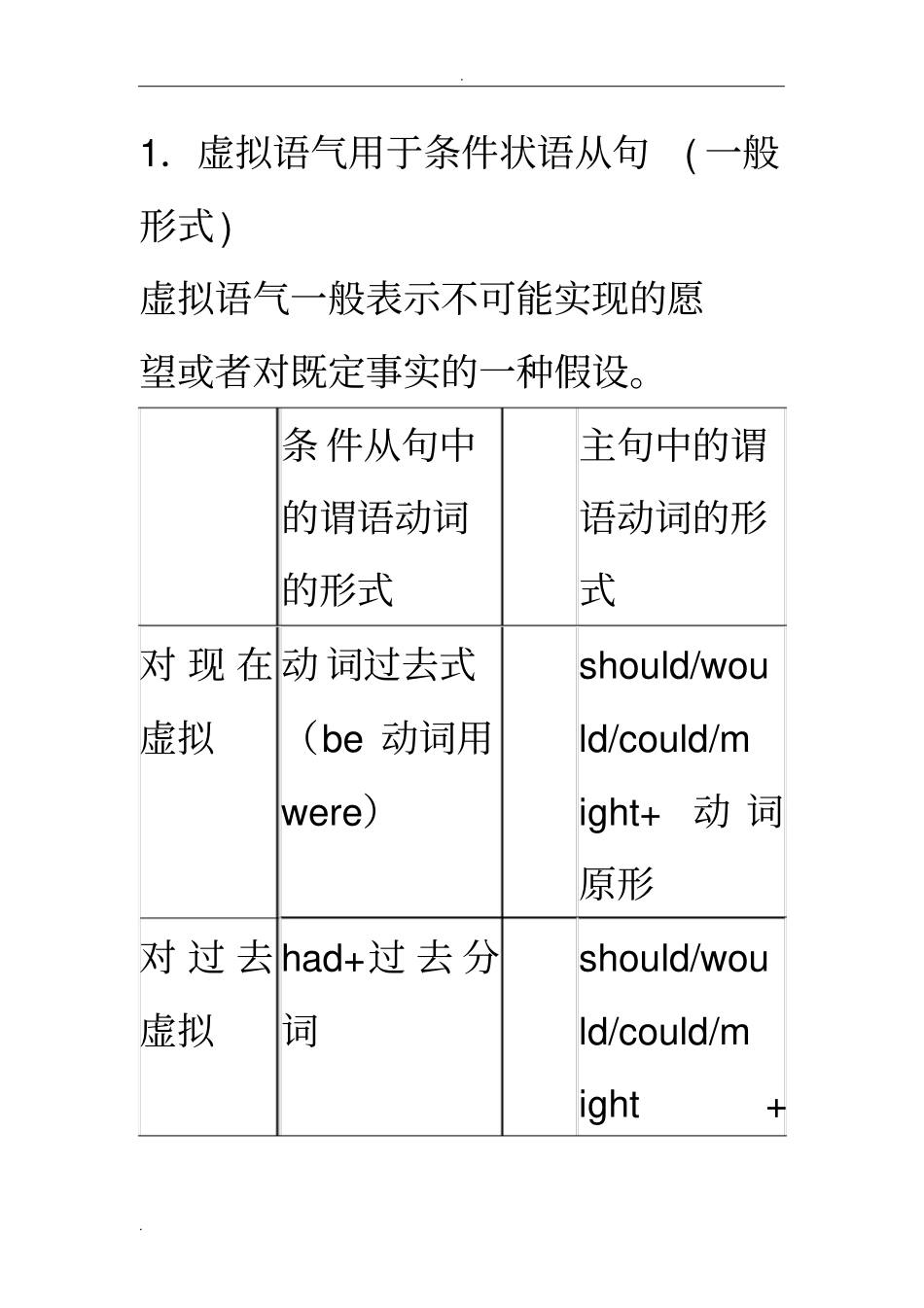
1.虚拟语气用于条件状语从句( 一般形式 ) 虚拟语气一般表示不可能实现的愿望或者对既定事实的一种假设
条 件从句中的谓语动词的形式主句中的谓语动词的形式对 现 在虚拟动 词过去式(be 动词用were)should/would/could/might+动 词原形对 过 去虚拟had+过 去 分词should/would/could/might +
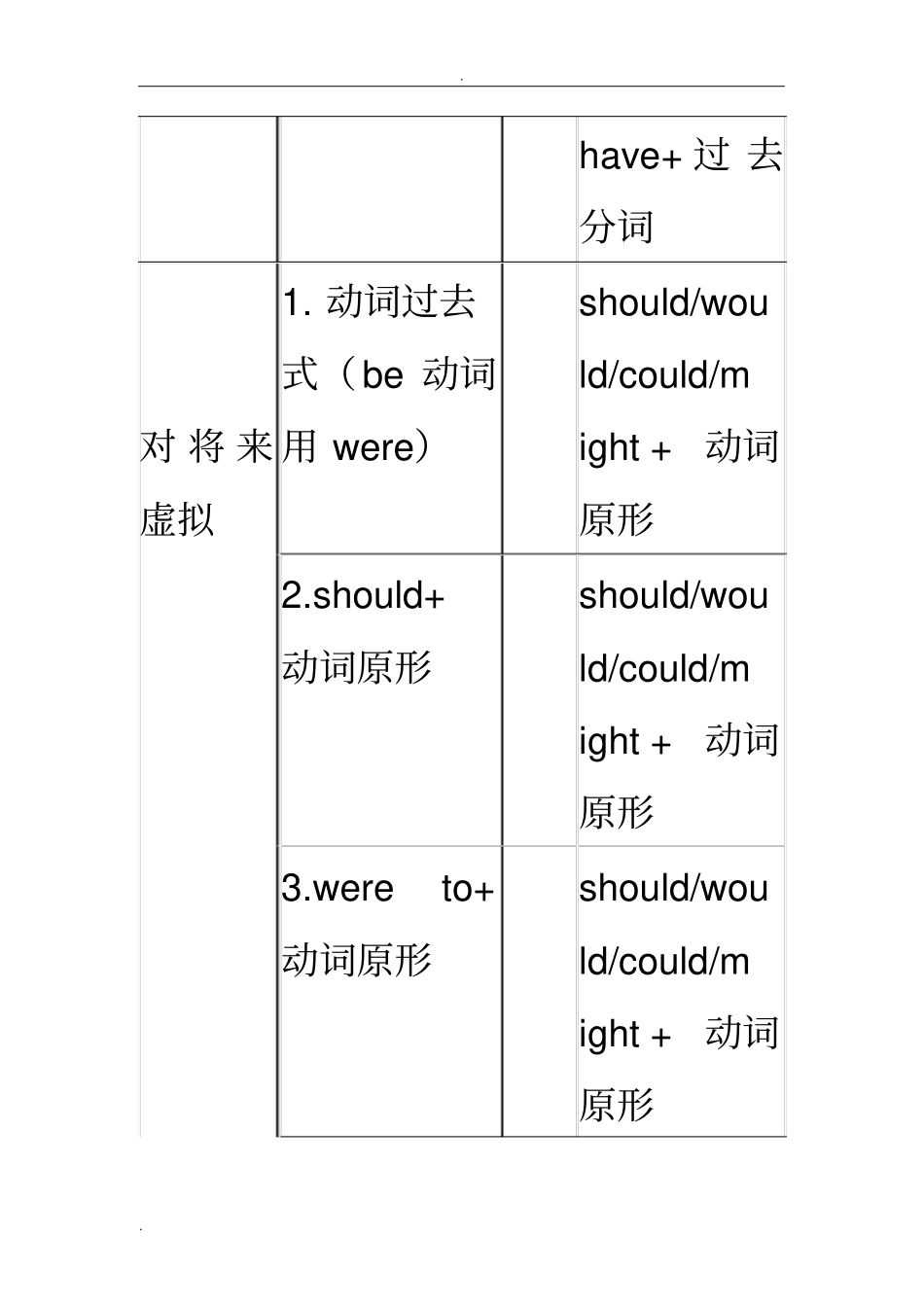
have+ 过 去分词对 将 来虚拟1
动词过去式( be 动词用 were)should/would/could/might +动词原形2
should+动词原形should/would/could/might +动词原形3
were to+动词原形should/would/could/might +动词原形
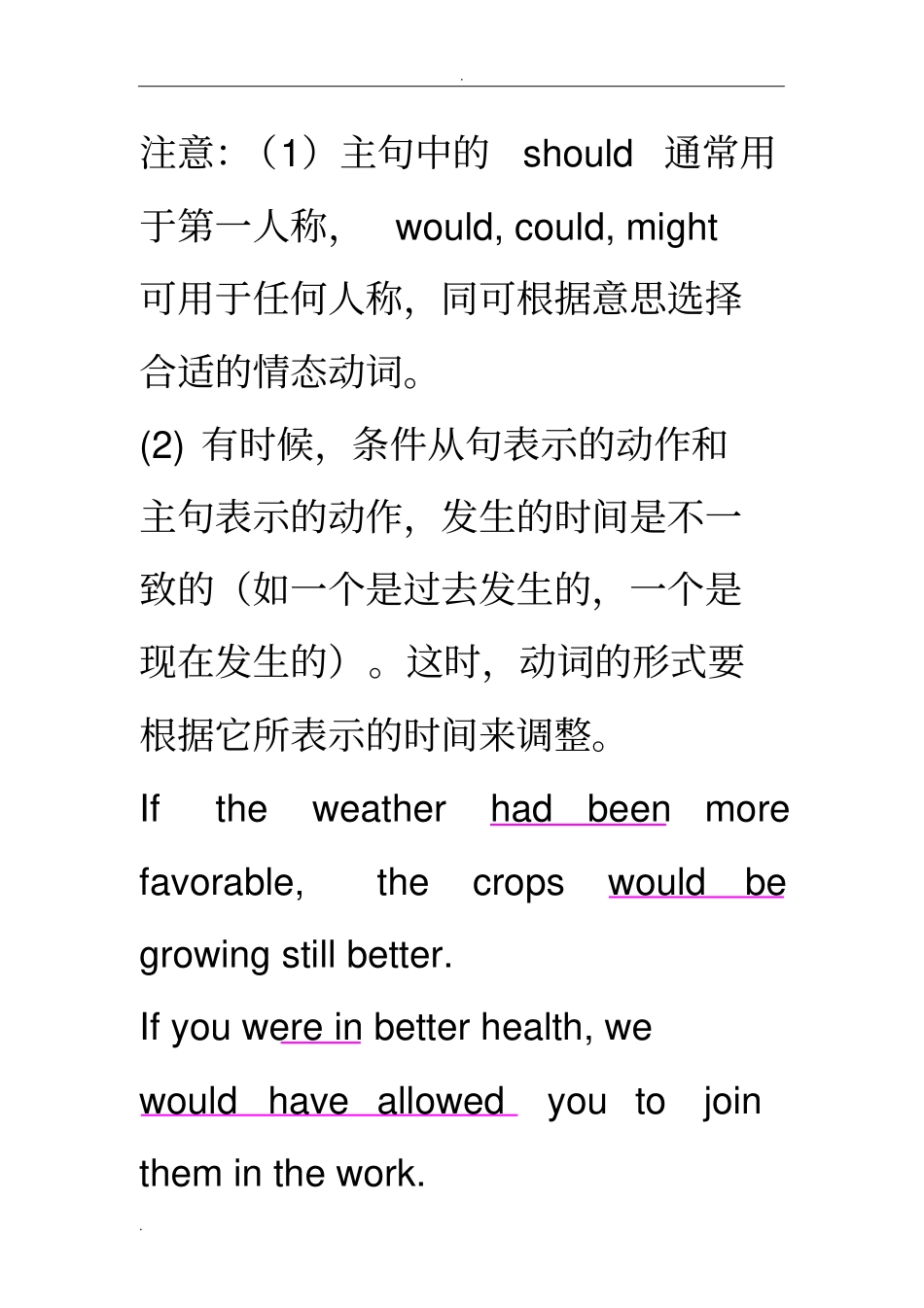
注意:(1)主句中的should 通常用于第一人称, would, could, might可用于任何人称,同可根据意思选择合适的情态动词
(2) 有时候,条件从句表示的动作和主句表示的动作,发生的时间是不一致的(如一个是过去发生的,一个是现在发生的)
这时,动词的形式要根据它所表示的时间来调整
If the weather had been more favorable, the crops would be growing still better
If you were in better health, we would have allowed you to join them in the work
If we hadn ’t got everything ready by now, we should be having a terrible time tomorrow
(3) 若 if从句中省略if ,则前提were/ had/ should ,把它们倒装放到主语之前