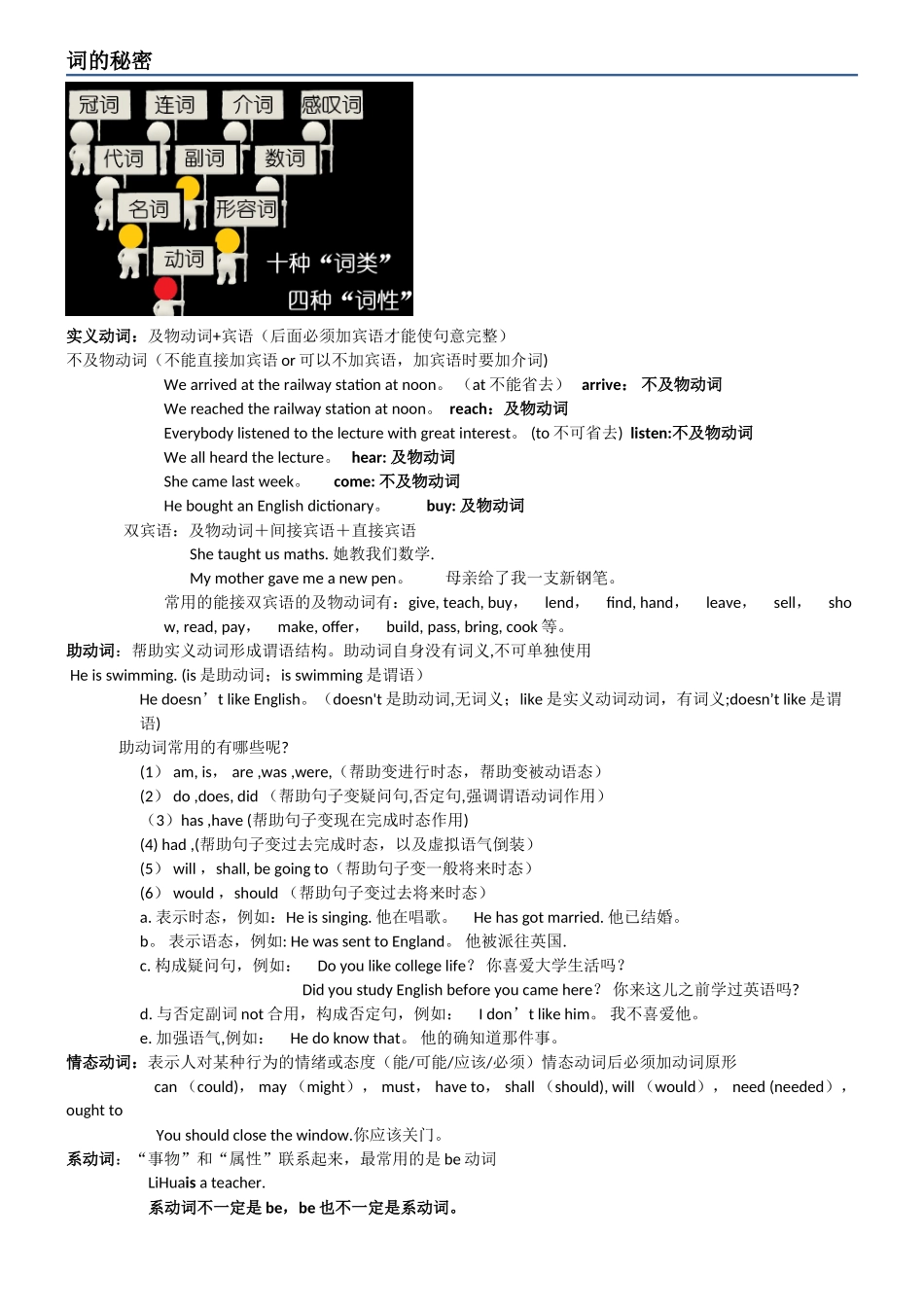
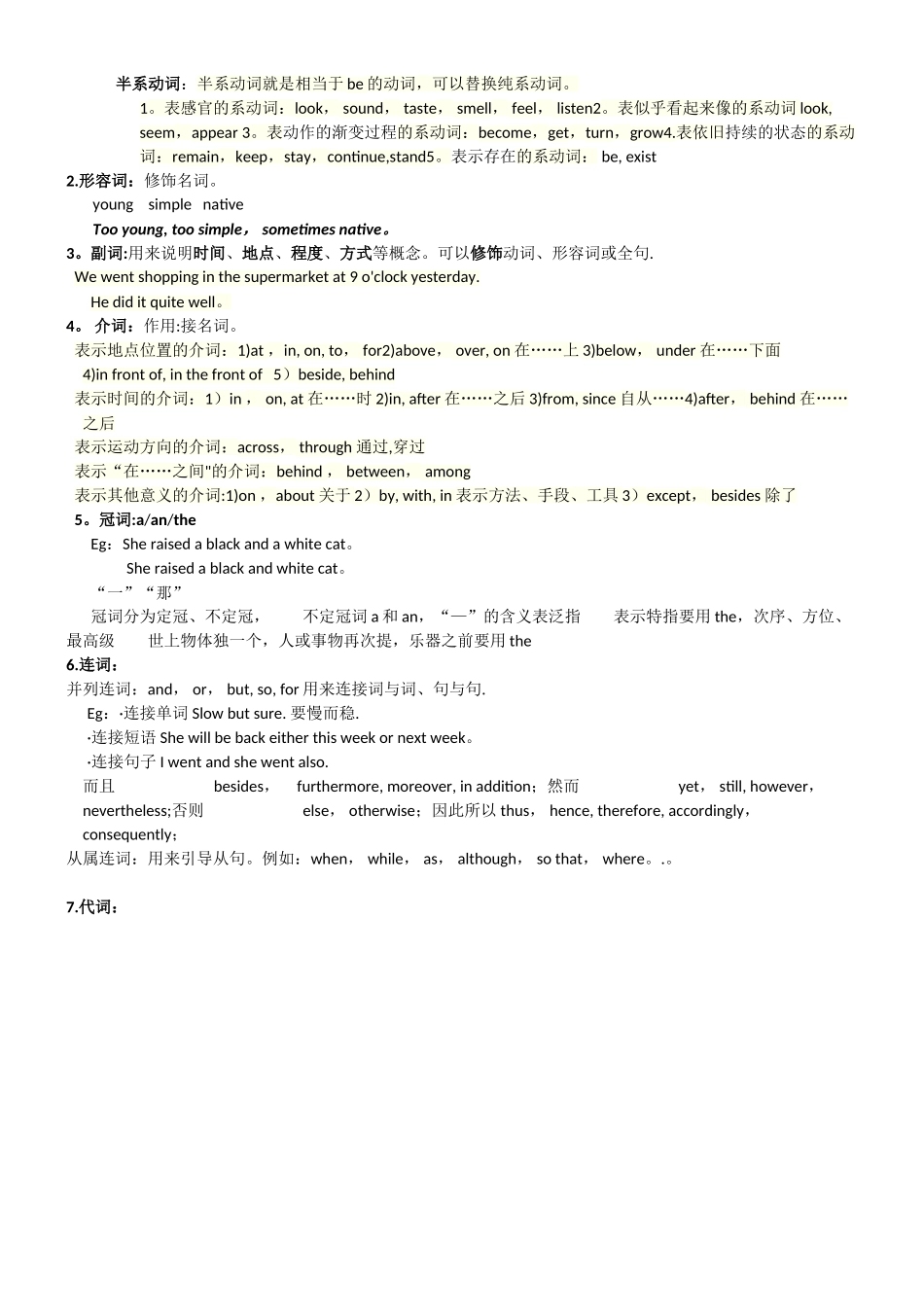
词的秘密实义动词:及物动词+宾语(后面必须加宾语才能使句意完整)不及物动词(不能直接加宾语 or 可以不加宾语,加宾语时要加介词)We arrived at the railway station at noon
(at 不能省去) arrive: 不及物动词We reached the railway station at noon
reach:及物动词Everybody listened to the lecture with great interest
(to 不可省去) listen:不及物动词We all heard the lecture
hear: 及物动词She came last week
come: 不及物动词He bought an English dictionary
buy: 及物动词双宾语:及物动词+间接宾语+直接宾语 She taught us maths
她教我们数学
My mother gave me a new pen
母亲给了我一支新钢笔
常用的能接双宾语的及物动词有:give, teach, buy, lend, find, hand, leave, sell, show, read, pay, make, offer, build, pass, bring, cook 等
助动词:帮助实义动词形成谓语结构
助动词自身没有词义,不可单独使用 He is swimming
(is 是助动词;is swimming 是谓语)He doesn’t like English
(doesn't 是助动词,无词义;like 是实义动词动词,有词义;doesn’t like 是谓语) 助动词常用的有哪些呢
(1) am, is, are ,was ,were,(帮助变进行时态,帮助变被动语态)(2) do ,doe