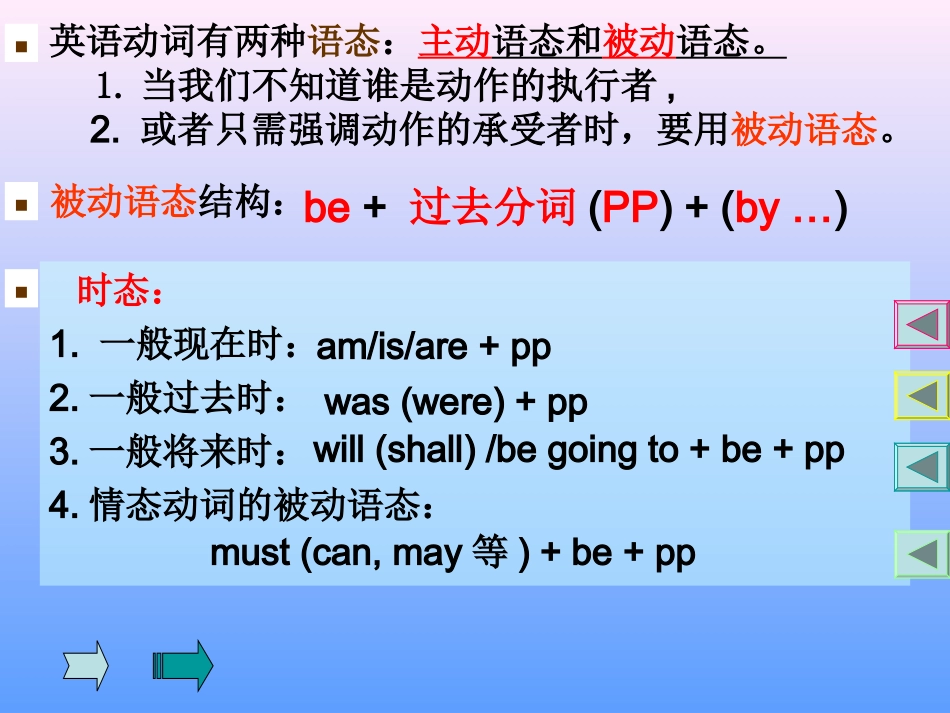
英语动词有两种语态:主动语态和被动语态
当我们不知道谁是动作的执行者,2
或者只需强调动作的承受者时,要用被动语态
一般现在时:2
一般过去时:3
一般将来时:4
情态动词的被动语态:被动语态结构:■■■be+过去分词(PP)+(by…)am/is/are+ppwas(were)+ppwill(shall)/begoingto+be+ppmust(can,may等)+be+pp在改写中应注意:1
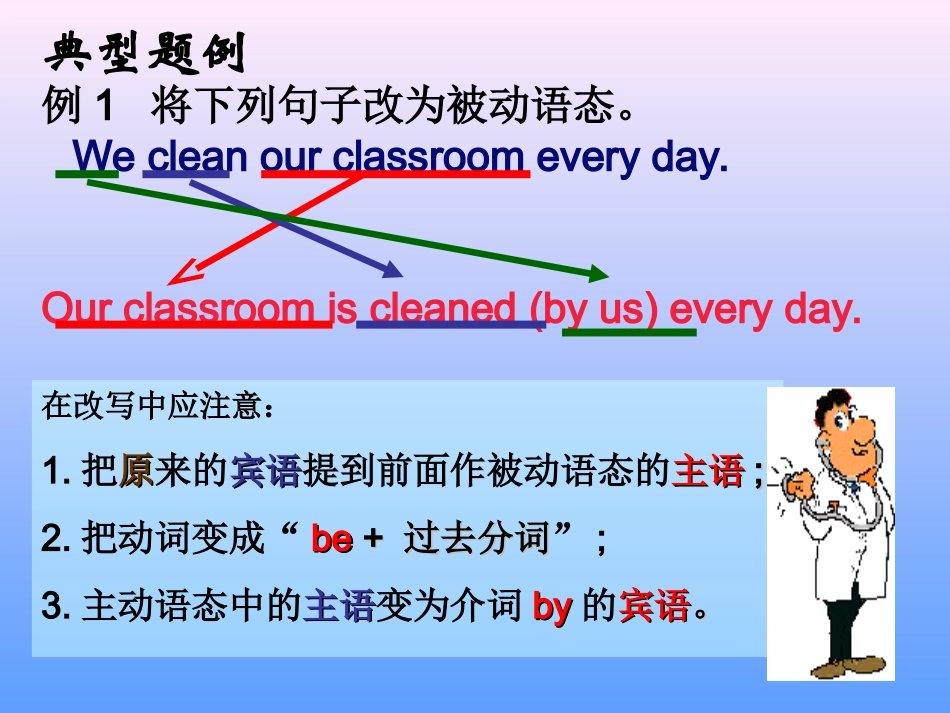
把原原来的宾语宾语提到前面作被动语态的主语主语;;2
把动词变成“bebe++过去分词过去分词”;3
主动语态中的主语主语变为介词byby的宾语宾语
典型题例例1将下列句子改为被动语态
Wecleanourclassroomeveryday
Ourclassroomiscleaned(byus)everyday
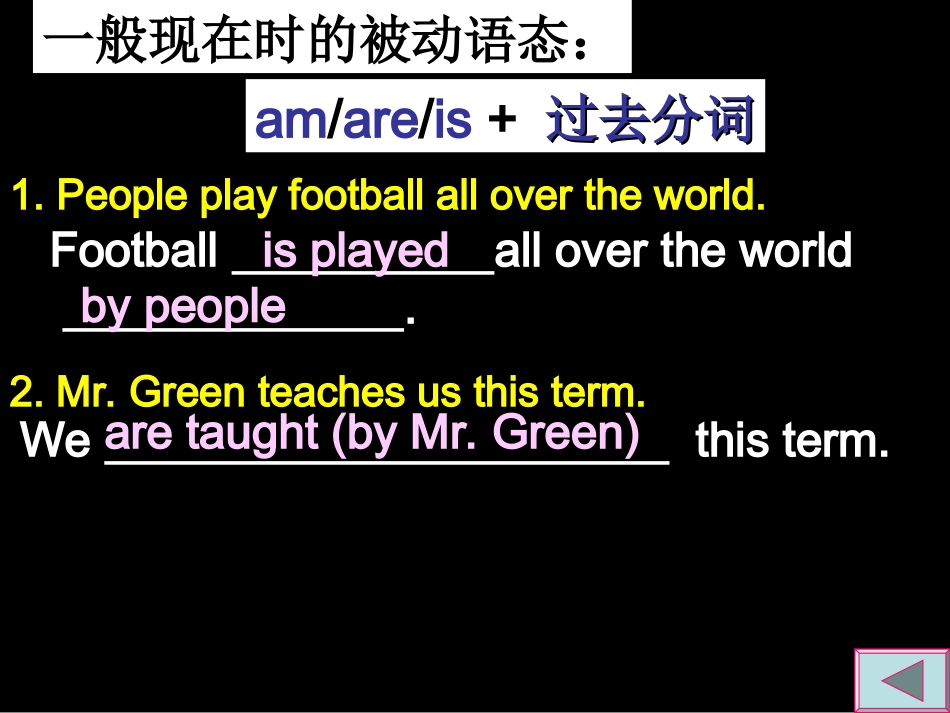
一般现在时的被动语态:am/are/is+过去分词过去分词1
Peopleplayfootballallovertheworld
Greenteachesusthisterm
Footballallovertheworld
Wethisterm
isplayedbypeoplearetaught(byMr
Green)一般过去时的被动语态:was/were+过去分词过去分词4
PeoplebuilttheGreatWalllongago
Twoyearsagoweusedthemachinestomakeshoesforchildren
TheGreatWalllongago
Twoyearsagothosemachinesshoesforchildren
wasbuilt(bypeople)wereused(byus)tomake一般将来时的被动语态:will/begoingto+be+过去分词过去分词6
Wewillwriteadiaryn