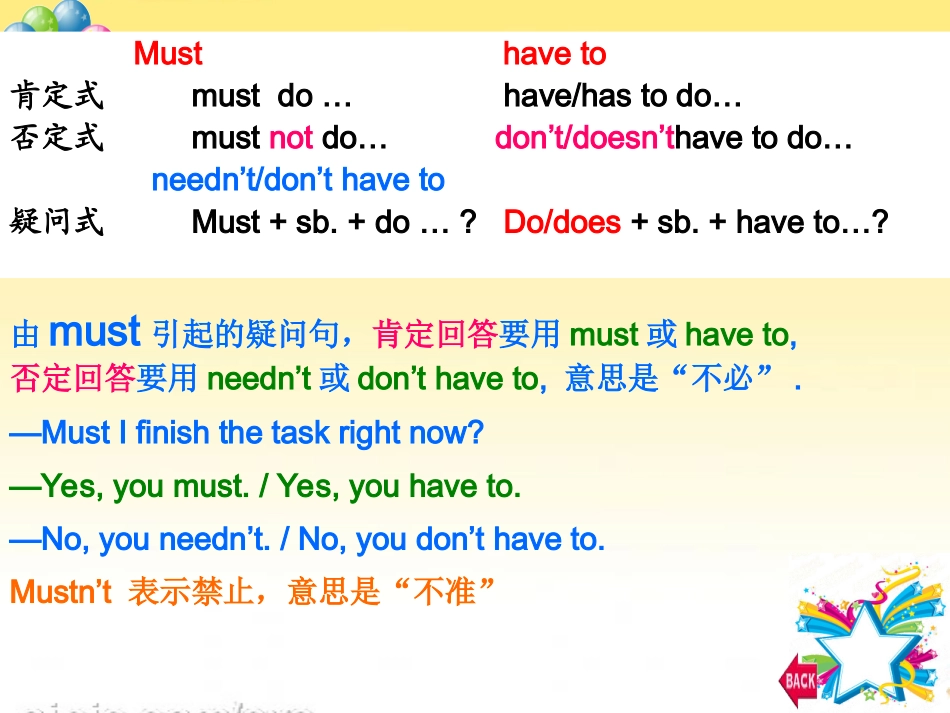
基本基本形式MustMustHavetoHavetoMustMustHavetoHaveto基本基本意义特殊特殊用法用法表示表示推测巩固巩固练习Musthaveto肯定式mustdo…have/hastodo…否定式mustnotdo…don’t/doesn’thavetodo…needn’t/don’thaveto疑问式Must+sb
Do/does+sb
+haveto…
由must引起的疑问句,肯定回答要用must或haveto,否定回答要用needn’t或don’thaveto,意思是“不必”
—MustIfinishthetaskrightnow
—Yes,youmust
/Yes,youhaveto
—No,youneedn’t
/No,youdon’thaveto
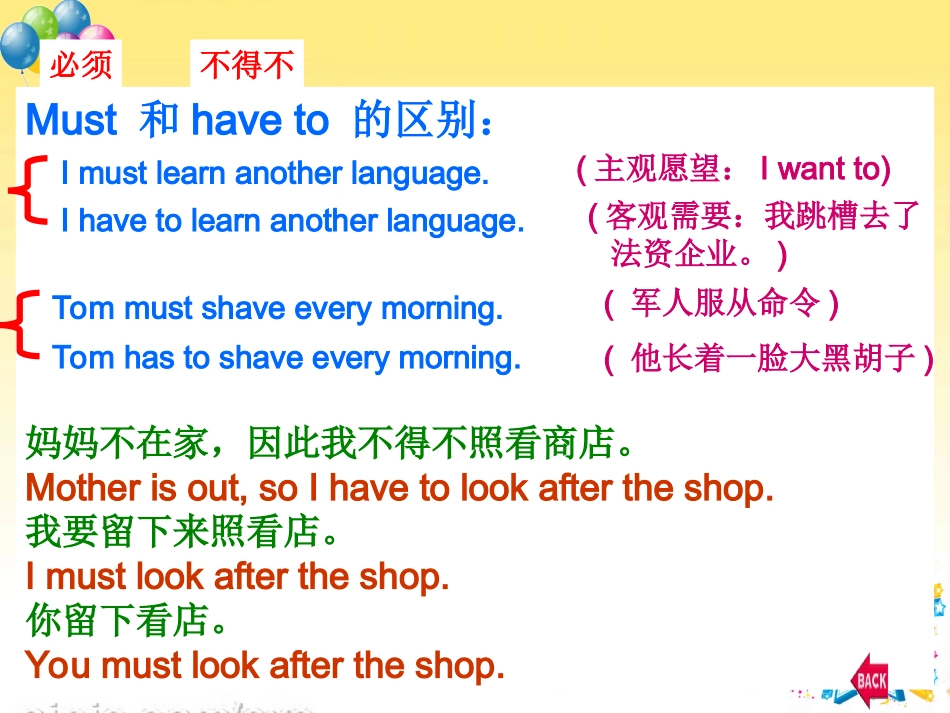
Mustn’t表示禁止,意思是“不准”Must和haveto的区别:Imustlearnanotherlanguage
Ihavetolearnanotherlanguage
Tommustshaveeverymorning
Tomhastoshaveeverymorning
妈妈不在家,因此我不得不照看商店
Motherisout,soIhavetolookaftertheshop
我要留下来照看店
Imustlookaftertheshop
Youmustlookaftertheshop
(主观愿望:Iwantto)(客观需要:我跳槽去了法资企业
)(军人服从命令)(他长着一脸大黑胡子)必须不得不Must表示猜测,常用于肯定句中,意思为“一定是,必然”
注意must表示推断或猜测的几种情况:你姐姐一定是这家医院的医生
(表现在的猜测)Yoursistermustbeadoctorinthishospital
他此刻一定正在阅览室读报
(表正在进行的猜测)Hemustbere