Unit 3Language in use复习时态关于英语八种时态的用法,我们在初三上册 Module 1 中已详细讲过六种,本单元再对其余的两种进行简单概述
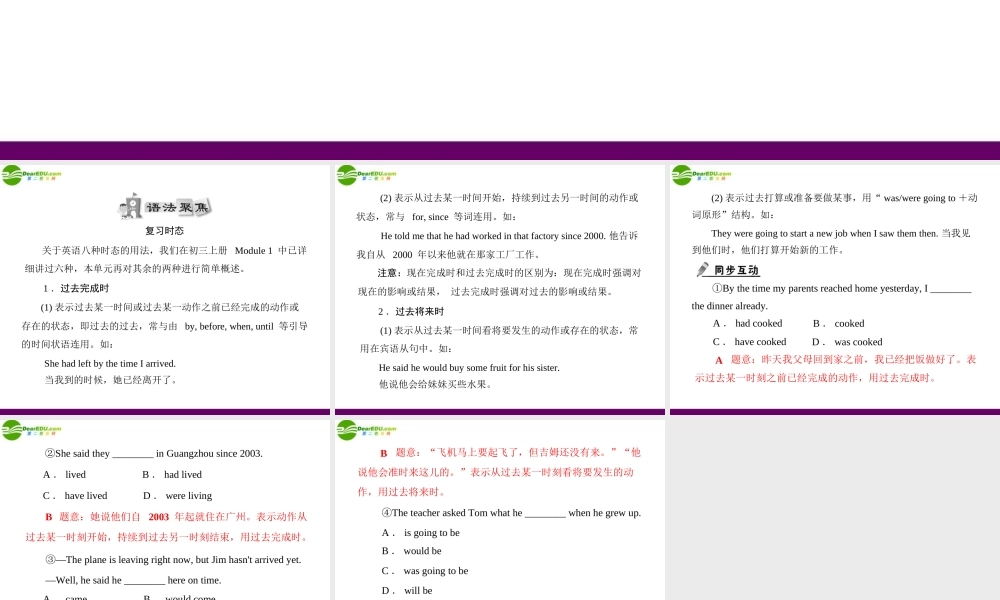
1 .过去完成时(1) 表示过去某一时间或过去某一动作之前已经完成的动作或存在的状态,即过去的过去,常与由 by, before, when, until 等引导的时间状语连用
如:She had left by the time I arrived
当我到的时候,她已经离开了
(2) 表示从过去某一时间开始,持续到过去另一时间的动作或状态,常与 for, since 等词连用
如:He told me that he had worked in that factory since 2000
他告诉我自从 2000 年以来他就在那家工厂工作
注意:现在完成时和过去完成时的区别为:现在完成时强调对现在的影响或结果, 过去完成时强调对过去的影响或结果
2 .过去将来时(1) 表示从过去某一时间看将要发生的动作或存在的状态,常用在宾语从句中
如:He said he would buy some fruit for his sister
他说他会给妹妹买些水果
(2) 表示过去打算或准备要做某事,用“ was/were going to +动词原形”结构
如:They were going to start a new job when I saw them then
当我见到他们时,他们打算开始新的工作
①By the time my parents reached home yesterday, I ________the dinner already
A . had cookedC . have cookedB . cookedD . was cookedA 题意:昨天我父母回到家之前,我已经把饭做好了