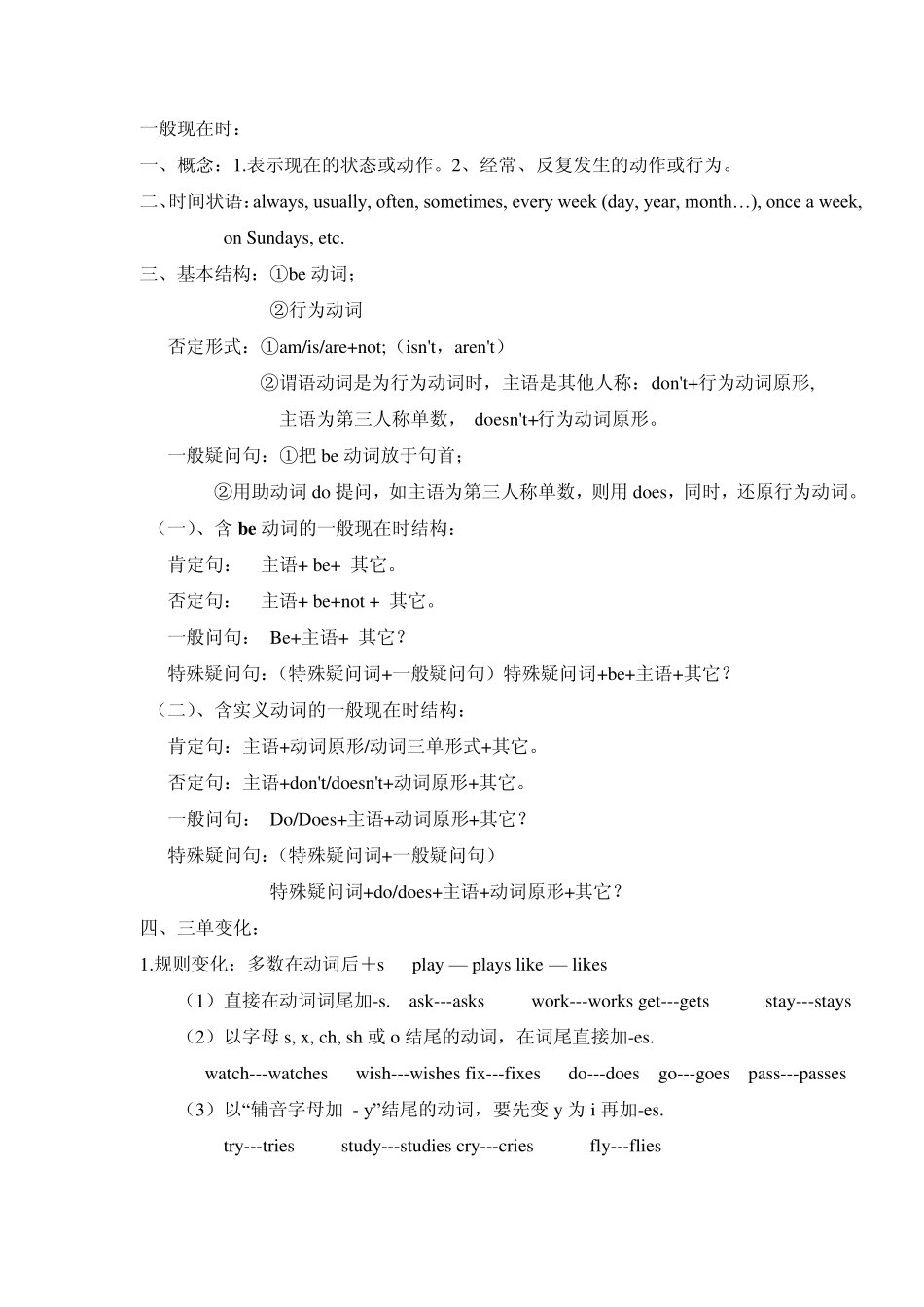
一般现在时: 一、概念:1
表示现在的状态或动作
2、经常、反复发生的动作或行为
二、时间状语:always, usually, often, sometimes, every week (day, year, month…), once a week, on Sundays, etc
三、基本结构:①be 动词; ②行为动词 否定形式:①am/is/are+not;(isn't,aren't) ②谓语动词是为行为动词时,主语是其他人称:don't+行为动词原形, 主语为第三人称单数, doesn't+行为动词原形
一般疑问句:①把 be 动词放于句首; ②用助动词 do 提问,如主语为第三人称单数,则用 does,同时,还原行为动词
(一)、含 be动词的一般现在时结构: 肯定句: 主语+ be+ 其它
否定句: 主语+ be+not + 其它
一般问句: Be+主语+ 其它
特殊疑问句:(特殊疑问词+一般疑问句)特殊疑问词+be+主语+其它
(二)、含实义动词的一般现在时结构: 肯定句:主语+动词原形/动词三单形式+其它
否定句:主语+don't/doesn't+动词原形+其它
一般问句: Do/Does+主语+动词原形+其它
特殊疑问句:(特殊疑问词+一般疑问句) 特殊疑问词+do/does+主语+动词原形+其它
四、三单变化: 1
规则变化:多数在动词后+s play — plays like — likes (1)直接在动词词尾加-s
ask---asks work---works get---gets stay---stays (2)以字母 s, x, ch, sh 或o 结尾的动词,在词尾直接加-es
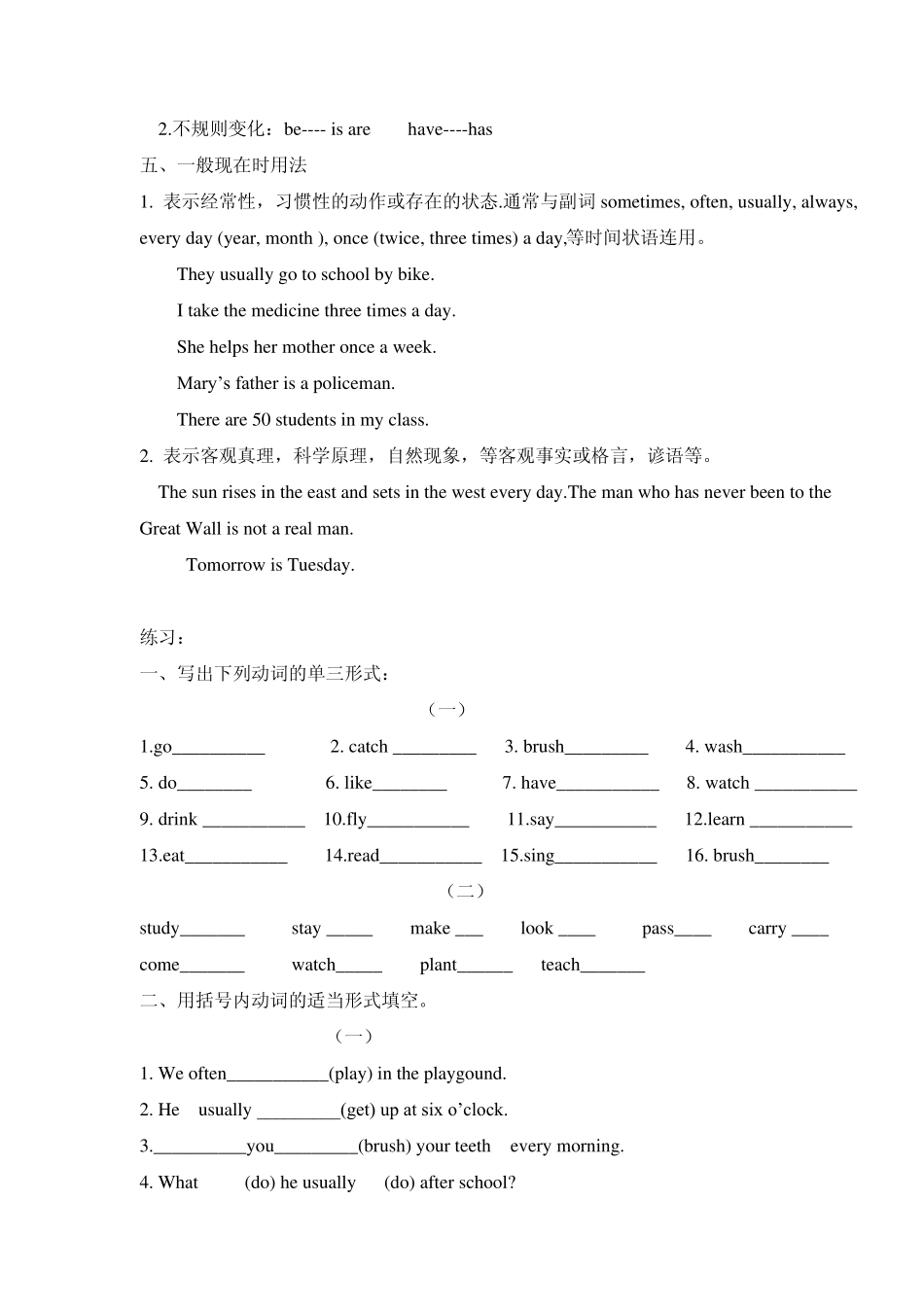
watch---watches wish---wishes fix---