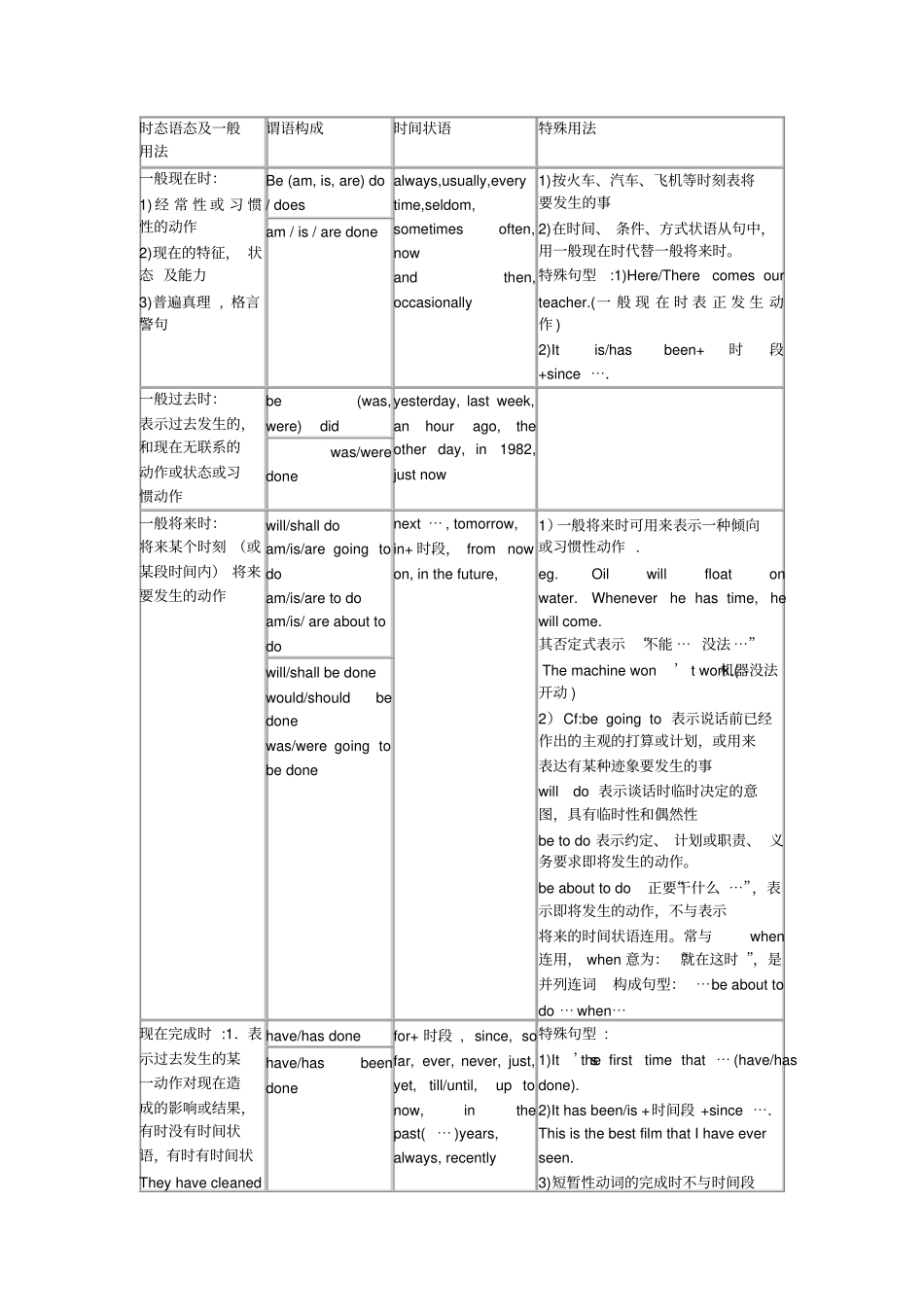
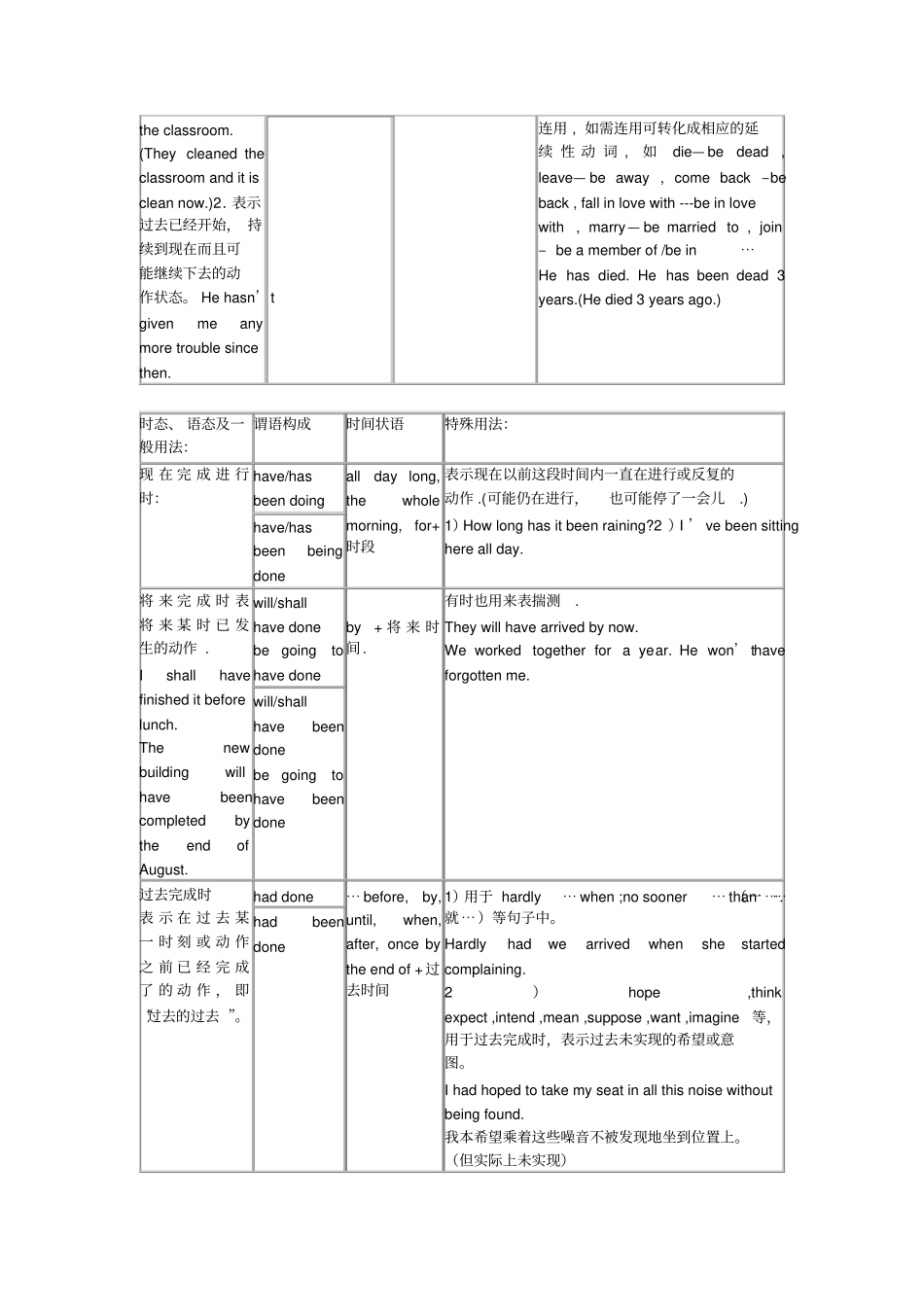
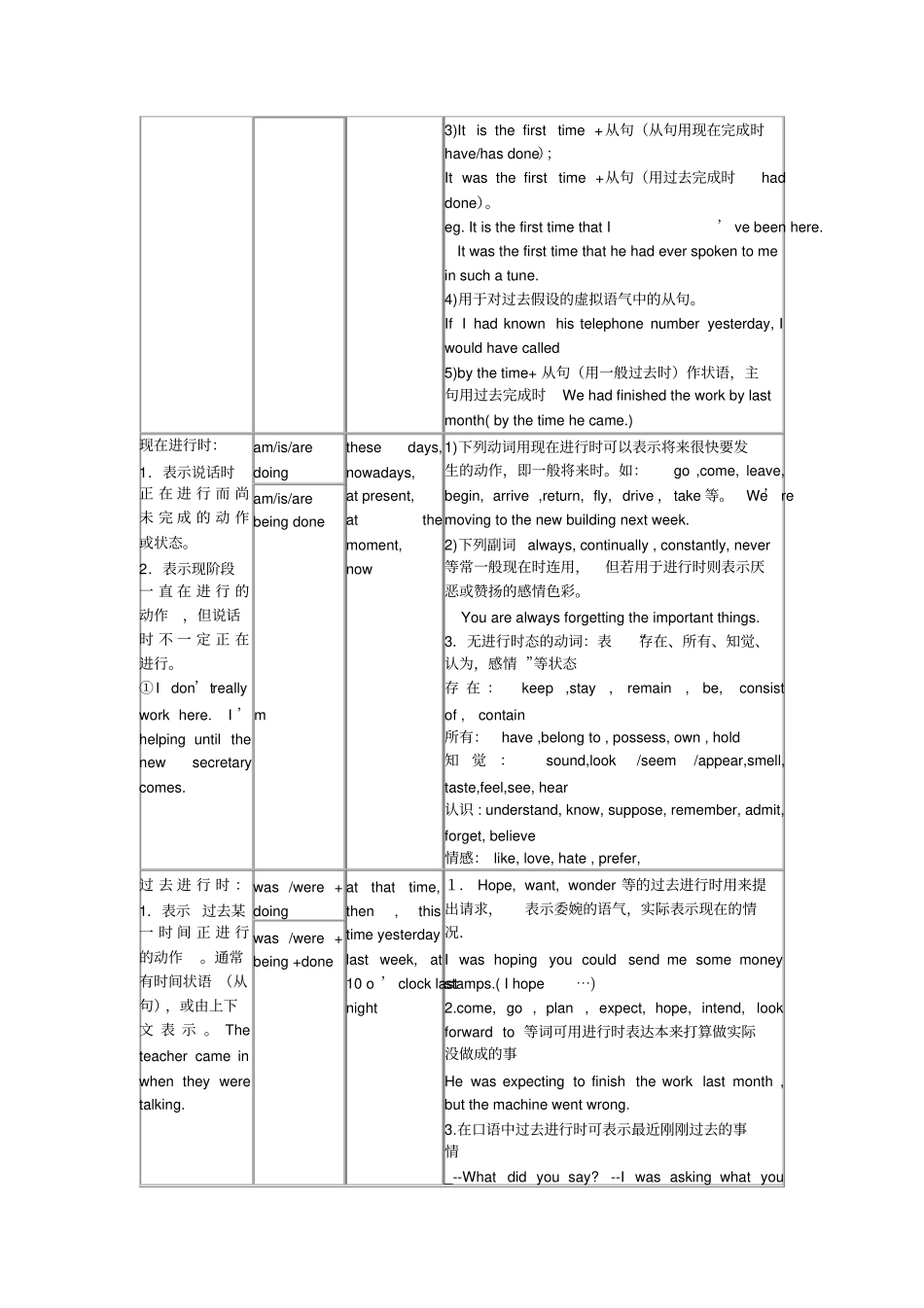
时态语态及一般用法谓语构成时间状语特殊用法一般现在时:1) 经 常 性 或 习 惯性的动作2)现在的特征, 状态 及能力3)普遍真理 , 格言警句Be (am, is, are) do / does always,usually,every time,seldom, sometimes often, now and then, occasionally 1)按火车、汽车、飞机等时刻表将要发生的事2)在时间、 条件、方式状语从句中,用一般现在时代替一般将来时
特殊句型:1)Here/There comes our teacher
(一 般 现 在 时 表 正 发 生 动作 ) 2)It is/has been+时段+since ⋯
am / is / are done 一般过去时:表示过去发生的,和现在无联系的动作或状态或习惯动作be (was, were) did yesterday, last week, an hour ago, the other day, in 1982, just now was/were done 一般将来时:将来某个时刻 (或某段时间内) 将来要发生的动作will/shall do am/is/are going to do am/is/are to do am/is/ are about to do next ⋯ , tomorrow,in+ 时段, from now on, in the future, 1)一般将来时可用来表示一种倾向或习惯性动作
Oil will float on water
Whenever he has time, he will come
其否定式表示 “不能 ⋯ 没法 ⋯”The machine won’ t work
(机器没法开动 ) 2)Cf:be going to 表示说话前已经作出的主观