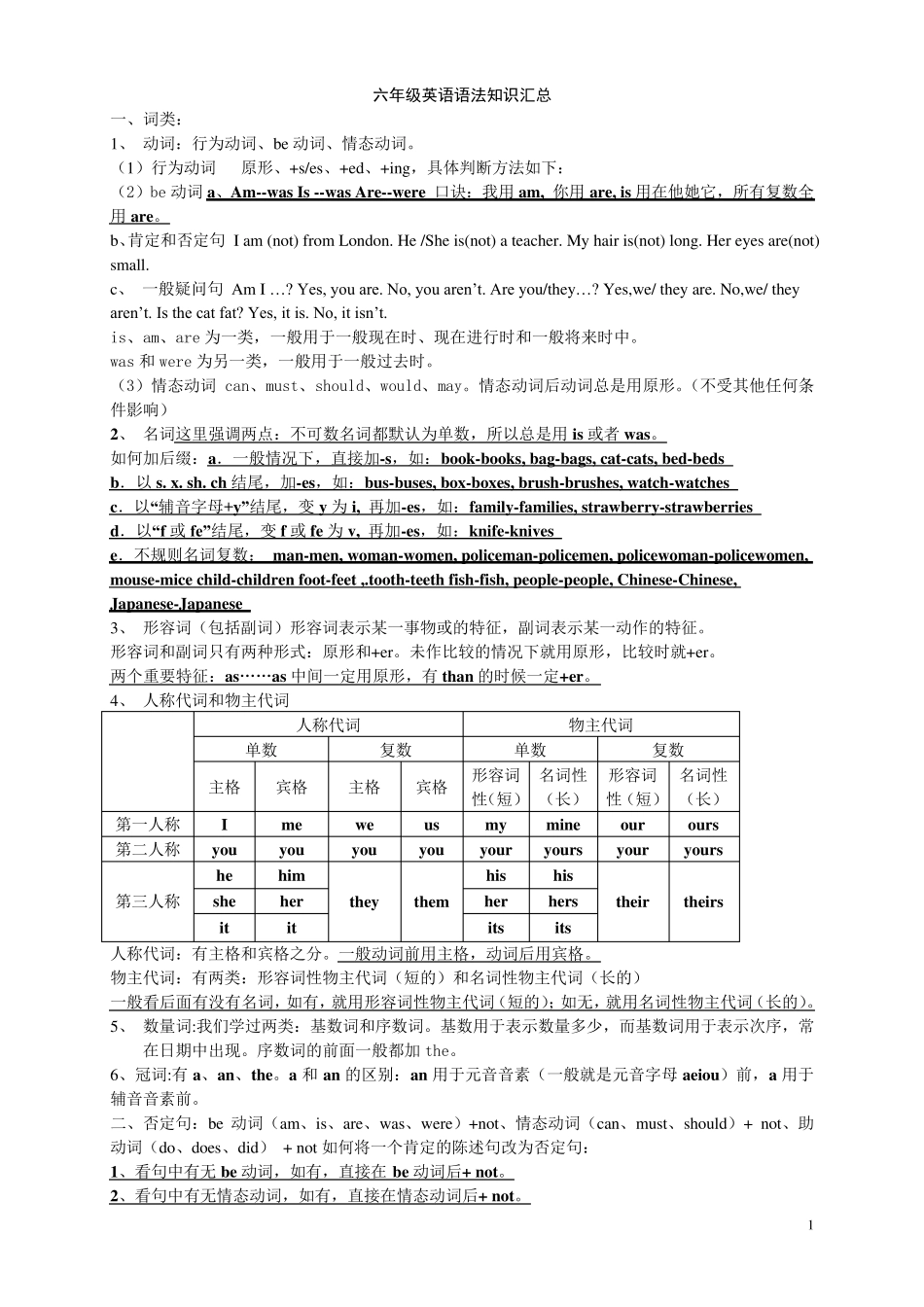
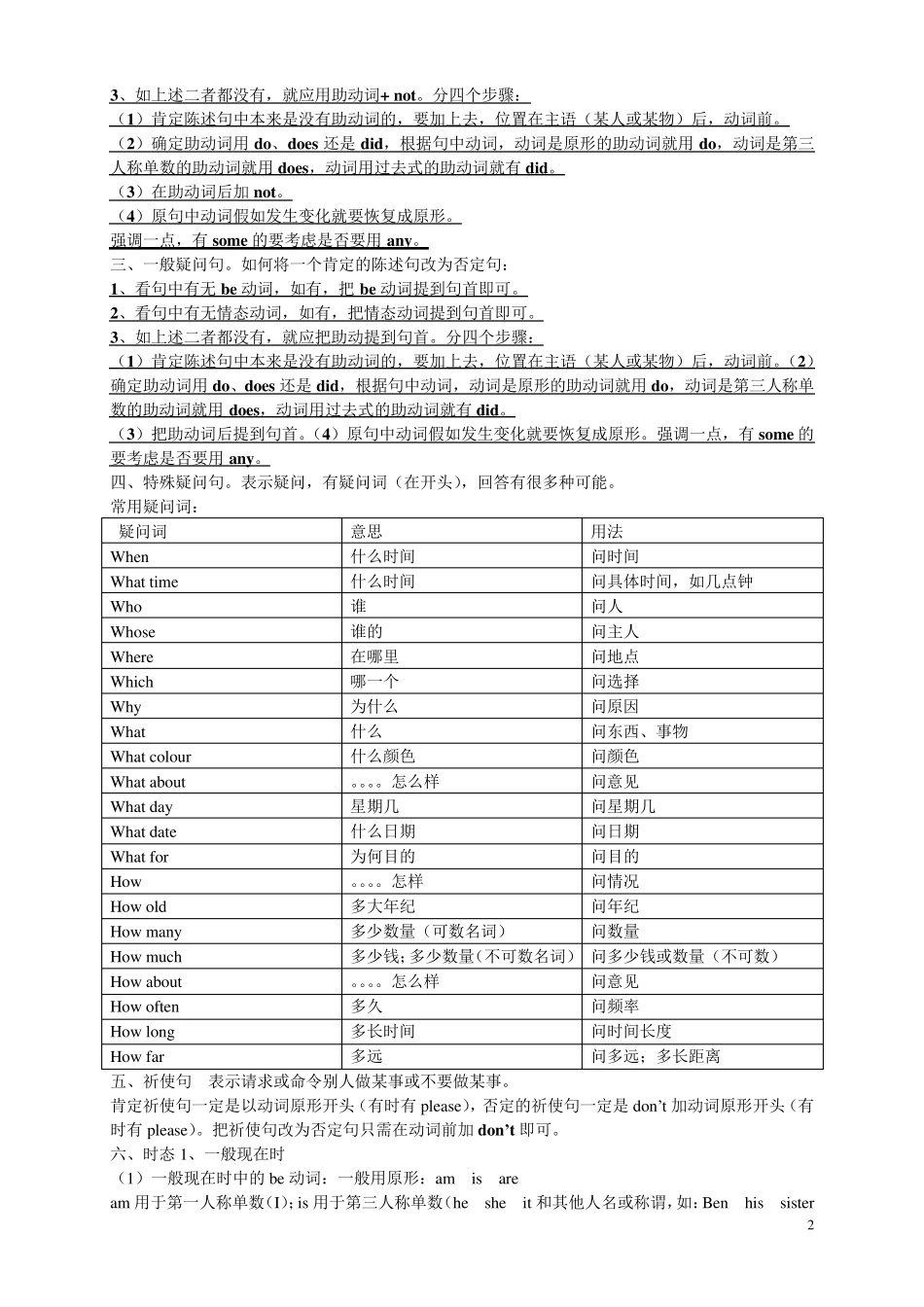
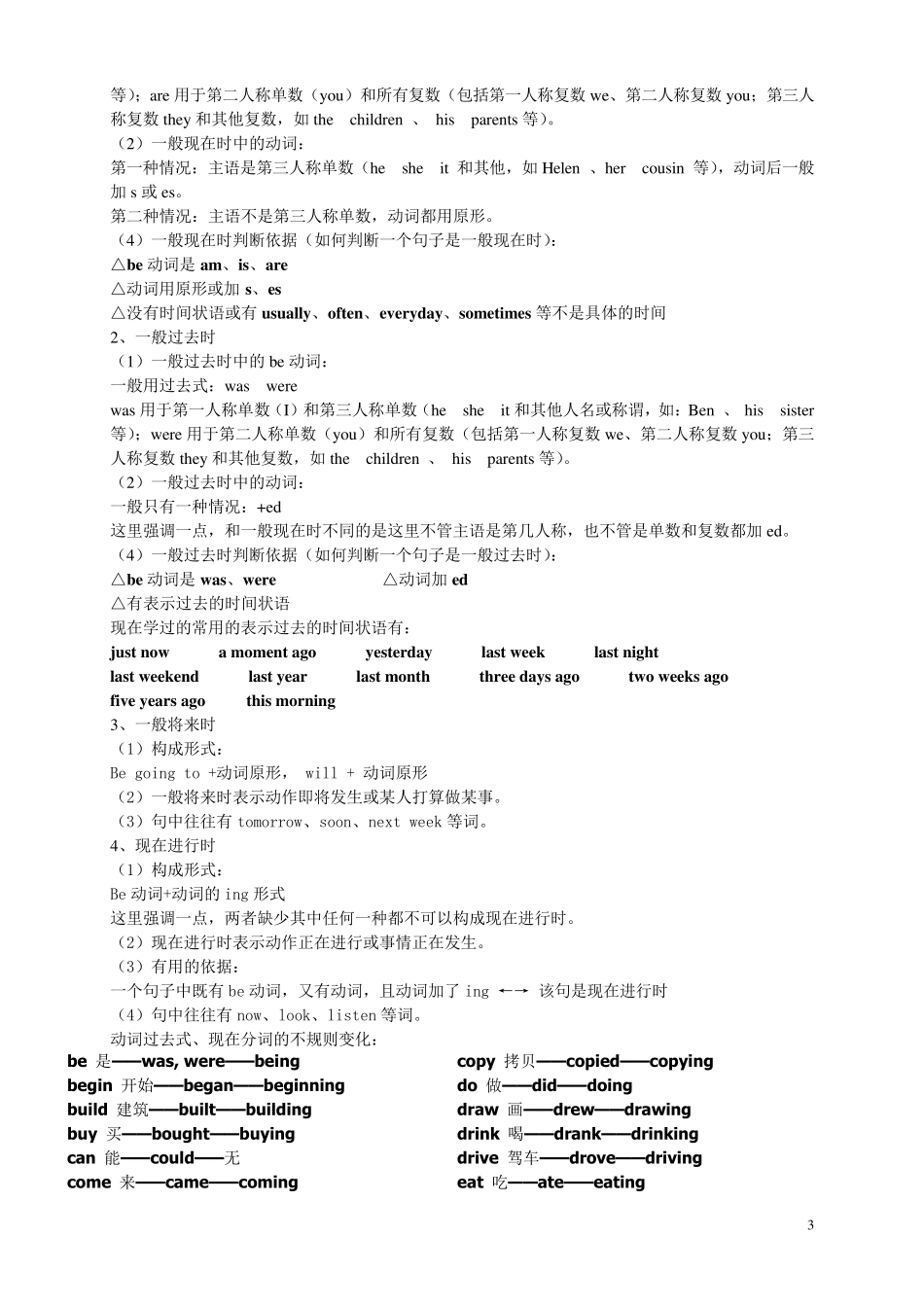
1 六年级英语语法知识汇总 一、词类: 1、 动词:行为动词、be 动词、情态动词
(1)行为动词 原形、+s/es、+ed、+ing,具体判断方法如下: (2)be 动词a、Am--was Is --was Are--were 口诀:我用am, 你用are, is 用在他她它,所有复数全用are
b、肯定和否定句 I am (not) from London
He /She is(not) a teacher
My hair is(not) long
Her eyes are(not) small
c、 一般疑问句 Am I …
Yes, you are
No, you aren’t
Are you/they…
Yes,we/ they are
No,we/ they aren’t
Is the cat fat
Yes, it is
No, it isn’t
is、am、are 为一类,一般用于一般现在时、现在进行时和一般将来时中
was 和were 为另一类,一般用于一般过去时
(3)情态动词can、must、should、would、may
情态动词后动词总是用原形
(不受其他任何条件影响) 2、 名词这里强调两点:不可数名词都默认为单数,所以总是用is 或者was
如何加后缀:a.一般情况下,直接加-s,如:book-books, bag-bags, cat-cats, bed-beds b.以s
ch 结尾,加-es,如:bus-buses, box-boxes, brush-brushes, watch-watches c.以“辅音字母+y”结尾,变y为i, 再加-es,如:family-families, strawberry-strawberries d.以“f 或fe”结尾,变f 或fe 为v, 再加-e