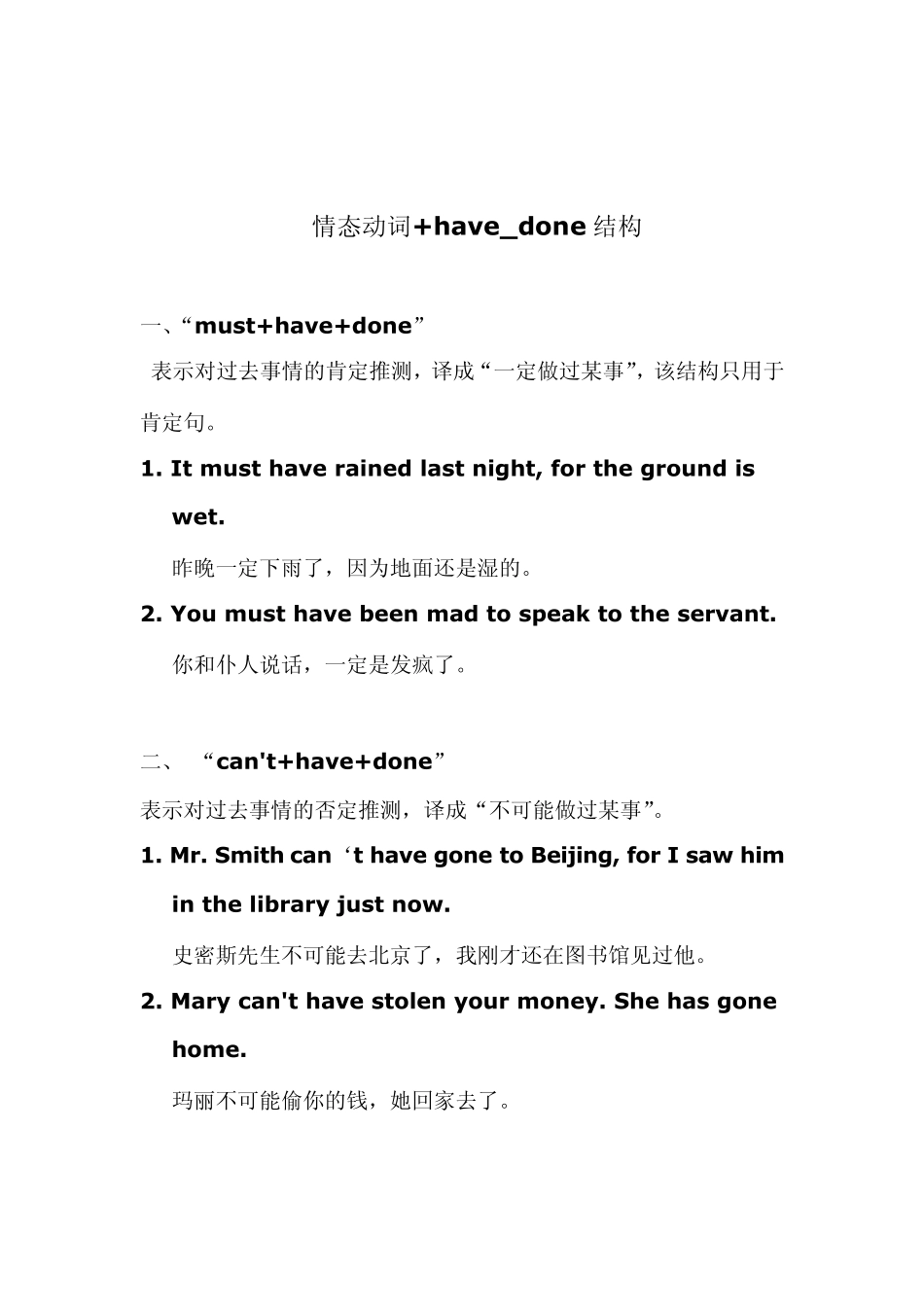
情态动词+have_done 结构 一、“must+have+done” 表示对过去事情的肯定推测,译成“一定做过某事”,该结构只用于肯定句
It must have rained last night, for the ground is wet
昨晚一定下雨了,因为地面还是湿的
You must have been mad to speak to the servant
你和仆人说话,一定是发疯了
二、 “can't+have+done” 表示对过去事情的否定推测,译成“不可能做过某事”
Smith can‘t have gone to Beijing, for I saw him in the library just now
史密斯先生不可能去北京了,我刚才还在图书馆见过他
Mary can't have stolen your money
She has gone home
玛丽不可能偷你的钱,她回家去了
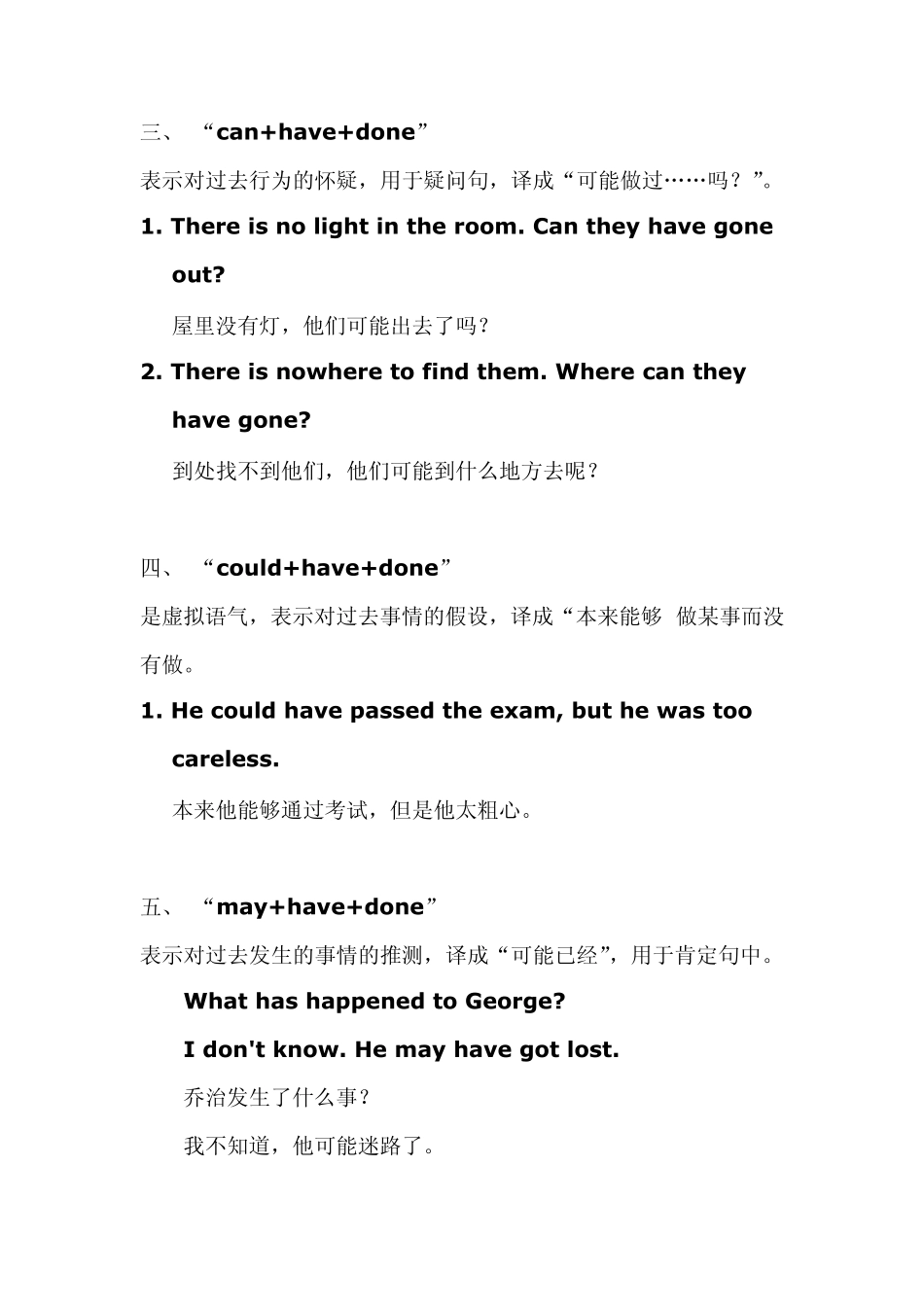
三、 “can+have+done” 表示对过去行为的怀疑,用于疑问句,译成“可能做过„„吗
There is no light in the room
Can they have gone out
屋里没有灯,他们可能出去了吗
There is nowhere to find them
Where can they have gone
到处找不到他们,他们可能到什么地方去呢
四、 “could+have+done” 是虚拟语气,表示对过去事情的假设,译成“本来能够”做某事而没有做
He could have passed the exam, but he was too careless
本来他能够通过考试,但是他太粗心
五、 “may+have