第十一章 比较句Comparative structures “比”字句 The “比”sentence 比较两个事物之间的差别时用“比”字句:A 比 B
The “ 比 ” sentence is used to show the difference between two persons or things through a comparison in the pattern “A 比 B
”The pattern 1基本句型(一) A 比 B + 形容词 A 比 B + Adj
※ 注意 “”“在 比 字句里,如果谓语是形容词,形容词前不能用 很、非”“常、特别、太、比较 等副词,但可以用表示比较程度的副词 更、”还 等 In a“”比 sentence ,if the predicate is an adjective, it cannot be preceded by such adverbs as “”很、非常、特别、太、比较 etc
But adverbs of degree such as “”更、还 may be used
A 比 B ( 更 / 还)+ 形容词 很/非常/特别/太/比较练习(1)改写句子
例)姐姐漂亮,妹妹不漂亮
→ 姐姐比妹妹漂亮
1) 这本书厚,那本书不厚
→ 这本书比那本书厚
2) 他的毛衣好看,我的毛衣不好看
1 → 3) 第十五课难,第十六课容易
→ 4) 这种水果好吃,那种水果不好吃
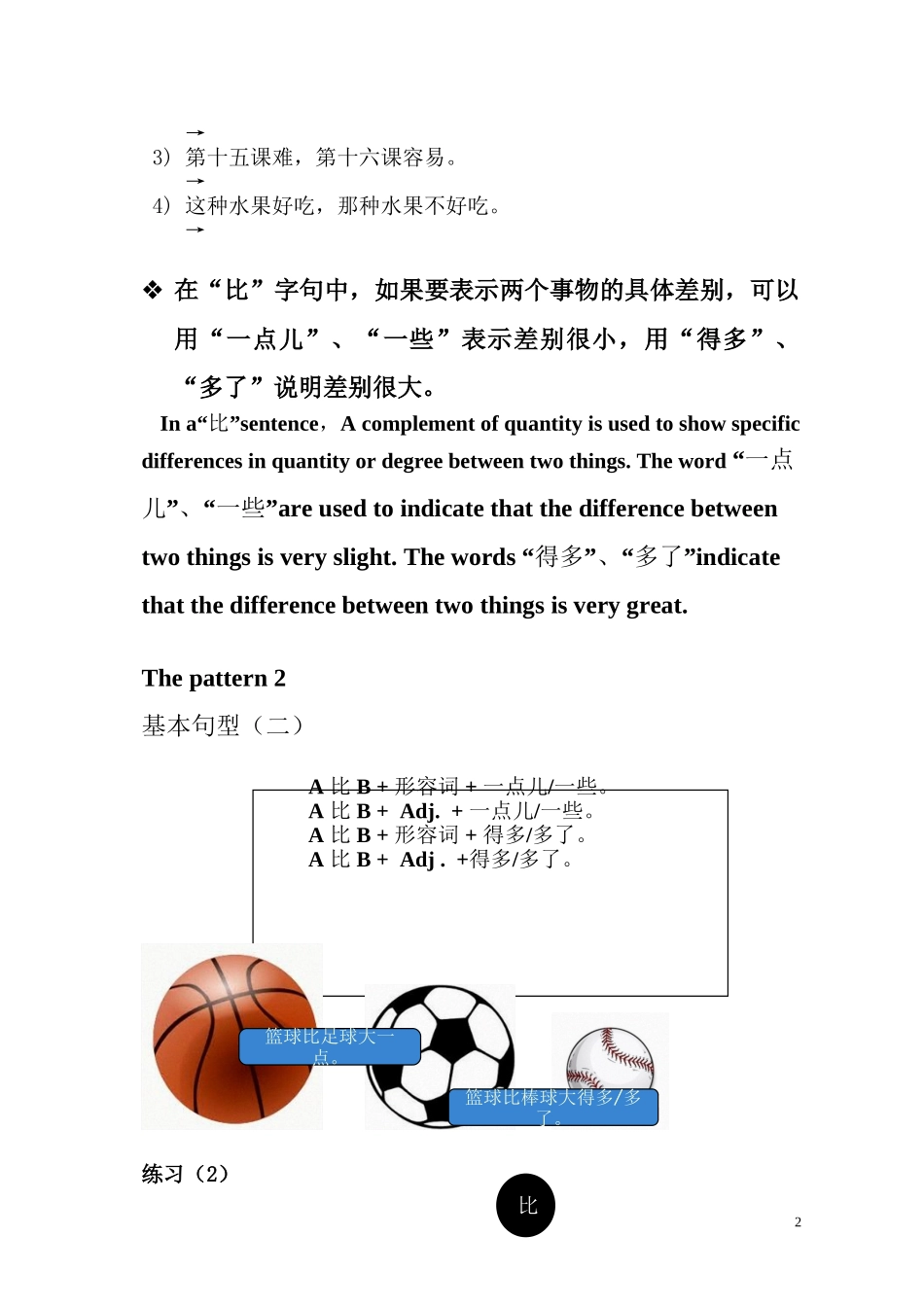
→ 在“比”字句中,如果要表示两个事物的具体差别,可以用“一点儿”、“一些”表示差别很小,用“得多”、“多了”说明差别很大
In a“”比 sentence,A complement of quantity is used to show specific differences in quan