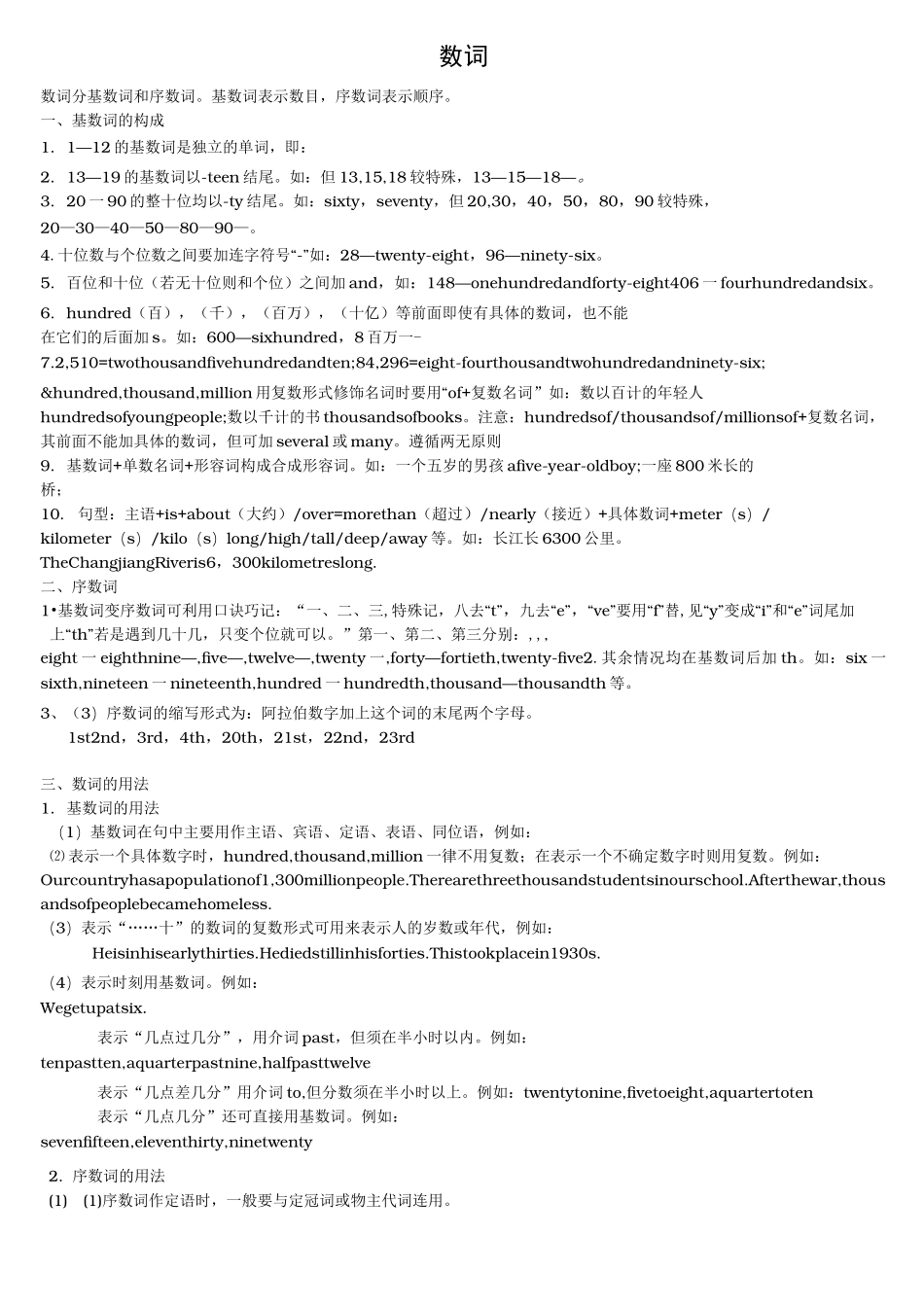
数词数词分基数词和序数词
基数词表示数目,序数词表示顺序
一、基数词的构成1
1—12 的基数词是独立的单词,即:2
13—19 的基数词以-teen 结尾
如:但 13,15,18 较特殊,13—15—18—
20 一 90 的整十位均以-ty 结尾
如:sixty,seventy,但 20,30,40,50,80,90 较特殊,20—30—40—50—80—90—
十位数与个位数之间要加连字符号“-”如:28—twenty-eight,96—ninety-six
百位和十位(若无十位则和个位)之间加 and,如:148—onehundredandforty-eight406 一 fourhundredandsix
hundred(百),(千),(百万),(十亿)等前面即使有具体的数词,也不能在它们的后面加 s
如:600—sixhundred,8 百万一-7
2,510=twothousandfivehundredandten;84,296=eight-fourthousandtwohundredandninety-six;&hundred,thousand,million 用复数形式修饰名词时要用“of+复数名词”如:数以百计的年轻人hundredsofyoungpeople;数以千计的书 thousandsofbooks
注意:hundredsof/thousandsof/millionsof+复数名词,其前面不能加具体的数词,但可加 several 或 many
遵循两无原则9
基数词+单数名词+形容词构成合成形容词
如:一个五岁的男孩 afive-year-oldboy;一座 800 米长的桥;10
句型:主语+is+about(大约)/over=morethan(超过)/nearly(接近)+具体数词+meter(s)/kilome