非谓语与谓语一、区分谓语与非谓语谓语 谓语(predicate) 或谓语动词(predicate verb) 得位置一般在主语之后,说明主语“就是什么”或者“做什么”,或表明主语得状态
谓语由简单动词或动词短语(助动词或情态动词+主要动词)构成
(谓语必修注意时态、语态与主谓一致)1
简单谓语 (1)、 What happened
发生了什么事
(2)、 He worked hard all day today、 她今日苦干了一天
(3)、 The plane took off at ten o’clock、 飞机就是十点起飞得
2、 复合谓语可分为两种情况: 第一种就是由情态动词 ,助动词 +不带 to 得动词不定式 构成得复合谓语: What does this word mean
I won’t do it again、 I’ll go and move away the bag of rice with Lin Tao、 You’d better catch a bus、 第二种就是由连系动词 +表语构成得复合谓语
例如: You look the same、 We are all here、 The weather gets warmer, and the days get longer、 Keep quite and listen to me、 He looked worried、 We have to be up early in the morning、 Note:一个英语句子就有一套主谓结构;假如就是从句,则至少有两套主谓结构,每套要求主语与谓语在时态与人称上要一致
祈使句无主语
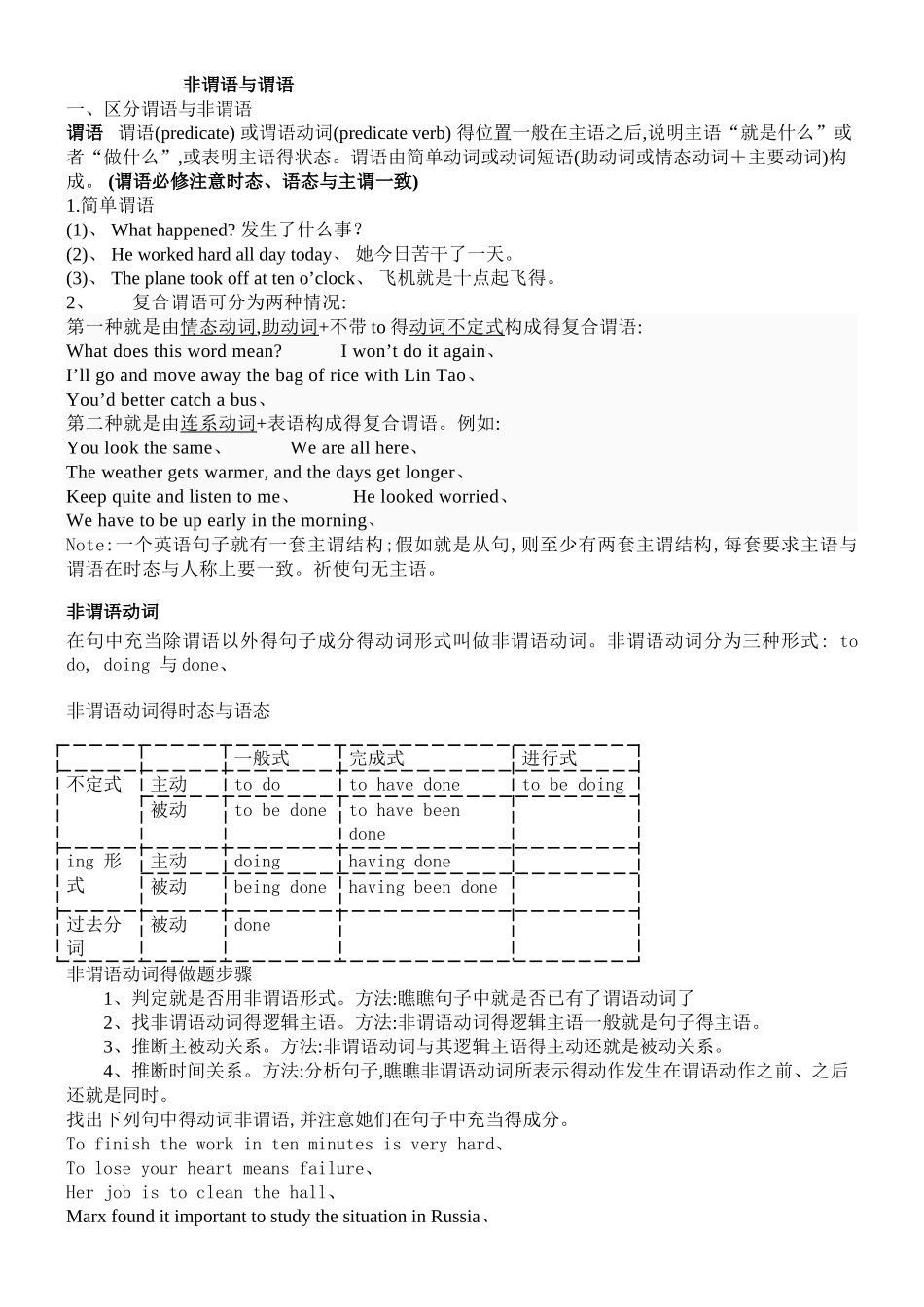
非谓语动词在句中充当除谓语以外得句子成分得动词形式叫做非谓语动词
非谓语动词分为三种形式: to do, doing 与 done、 非谓语动词得时态与语态 一般式完