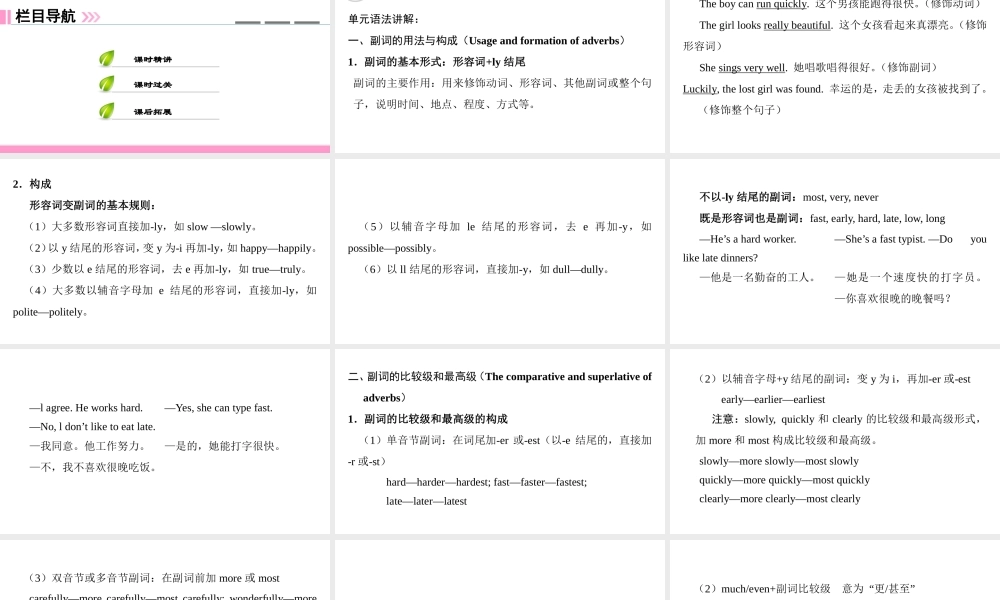
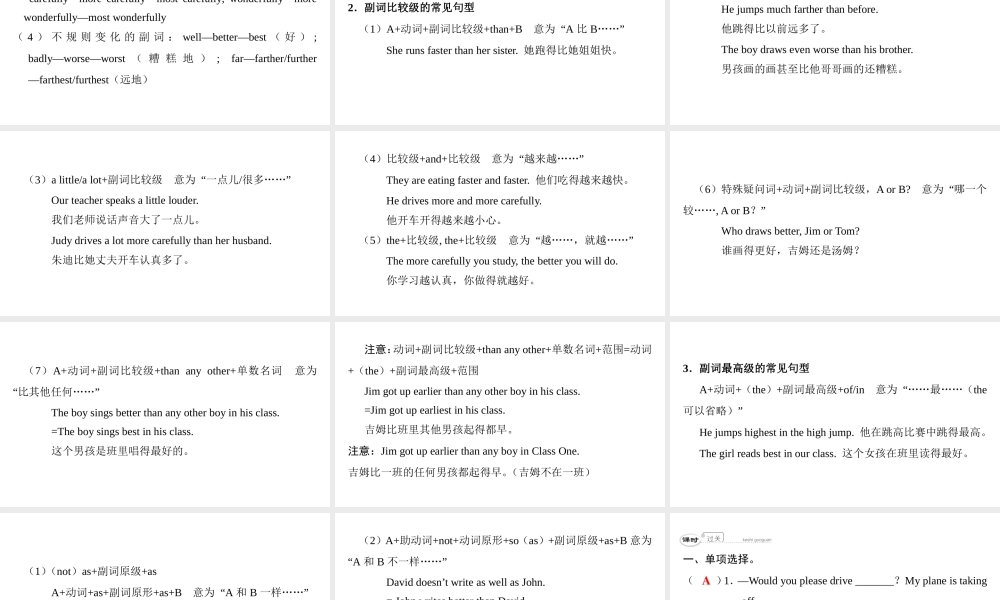
Unit 6 Pets第 3 课时——语法课后拓展课时精讲栏目导航课时过关单元语法讲解: 一、副词的用法与构成(Usage and formation of adverbs) 1.副词的基本形式:形容词+ly 结尾 副词的主要作用:用来修饰动词、形容词、其他副词或整个句子,说明时间、地点、程度、方式等
The boy can run quickly
这个男孩能跑得很快
(修饰动词) The girl looks really beautiful
这个女孩看起来真漂亮
(修饰形容词) She sings very well
她唱歌唱得很好
(修饰副词) Luckily, the lost girl was found
幸运的是,走丢的女孩被找到了
(修饰整个句子) 2.构成 形容词变副词的基本规则: (1)大多数形容词直接加-ly,如 slow —slowly
(2)以 y 结尾的形容词,变 y 为-i 再加-ly,如 happy—happily
(3)少数以 e 结尾的形容词,去 e 再加-ly,如 true—truly
(4)大多数以辅音字母加 e 结尾的形容词,直接加-ly,如polite—politely
(5)以辅音字母加 le 结尾的形容词,去 e 再加-y,如possible—possibly
(6)以 ll 结尾的形容词,直接加-y,如 dull—dully
不以-ly 结尾的副词:most, very, never 既是形容词也是副词:fast, early, hard, late, low, long —He’s a hard worker
—She’s a fast typist
—Do you like late dinners
—他是一名勤奋的工人
—她是一个速度快的打字员
—你喜欢很晚的晚餐吗
—l agree