Module12Help课型:前置语法课【学习目标】1
了解并掌握情态动词can,must的意义和用法;2
掌握情态动词can,must的各种句式转换
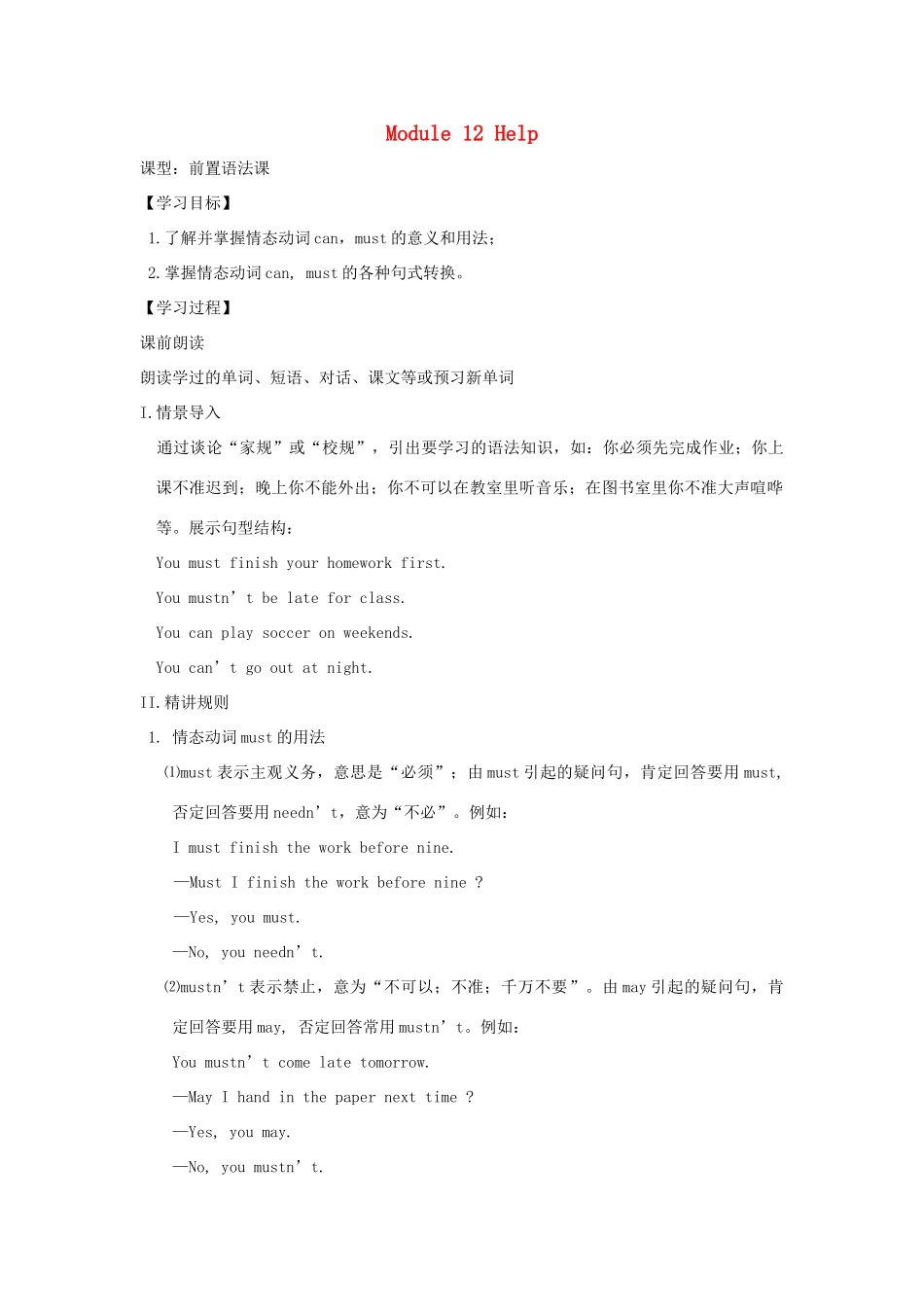
【学习过程】课前朗读朗读学过的单词、短语、对话、课文等或预习新单词I
情景导入通过谈论“家规”或“校规”,引出要学习的语法知识,如:你必须先完成作业;你上课不准迟到;晚上你不能外出;你不可以在教室里听音乐;在图书室里你不准大声喧哗等
展示句型结构:Youmustfinishyourhomeworkfirst
Youmustn’tbelateforclass
Youcanplaysocceronweekends
Youcan’tgooutatnight
情态动词must的用法⑴must表示主观义务,意思是“必须”;由must引起的疑问句,肯定回答要用must,否定回答要用needn’t,意为“不必”
例如:Imustfinishtheworkbeforenine
—MustIfinishtheworkbeforenine
—Yes,youmust
—No,youneedn’t
⑵mustn’t表示禁止,意为“不可以;不准;千万不要”
由may引起的疑问句,肯定回答要用may,否定回答常用mustn’t
例如:Youmustn’tcomelatetomorrow
—MayIhandinthepapernexttime
—Yes,youmay
—No,youmustn’t
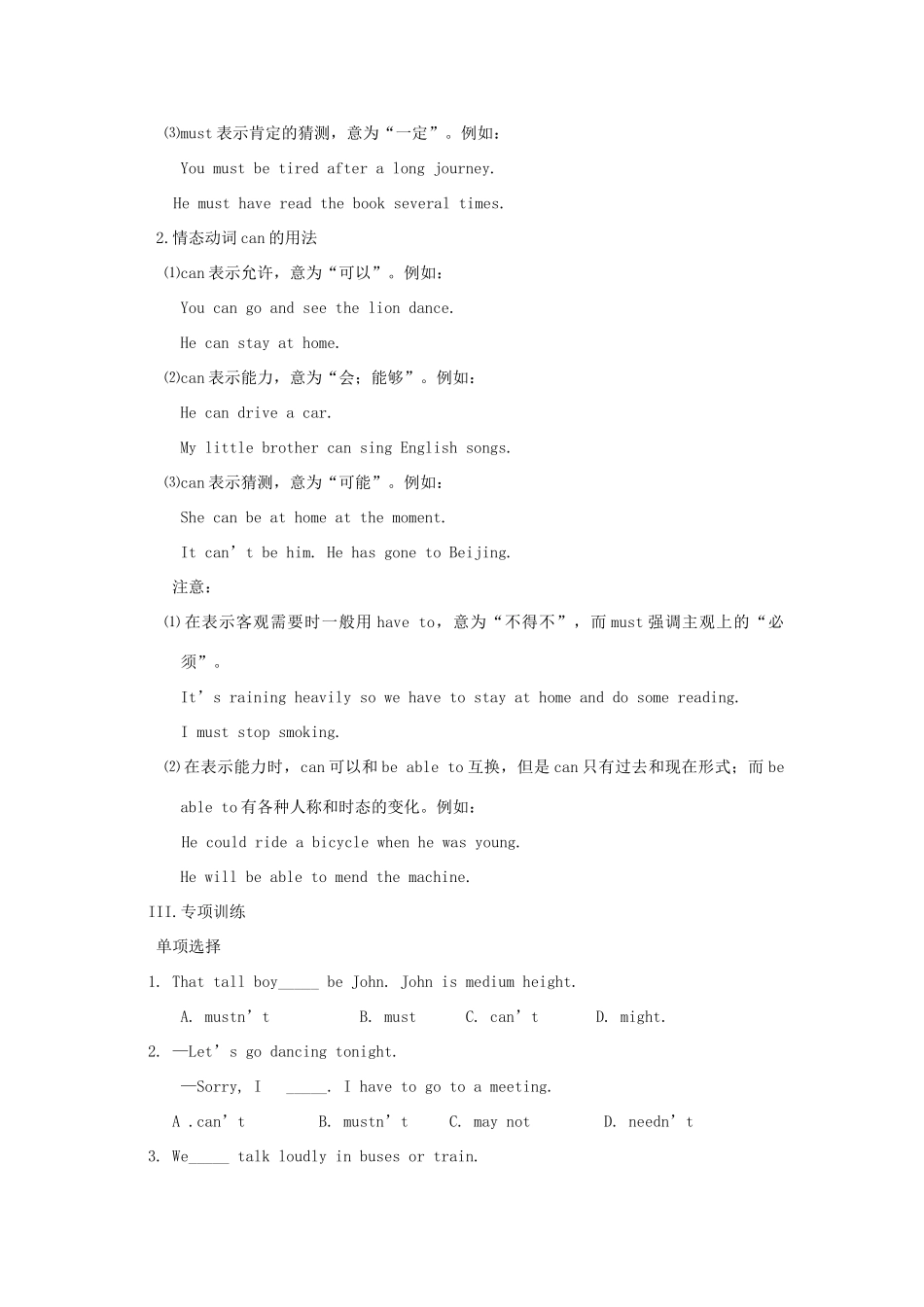
⑶must表示肯定的猜测,意为“一定”
例如:Youmustbetiredafteralongjourney
Hemusthavereadthebookseveraltimes
情态动词can的用法⑴can表示允许,意为“可以”
例如:Youcangoandseetheliondance
Hecanstayathome
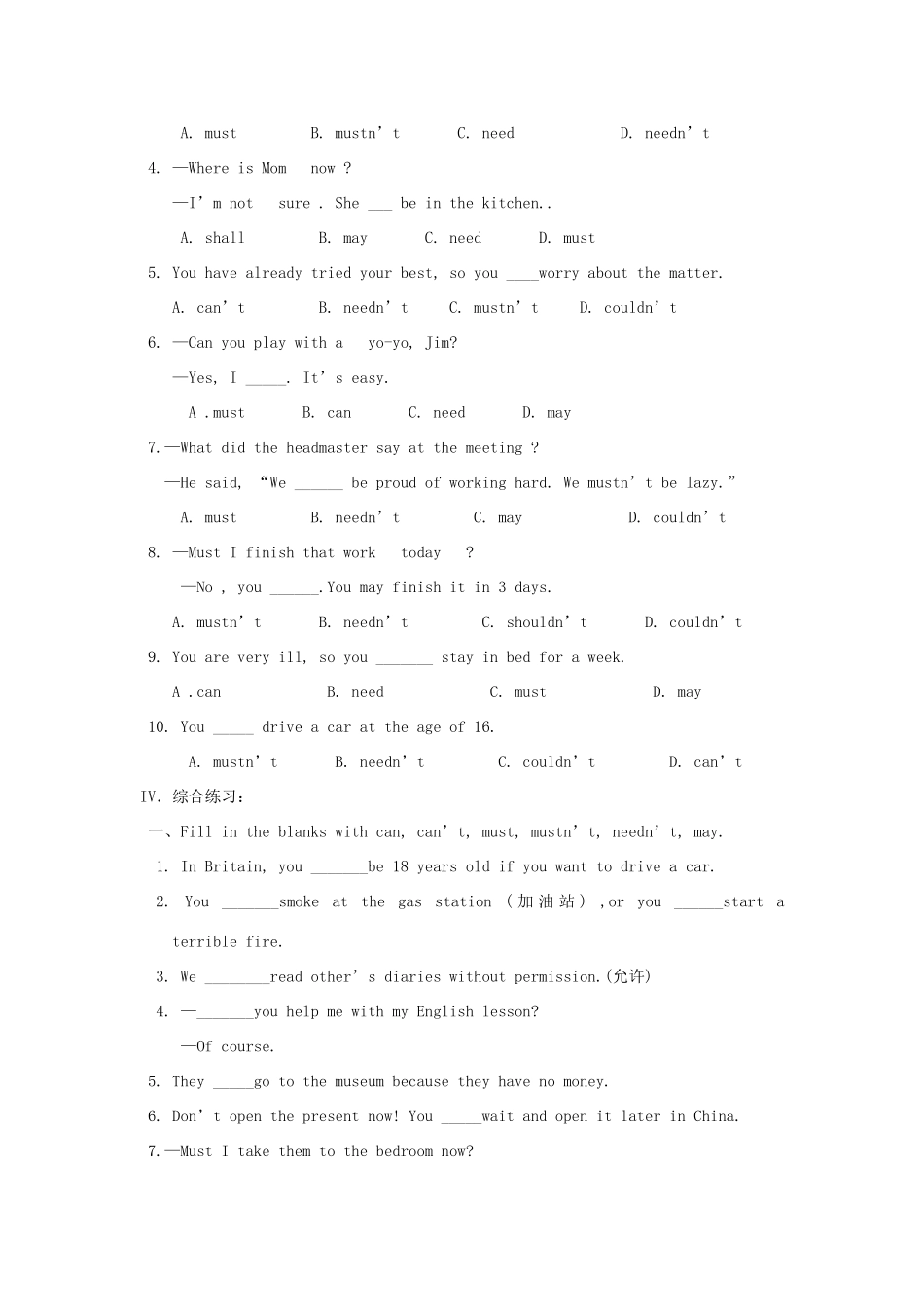
⑵can表示能力,意