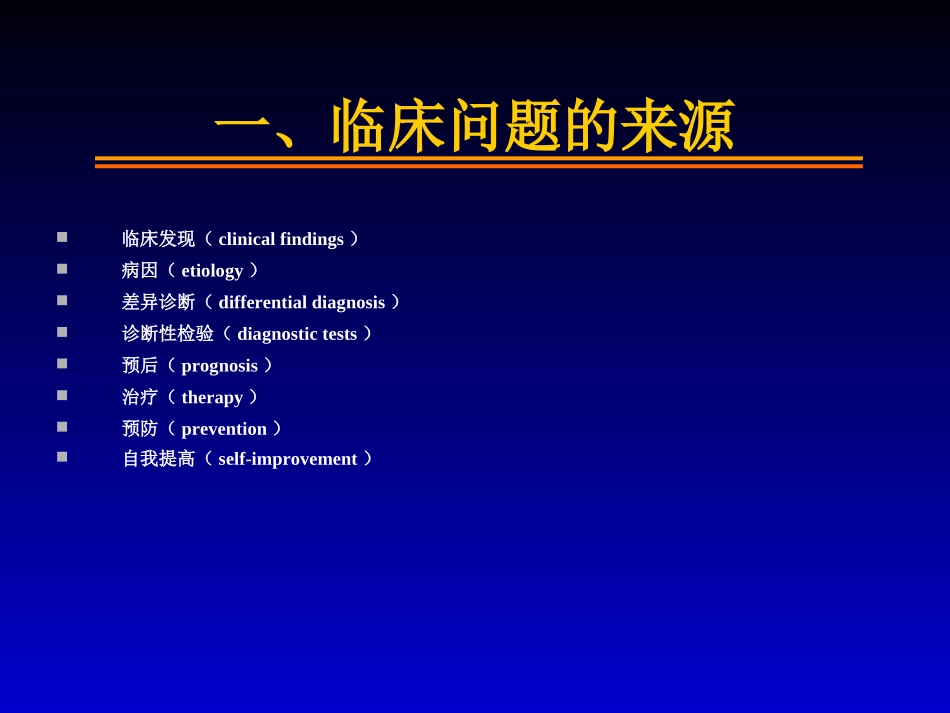
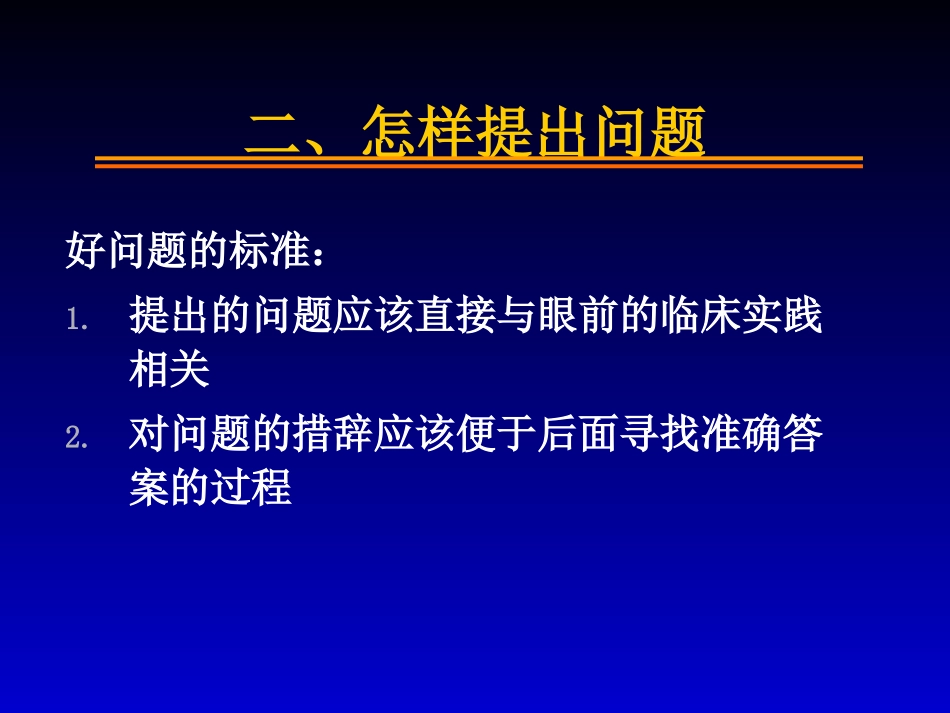
循证医学:提出问题南昌大学公共卫生学院姜红英副教授一、临床问题的来源临床发现(clinicalfindings)病因(etiology)差异诊断(differentialdiagnosis)诊断性检验(diagnostictests)预后(prognosis)治疗(therapy)预防(prevention)自我提高(self-improvement)二、怎样提出问题好问题的标准:1
提出的问题应该直接与眼前的临床实践相关2
对问题的措辞应该便于后面寻找准确答案的过程StructureofGoodQuestionsthepatientorproblembeingaddressed;theinterventionorexposurebeingconsidered;thecomparisoninterventionorexposure,whenrelevant;theclinicaloutcomesofinterest
1)Patients/problems描述病人的特点:如年龄、性别、种族、所具有的危险因素等有待解决的问题:主要疾病、合并症以及其他有临床意义的性状等如果能够认真充分的定义眼前的病人,查找文献时,就可以很容易的去判断找到的文献是否可以应用到你的病人
SpiritMindBodyFamilyPersonalBehaviorPsycho-Socio-EconomicEnvironmentHumanBiologyPhysicalEnvironmentPersonalTimeUrbanSystemWorkLifestyleCultureBiosphereThemodeloftheHumanEcosystem——HancockandPerkins,19852)干预(I:intervention)干预是一个笼统的概念,可以包括以下一些内容:--