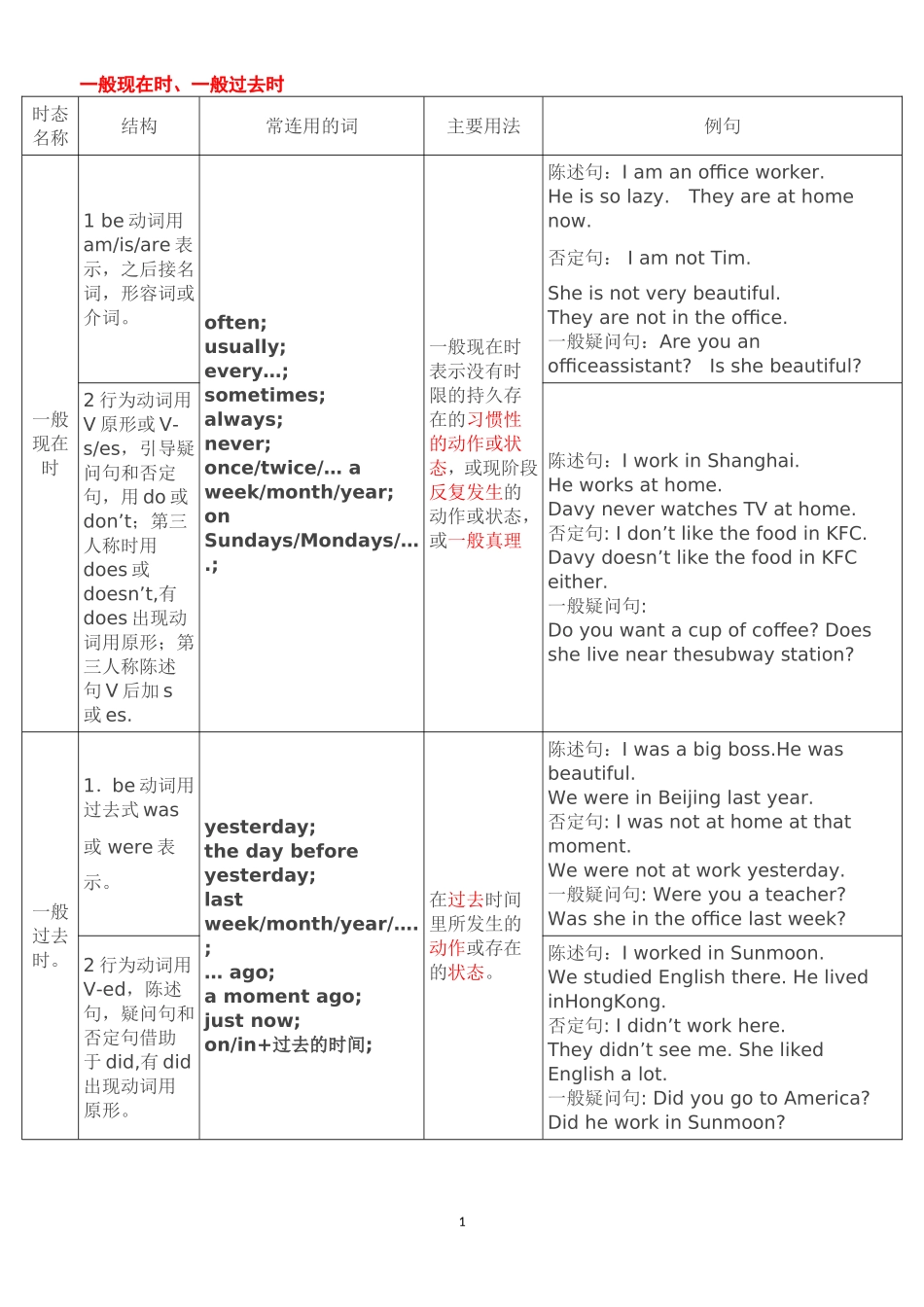
一般现在时、一般过去时时态名称结构常连用的词主要用法例句一般现在时1be动词用am/is/are表示,之后接名词,形容词或介词
often;usually;every…;sometimes;always;never;once/twice/…aweek/month/year;onSundays/Mondays/…
;一般现在时表示没有时限的持久存在的习惯性的动作或状态,或现阶段反复发生的动作或状态,或一般真理陈述句:Iamanofficeworker
Heissolazy
Theyareathomenow
否定句:IamnotTim
Sheisnotverybeautiful
Theyarenotintheoffice
一般疑问句:Areyouanofficeassistant
Isshebeautiful
2行为动词用V原形或V-s/es,引导疑问句和否定句,用do或don’t;第三人称时用does或doesn’t,有does出现动词用原形;第三人称陈述句V后加s或es
陈述句:IworkinShanghai
Heworksathome
DavyneverwatchesTVathome
否定句:Idon’tlikethefoodinKFC
Davydoesn’tlikethefoodinKFCeither
一般疑问句:Doyouwantacupofcoffee
Doesshelivenearthesubwaystation
1.be动词用过去式was或were表示
yesterday;thedaybeforeyesterday;lastweek/month/year/…
;…ago;amomentago;justnow;on/in+过去的时间;在过去时间里所发生的动作或存在的状态
陈述句:Iwasabigboss
Hewasbeautiful
WewereinB