未来的安排和打算Future arrangements and intentions一般将来时表示单纯的将来事实1
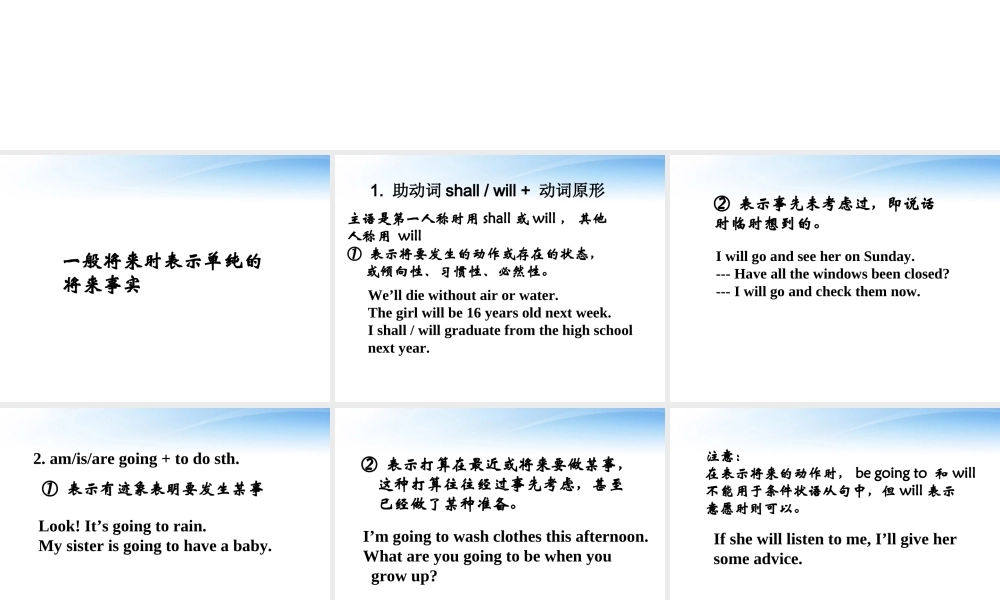
助动词 shall / will + 动词原形主语是第一人称时用 shall 或 will , 其他人称用 will① 表示将要发生的动作或存在的状态, 或倾向性、习惯性、必然性
We’ll die without air or water
The girl will be 16 years old next week
I shall / will graduate from the high school next year
② 表示事先未考虑过,即说话时临时想到的
I will go and see her on Sunday
--- Have all the windows been closed
--- I will go and check them now
am/is/are going + to do sth
① 表示有迹象表明要发生某事Look
It’s going to rain
My sister is going to have a baby
② 表示打算在最近或将来要做某事, 这种打算往往经过事先考虑,甚至 已经做了某种准备
I’m going to wash clothes this afternoon
What are you going to be when you grow up
注意:在表示将来的动作时, be going to 和 will 不能用于条件状语从句中,但 will 表示意愿时则可以
If she will listen to me, I’ll give her some advice
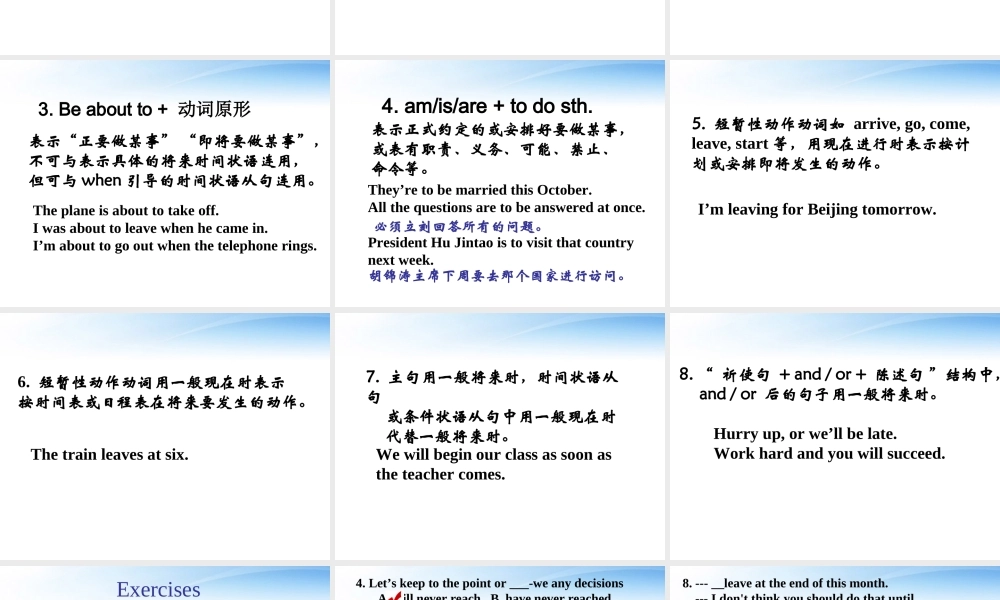
Be about to + 动词原形表示“正要做某事” “即将要做某事”,不可与表示具体的将来时间状语连用,但可