2016 年广州市第一次模拟考试英语2016.3 本试卷分第 1 卷(选择题 )和第Ⅱ卷 (非选择题 )两部分
考试结束后,将本试卷和答题卡一并交回
第 I 卷注意事项:1.答第 I 卷前,考生务必将自己的姓名和考生号、试室号、座位号填写在答题卡上,并用铅笔在答题卡上的相应位置填涂考生号
2.选出每小题答案后,用铅笔把答题卡上对应题目的答案标号涂黑,如需改动,用橡皮擦干净后,再选涂其他答案标号,不能答在本试卷上,否则无效
第一部分阅读理解 ( 共两节,满分 40 分) 第一节 (共 15 小题;每小题 2 分,满分 30 分) 阅读下列短文,从每题所给的四个选项(A、B、C 和 D)中,选出最佳选项,并在答题卡上将该项涂黑
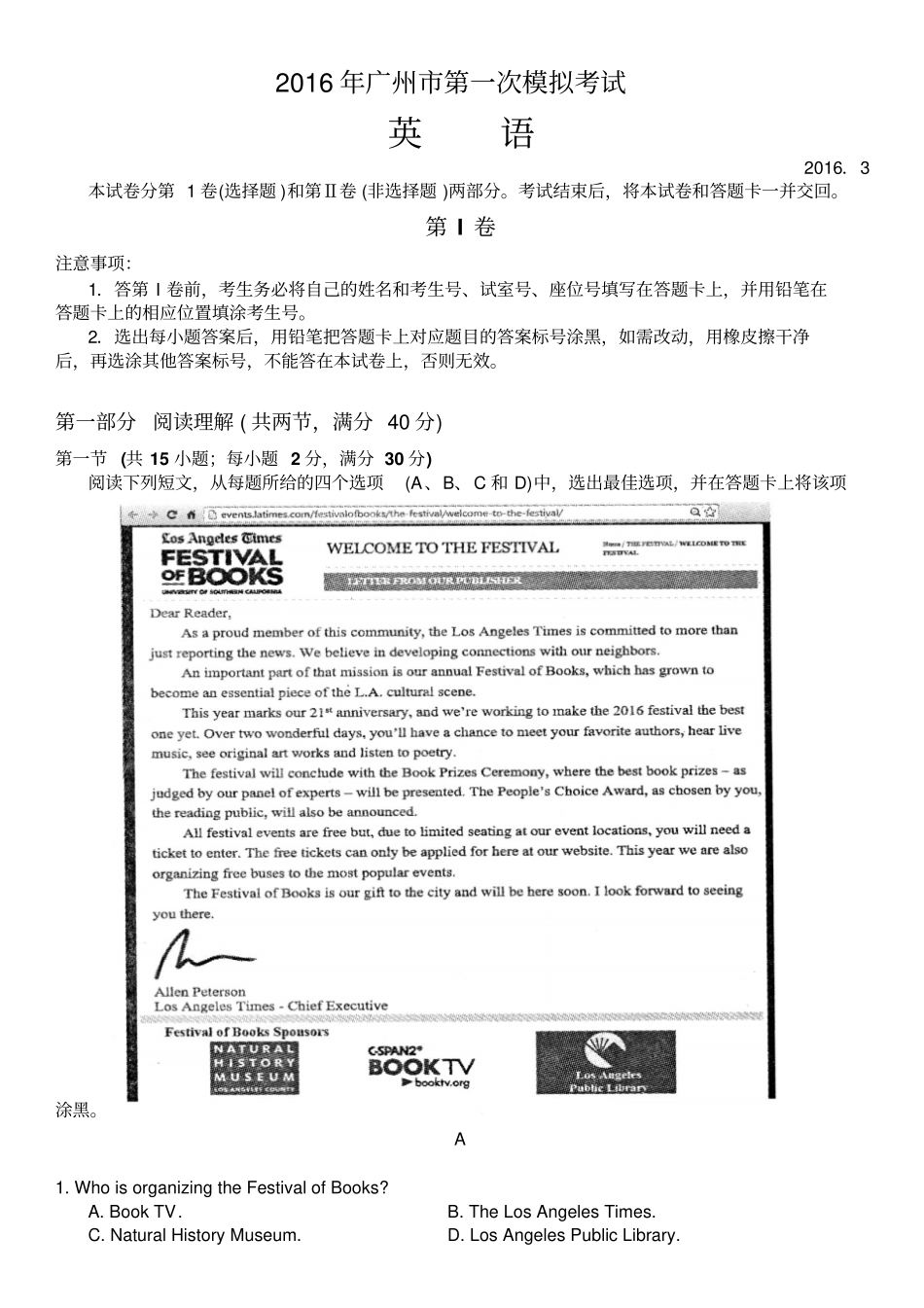
Who is organizing the Festival of Books
Book TV
The Los Angeles Times
Natural History Museum
Los Angeles Public Library
How are the best book prizes chosen
By a group of experts
By a vote of the authors, C
By the reading public
By festival sponsors
What is true about tickets to the festival
They are only for published authors
They include transport to each event
They can only be applied for online D
They can be purchased at t