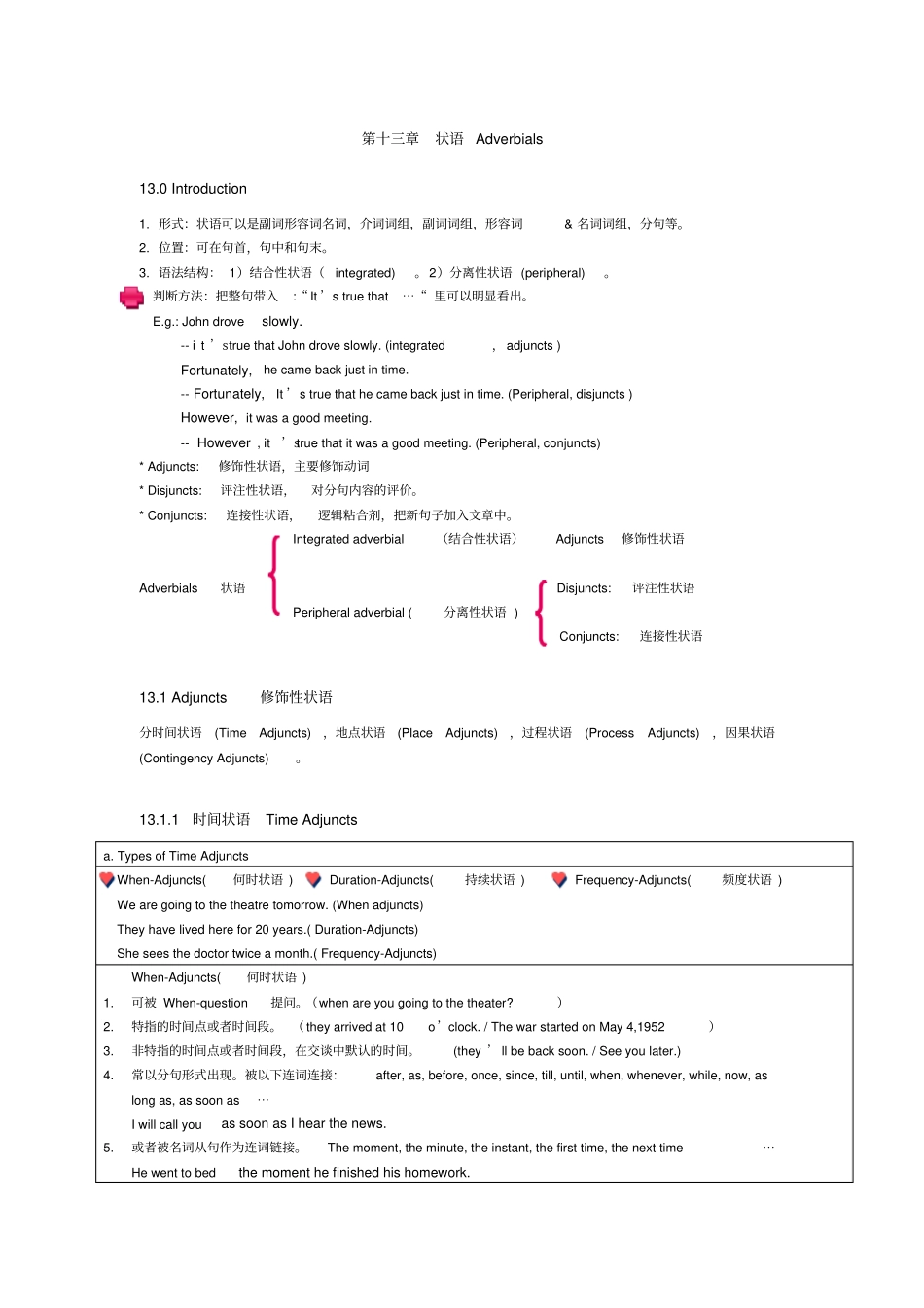
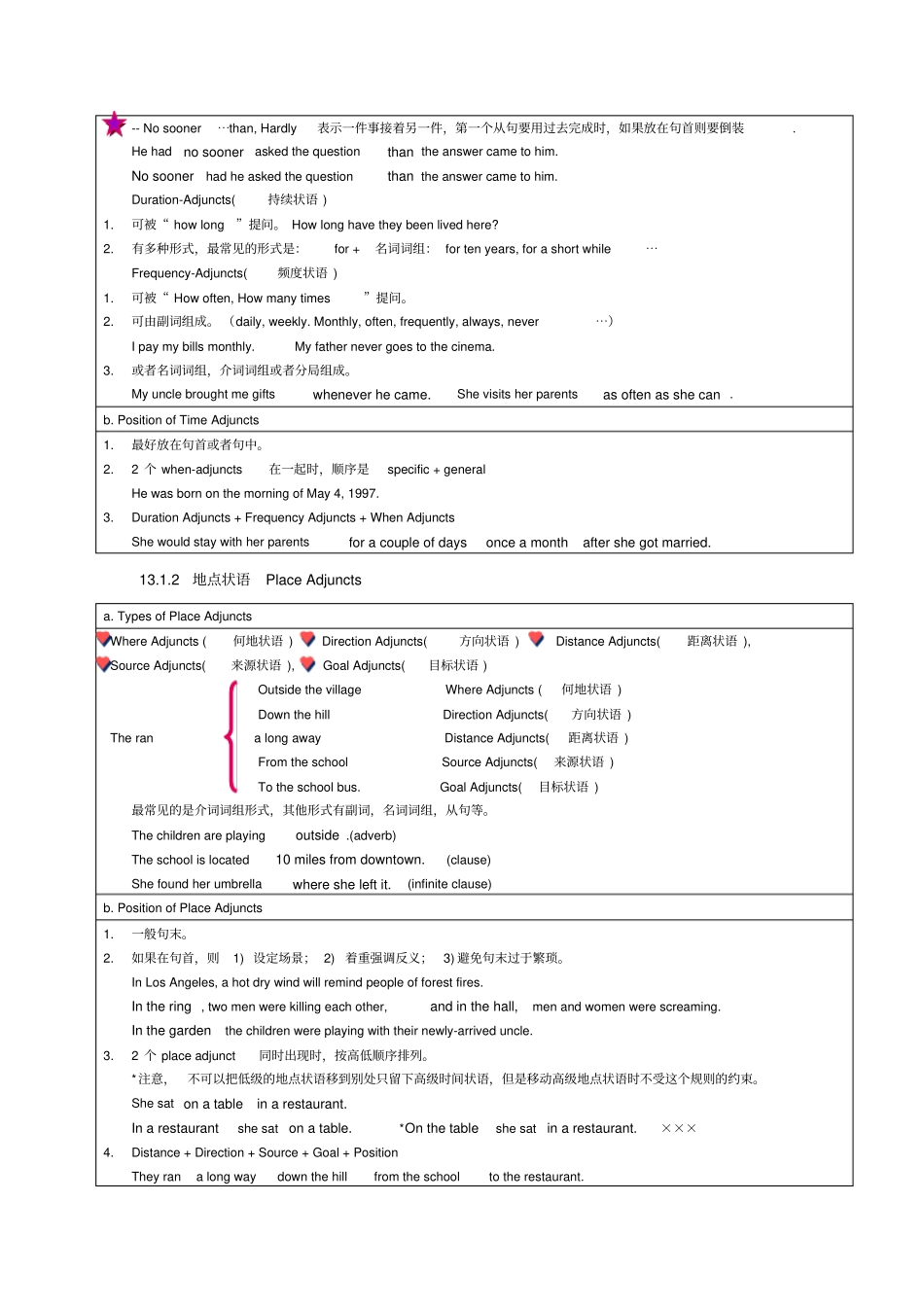
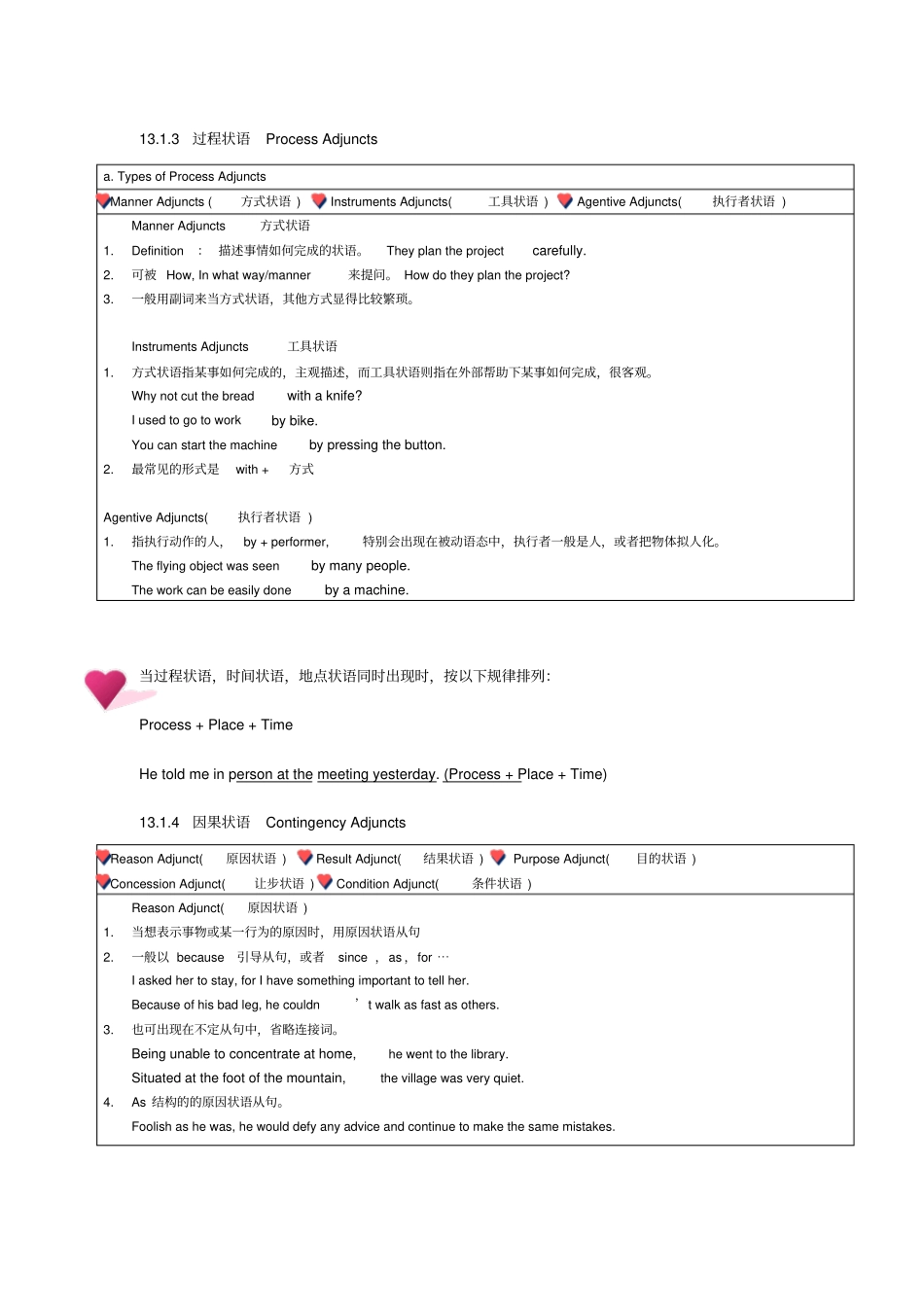
第十三章状语 Adverbials 13
0 Introduction 1
形式:状语可以是副词形容词名词,介词词组,副词词组,形容词& 名词词组,分句等
位置:可在句首,句中和句末
语法结构: 1)结合性状语(integrated)
2)分离性状语 (peripheral)
判断方法:把整句带入:“ It ’s true that⋯“ 里可以明显看出
: John drove slowly
-- i t ’s true that John drove slowly
(integrated, adjuncts ) Fortunately, he came back just in time
-- Fortunately, It ’s true that he came back just in time
(Peripheral, disjuncts ) However, it was a good meeting
-- However , it’s true that it was a good meeting
(Peripheral, conjuncts) * Adjuncts: 修饰性状语,主要修饰动词* Disjuncts: 评注性状语,对分句内容的评价
* Conjuncts: 连接性状语,逻辑粘合剂,把新句子加入文章中
Integrated adverbial(结合性状语)Adjuncts修饰性状语Adverbials 状语Disjuncts: 评注性状语Peripheral adverbial (分离性状语 ) Conjuncts: 连接性状语13
1 Adjuncts 修饰性状语分时间状语(Time Adjuncts),地点状语(Place Adjuncts),过程状语(Process Adjuncts),因果状语(Cont