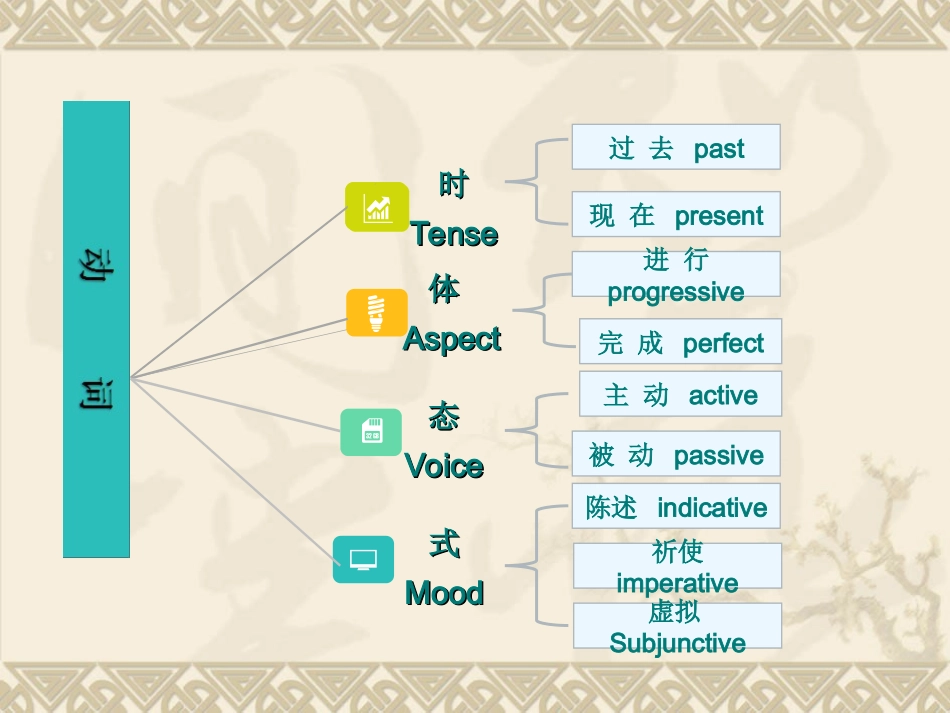
动词的时和体式式MoodMood时时TenseTense体体AspectAspect态态VoiceVoice过去past现在present进行progressive完成perfect主动active被动passive陈述indicative祈使imperative虚拟Subjunctive一般现在构成一般现在时通常用动词原形表示,但在第三人称单数后要加词尾-s或-esbe和have有特殊的人称形式(is,am,are;has,have)
用法1.表示经常发生或习惯性的动作或状态常与usually,often.always,sometimes,everyday,onceaweek等时间状语连用;有时也可不加这类状语
如:Fatheralwaysreadsnewspapersaftersupper.Wealwayscareforeachotherandhelpeachother.Weusuallygotoschoolatseveno’clockinthemorning.2.表示客观事实或普遍真理Lighttravelsmorequicklythansound.Theearthmovesaroundthesun.JapanistotheeastofChina.用法3.表示按规定、计划或时间表将要发生的事这通常限于表示“运动”的动词,如go,come,leave
start,begin,arrive,takeoff等,其后常跟有表示将来的时间状语
在这种情况下,一般现在时的意义与一般将来时的意义相同
ThedelegationarriyesinBeijingthisafternoon.Theplanetakesoffat9:20a
Thesummerholidaysbeginnextweek.4.代替将来时在由连词when,assoonas,b