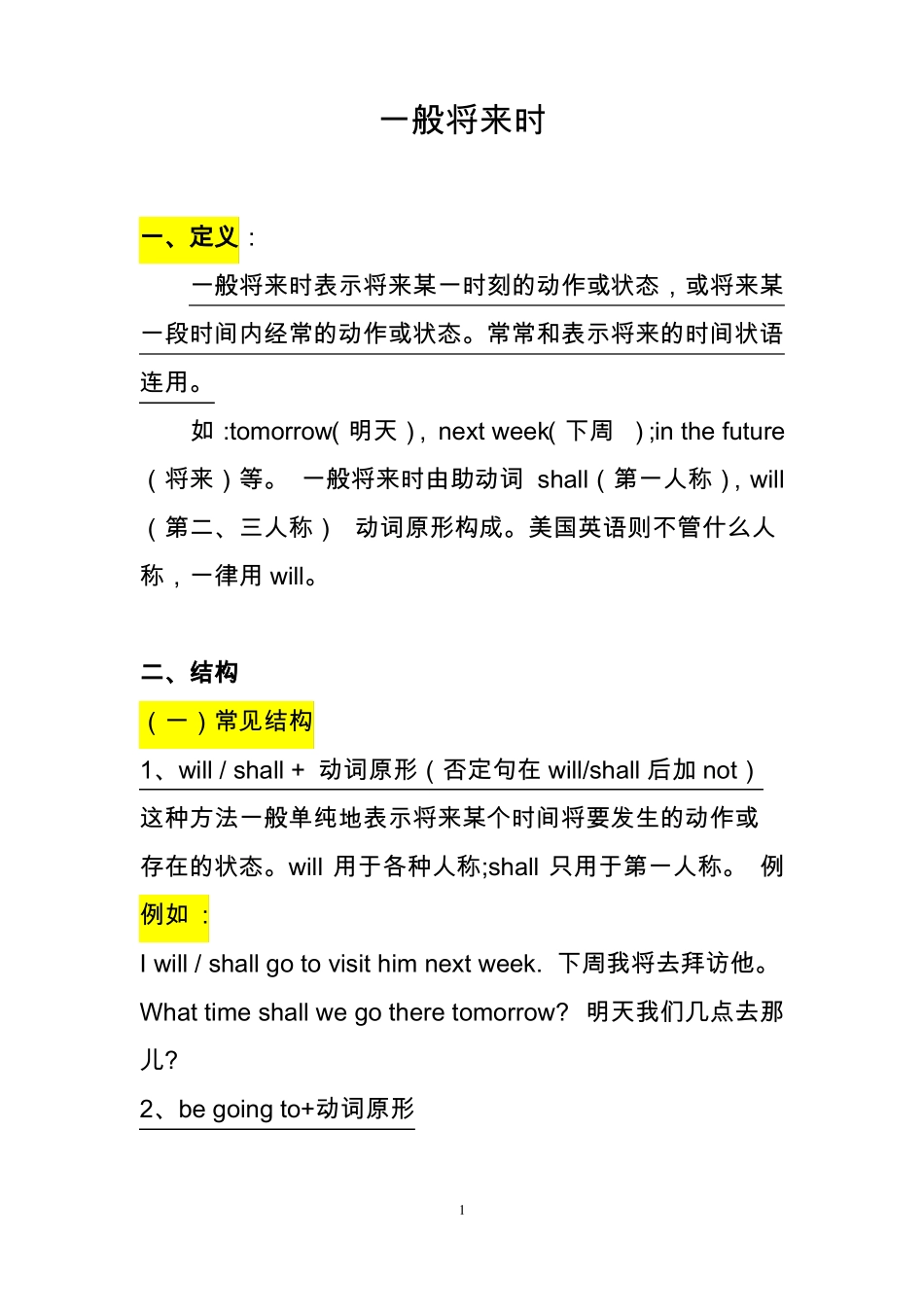
一般将来时一、定义:一般将来时表示将来某一时刻的动作或状态,或将来某一段时间内经常的动作或状态
常常和表示将来的时间状语连用
如:tomorrow(明天),next week(下周 );in the future(将来)等
一般将来时由助动词 shall(第一人称),will(第二、三人称) 动词原形构成
美国英语则不管什么人称,一律用 will
二、结构(一)常见结构1、will / shall + 动词原形(否定句在 will/shall 后加 not)这种方法一般单纯地表示将来某个时间将要发生的动作或存在的状态
will 用于各种人称;shall 只用于第一人称
例例如 :I will / shall go to visit him next week
下周我将去拜访他
What time shall we go there tomorrow
明天我们几点去那儿
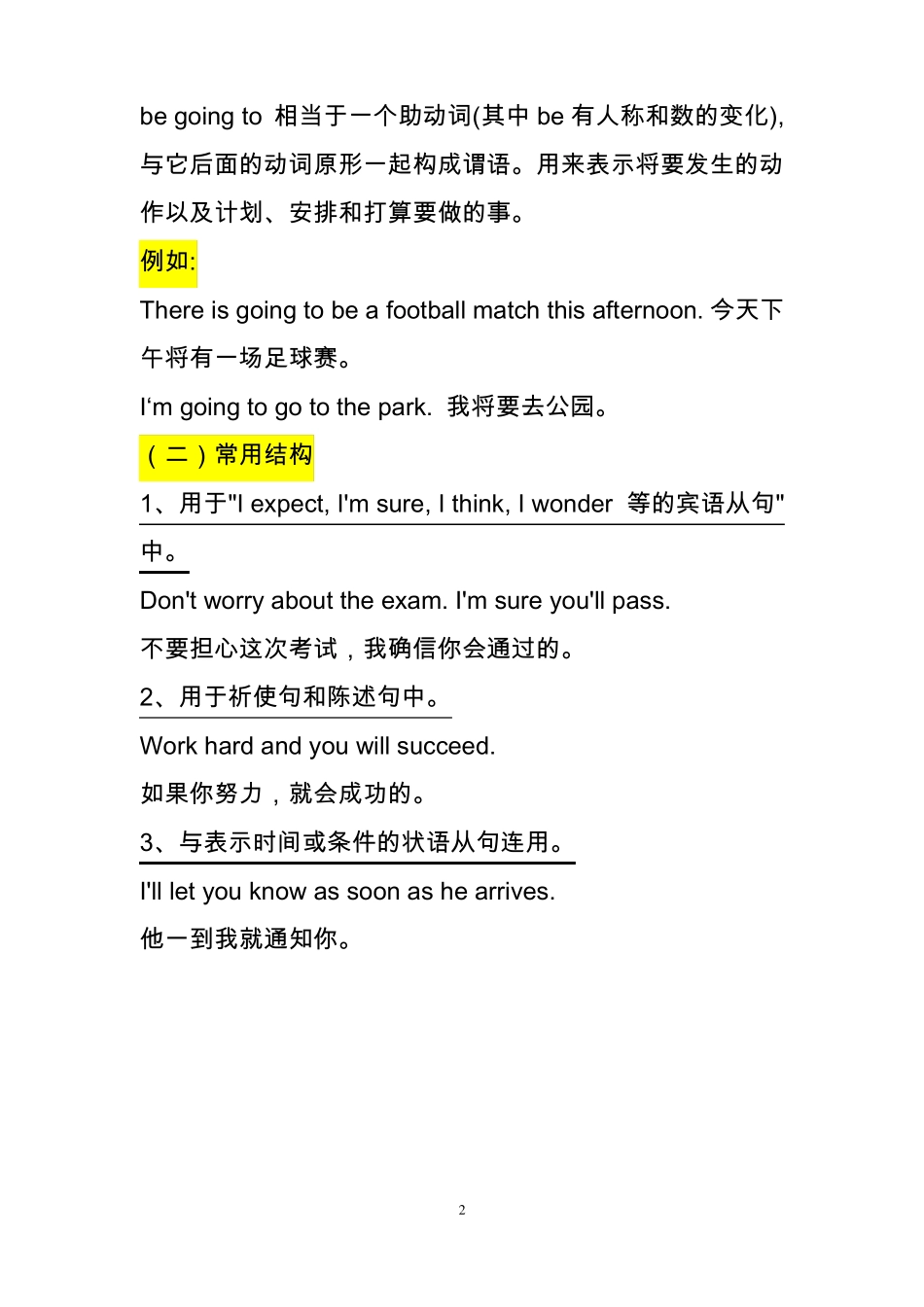
2、be going to+动词原形1be going to 相当于一个助动词(其中 be 有人称和数的变化),与它后面的动词原形一起构成谓语
用来表示将要发生的动作以及计划、安排和打算要做的事
例如:There is going to be a football match this afternoon
今天下午将有一场足球赛
I‘m going to go to the park
我将要去公园
(二)常用结构1、用于"I expect, I'm sure, I think, I wonder 等的宾语从句"中
Don't worry about the exam
I'm sure you'll pass
不要担心这次考试,我确信你会通过的
2、用于祈使句和陈述句中
Work hard and you will succeed
如果你努力,就会成功的