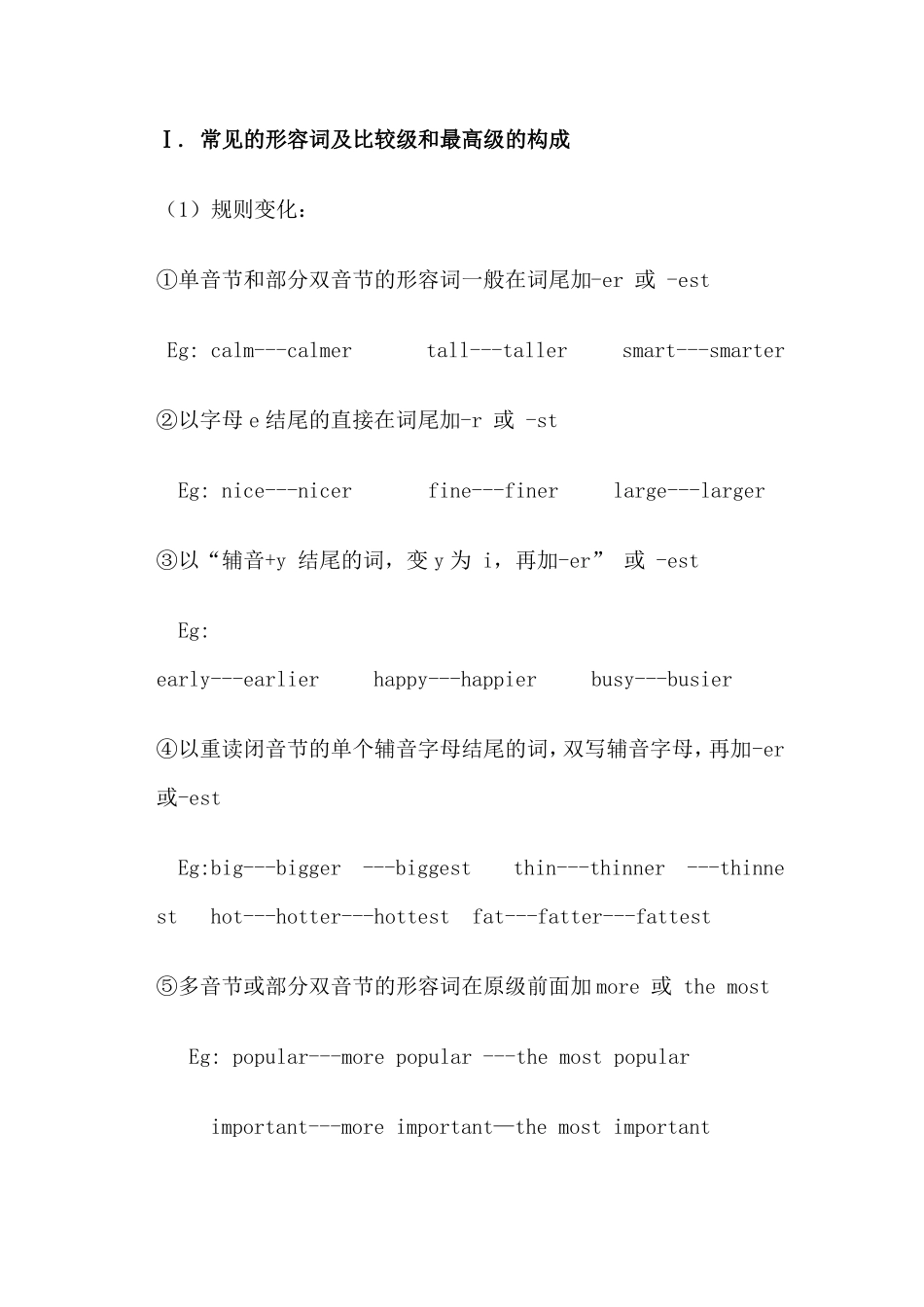
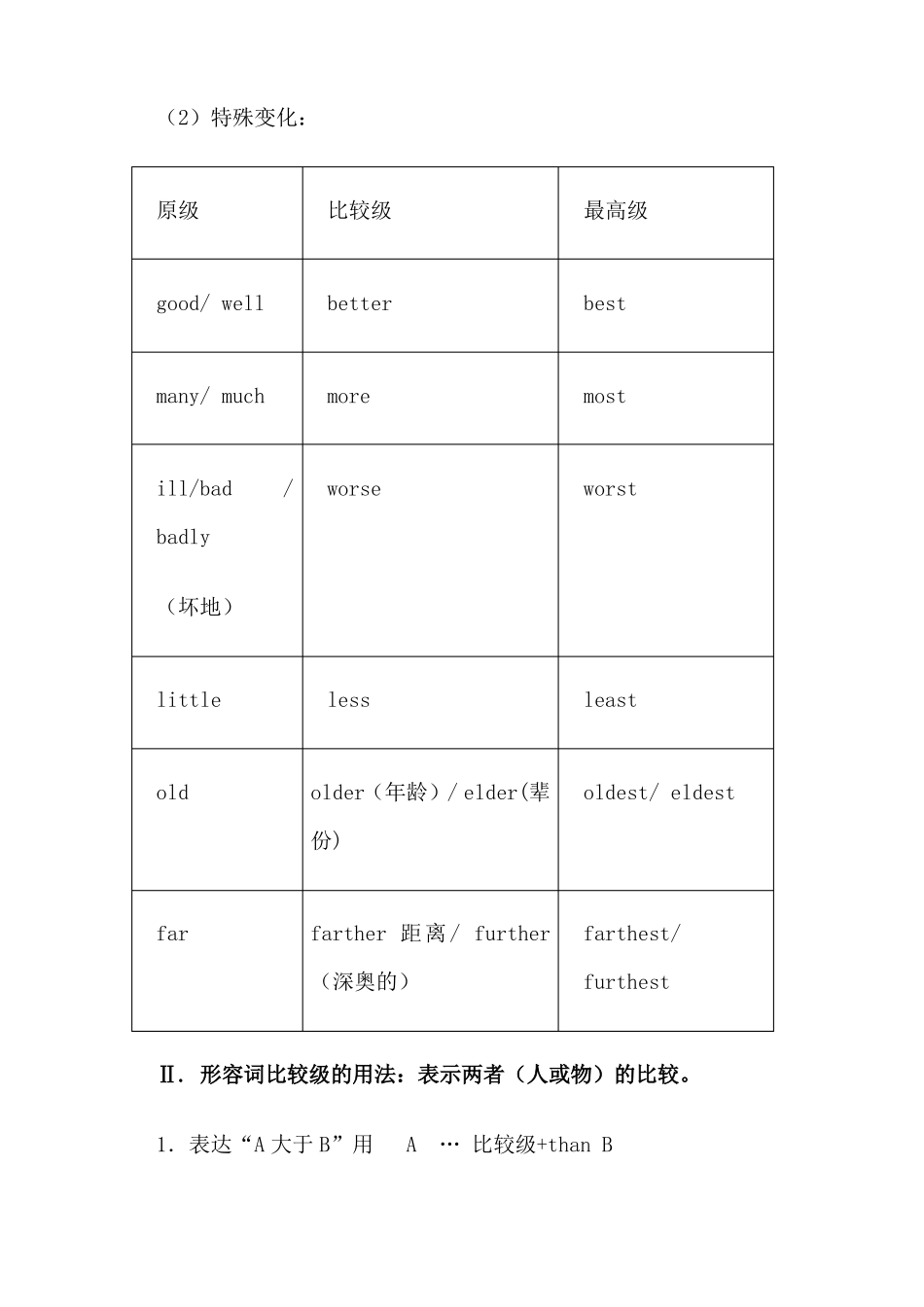
常见的形容词及比较级和最高级的构成(1)规则变化:①单音节和部分双音节的形容词一般在词尾加-er 或 -est Eg: calm---calmer tall---taller smart---smarter②以字母 e 结尾的直接在词尾加-r 或 -stEg: nice---nicer fine---finer large---larger③以“辅音+y 结尾的词,变 y 为 i,再加-er” 或 -estEg:early---earlier happy---happier busy---busier④以重读闭音节的单个辅音字母结尾的词,双写辅音字母,再加-er或-estEg:big---bigger---biggestthin---thinner---thinnest hot---hotter---hottest fat---fatter---fattest⑤多音节或部分双音节的形容词在原级前面加 more 或 the most Eg: popular---more popular ---the most popularimportant---more important—the most important(2)特殊变化:原级比较级最高级good/ wellbetterbestmany/ muchmoremostill/badbadly(坏地)/worseworstlittlelessleastoldolder(年龄)/ elder(辈份)oldest/ eldestfarfarther 距离/ further(深奥的)farthest/furthestⅡ
形容词比较级的用法:表示两者(人或物)的比较
1.表达“A 大于 B”用A … 比较级+than B①
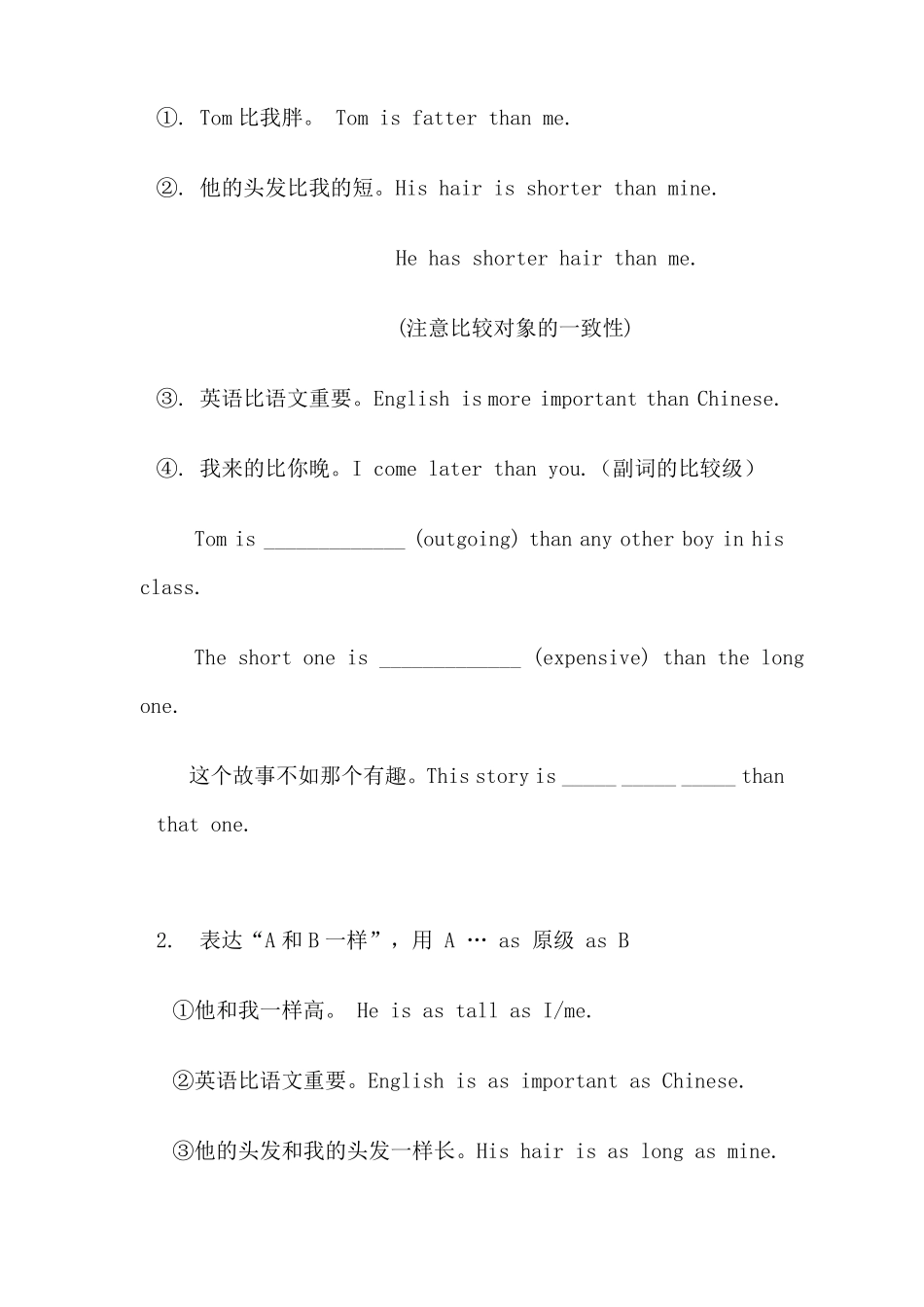
Tom 比我胖
Tom is fatter than me
他的头发比我的短
His hair