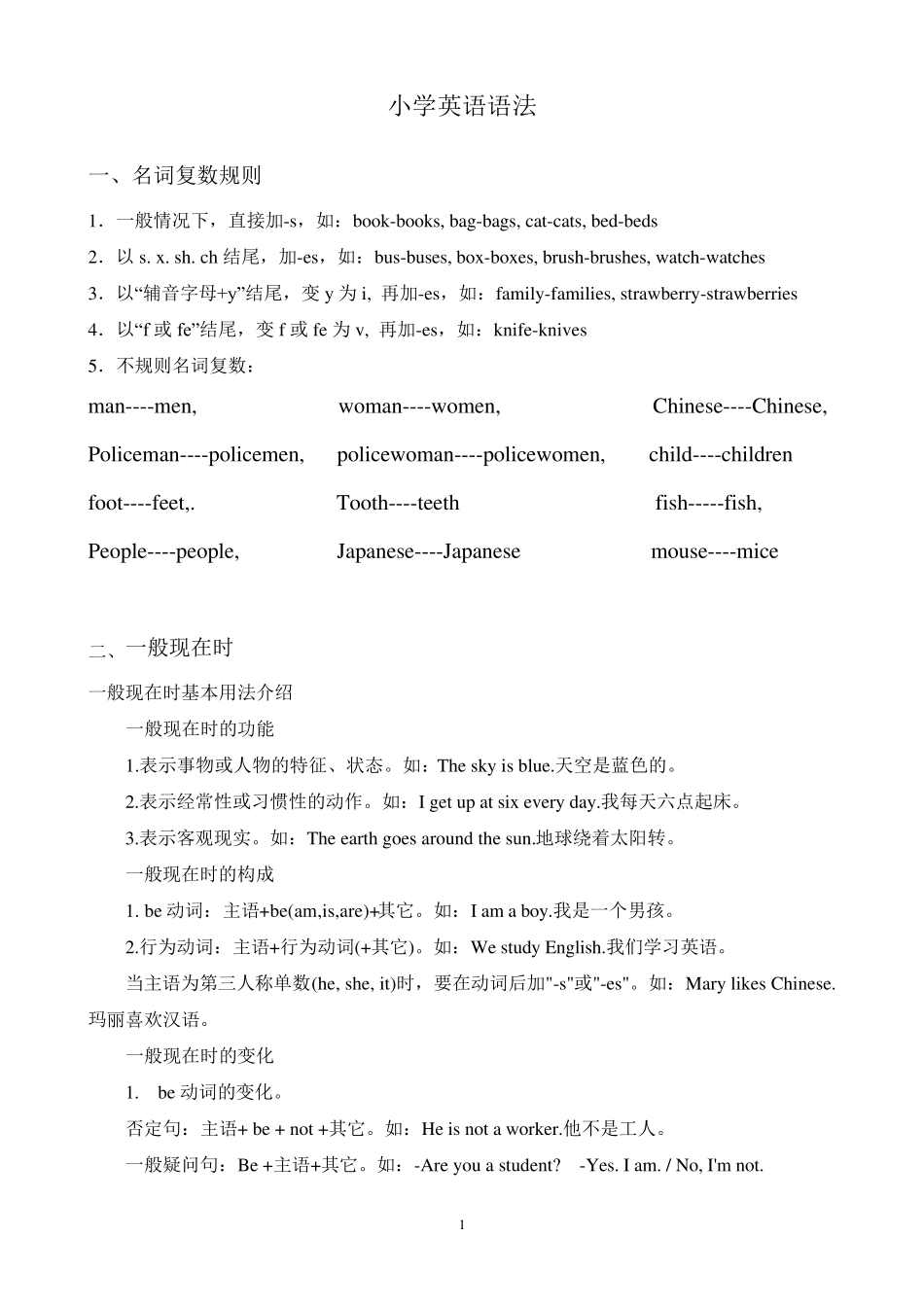
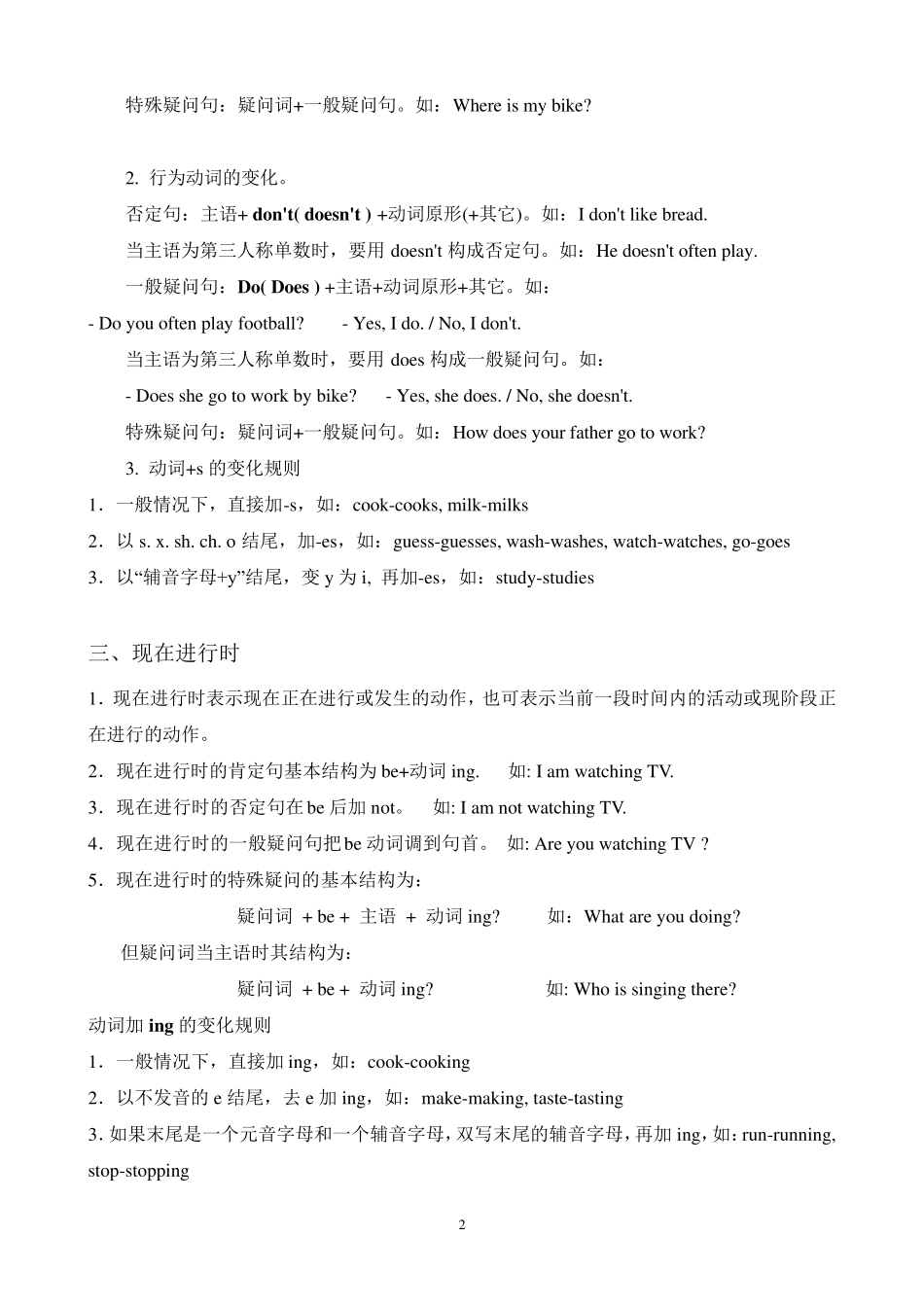
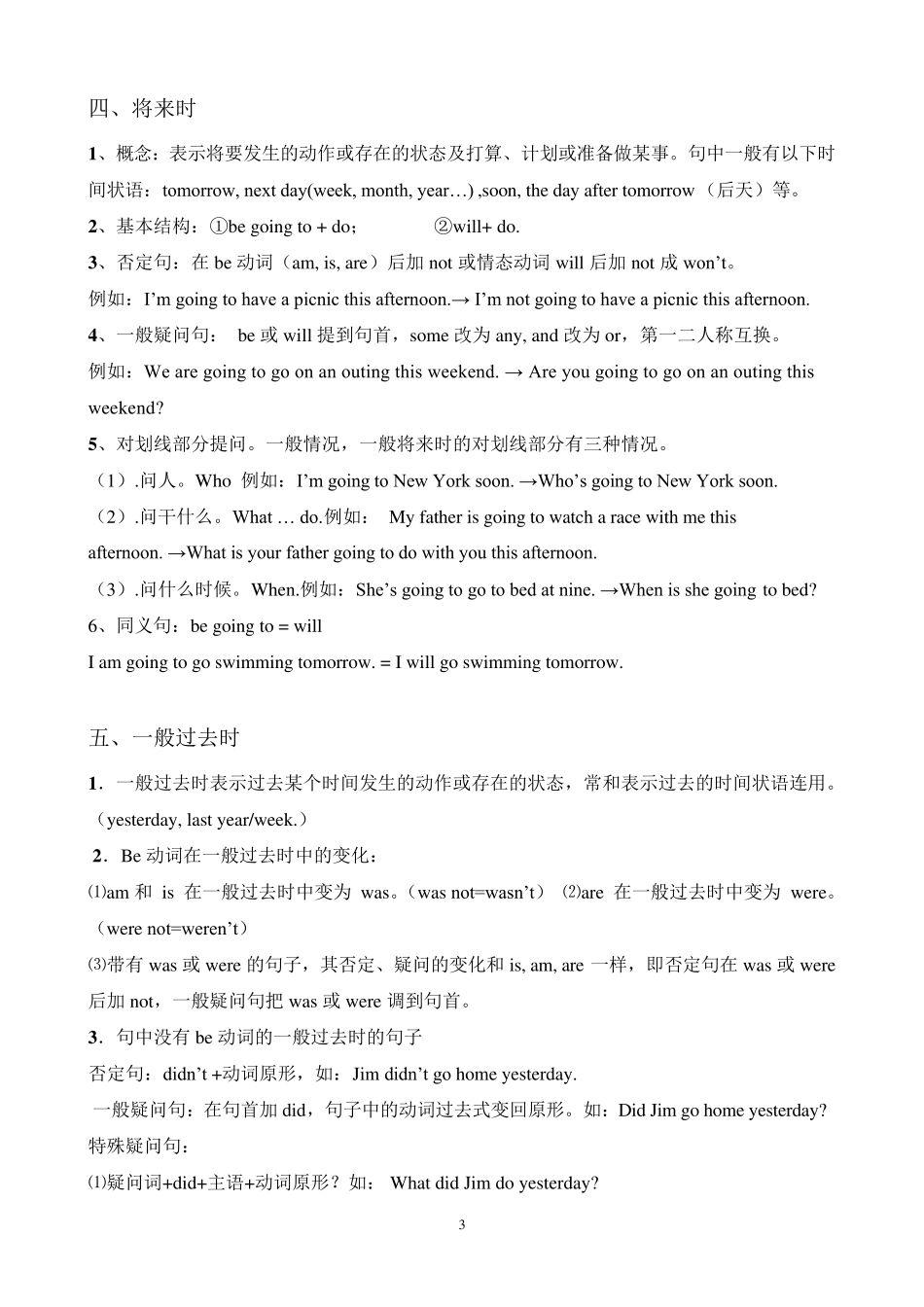
1 小学英语语法 一、名词复数规则 1.一般情况下,直接加-s,如:book-books, bag-bags, cat-cats, bed-beds 2.以 s
ch 结尾,加-es,如:bus-buses, box-boxes, brush-brushes, watch-watches 3.以“辅音字母+y”结尾,变 y为 i, 再加-es,如:family-families, strawberry-strawberries 4.以“f 或 fe”结尾,变 f 或 fe 为 v, 再加-es,如:knife-knives 5.不规则名词复数: man----men, woman----women, Chinese----Chinese, Policeman----policemen, policewoman----policewomen, child----children foot----feet,
Tooth----teeth fish-----fish, People----people, Japanese----Japanese mouse----mice 二、一般现在时 一般现在时基本用法介绍 一般现在时的功能 1
表示事物或人物的特征、状态
如:The sky is blue
天空是蓝色的
表示经常性或习惯性的动作
如:I get up at six every day
我每天六点起床
表示客观现实
如:The earth goes around the sun
地球绕着太阳转
一般现在时的构成 1
be 动词:主语+be(am,is,are)+其它
如:I am a boy
我是一个男孩
行为动词:主语+行为动词(+其它)
如:We study English
我们学习英语
当主语为第三人称单数(he, she, i