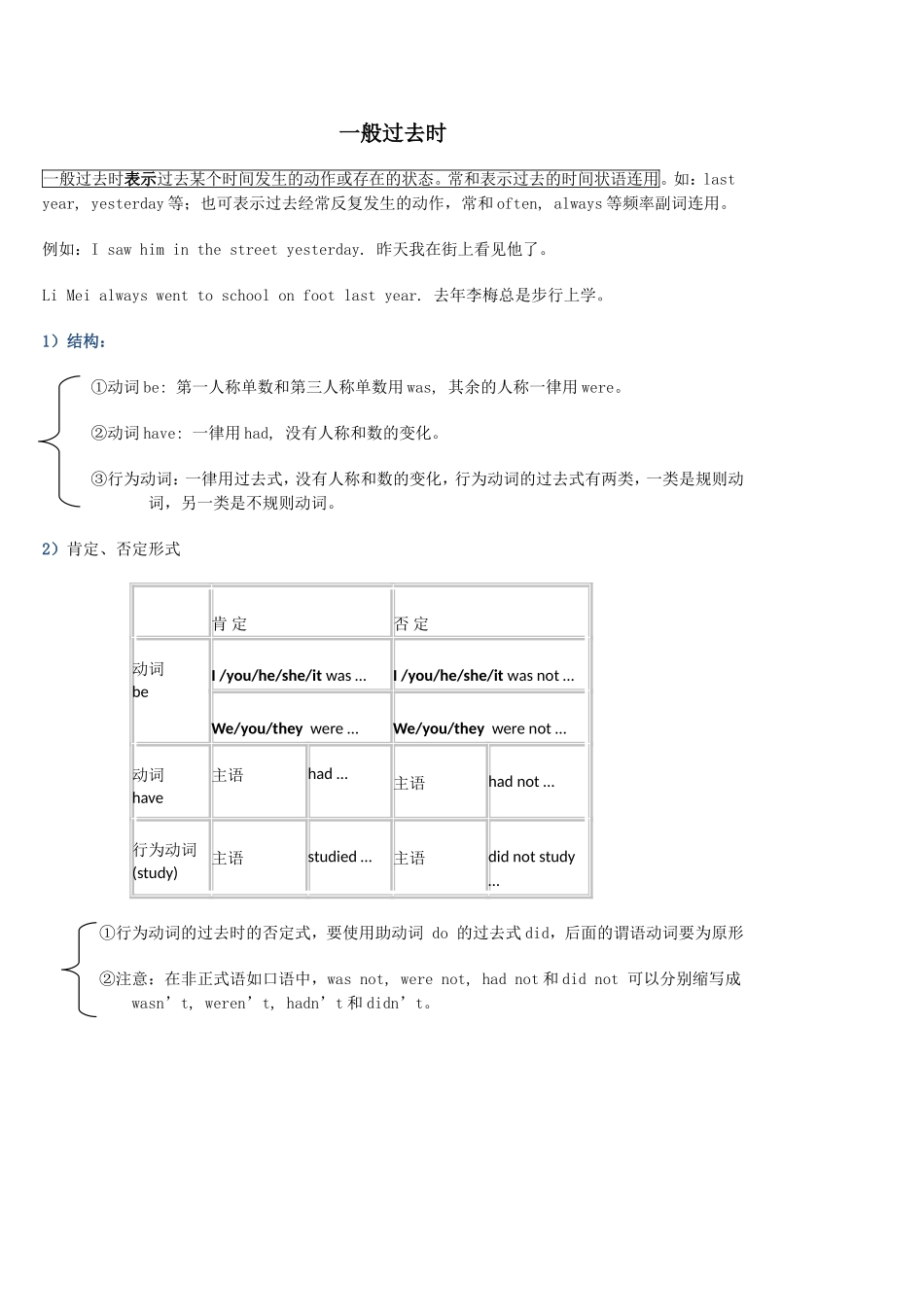
一般过去时一般过去时表示过去某个时间发生的动作或存在的状态
常和表示过去的时间状语连用
如:lastyear,yesterday等;也可表示过去经常反复发生的动作,常和often,always等频率副词连用
例如:Isawhiminthestreetyesterday
昨天我在街上看见他了
LiMeialwayswenttoschoolonfootlastyear
去年李梅总是步行上学
1)结构:①动词be:第一人称单数和第三人称单数用was,其余的人称一律用were
②动词have:一律用had,没有人称和数的变化
③行为动词:一律用过去式,没有人称和数的变化,行为动词的过去式有两类,一类是规则动词,另一类是不规则动词
2)肯定、否定形式肯定否定动词beI/you/he/she/itwas…I/you/he/she/itwasnot…We/you/theywere…We/you/theywerenot…动词have主语had…主语hadnot…行为动词(study)主语studied…主语didnotstudy…①行为动词的过去时的否定式,要使用助动词do的过去式did,后面的谓语动词要为原形②注意:在非正式语如口语中,wasnot,werenot,hadnot和didnot可以分别缩写成wasn’t,weren’t,hadn’t和didn’t
3)一般疑问句和简略回答一般疑问句简略回答动词beWereyou…
Washe…
Werethey…
Yes,主语+was/were
No,主+was/werenot
行为动词(study)Did主语+study…
Yes,主语+did
No,主语didnot
一般过去时的几种句型(这里只行为动词)肯定句结构为:主语+动词的过去式+其他
如:Hewenttothetoystoreyesterday
他昨天去玩具店了