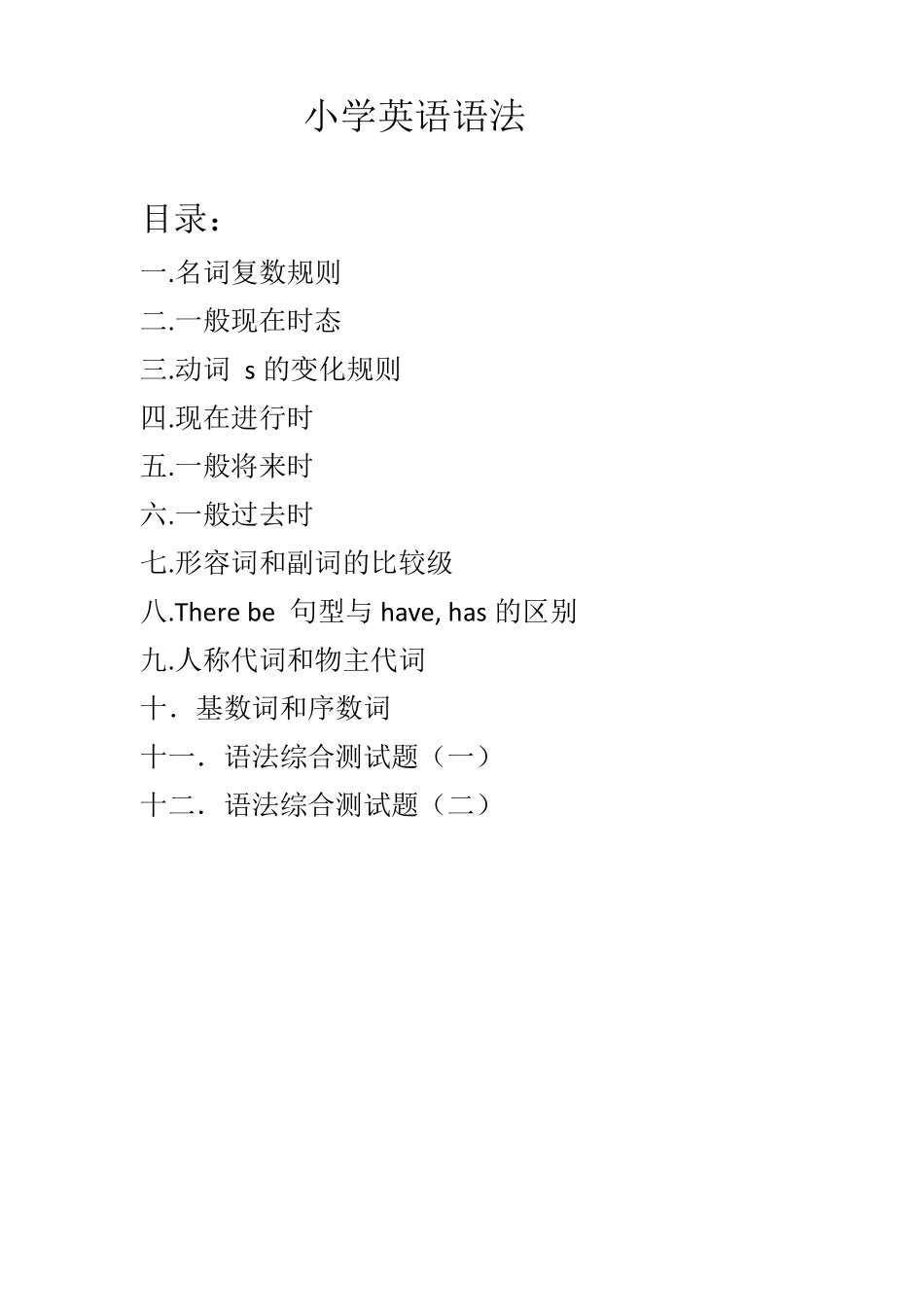
小学英语语法目录:一
名词复数规则 二
一般现在时态 三
动词 s 的变化规则四
现在进行时五
一般将来时六
一般过去时七
形容词和副词的比较级八
There be 句型与 have, has 的区别九
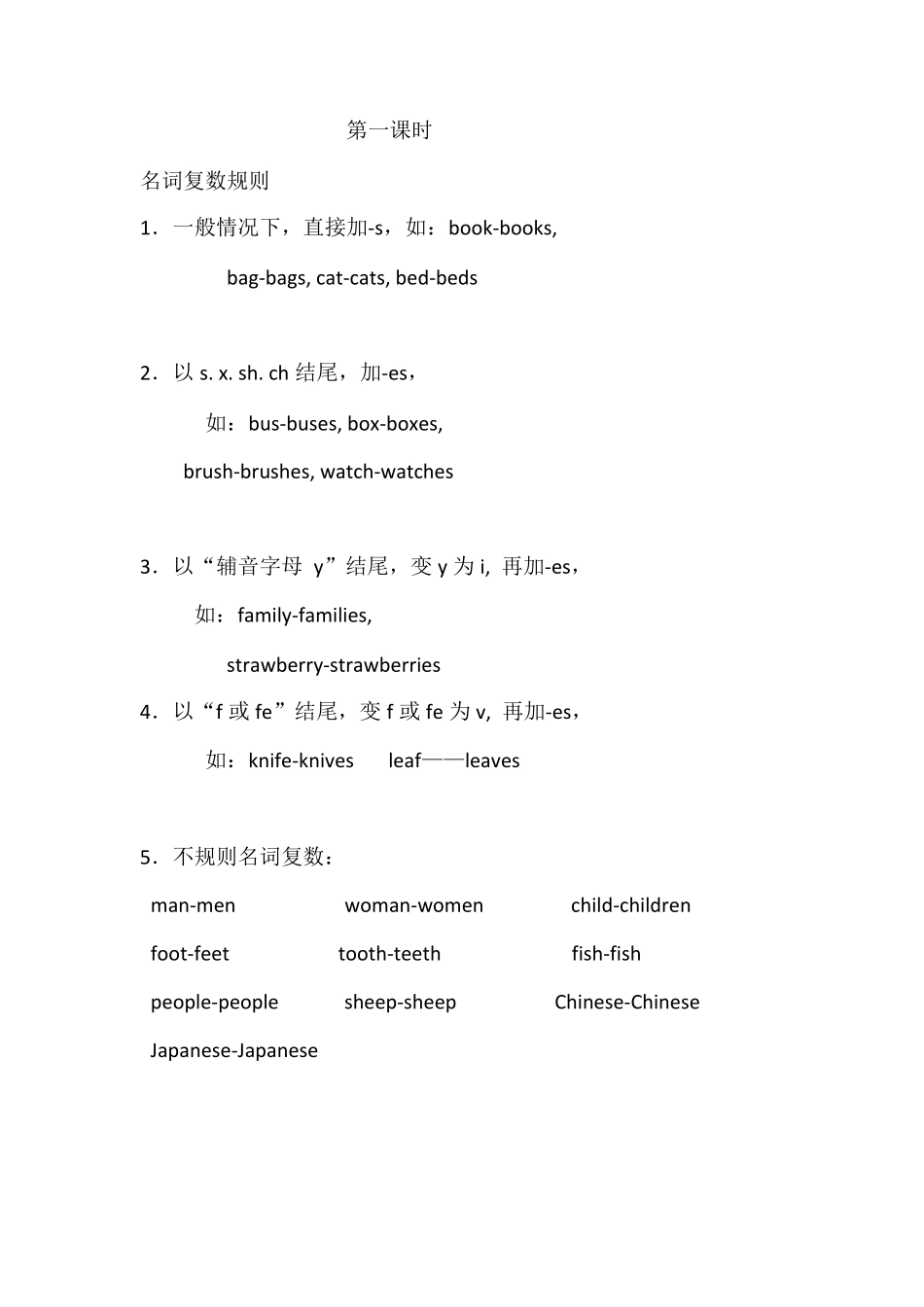
人称代词和物主代词十.基数词和序数词十一.语法综合测试题(一)十二.语法综合测试题(二) 第一课时名词复数规则1.一般情况下,直接加-s,如:book-books, bag-bags, cat-cats, bed-beds2.以s
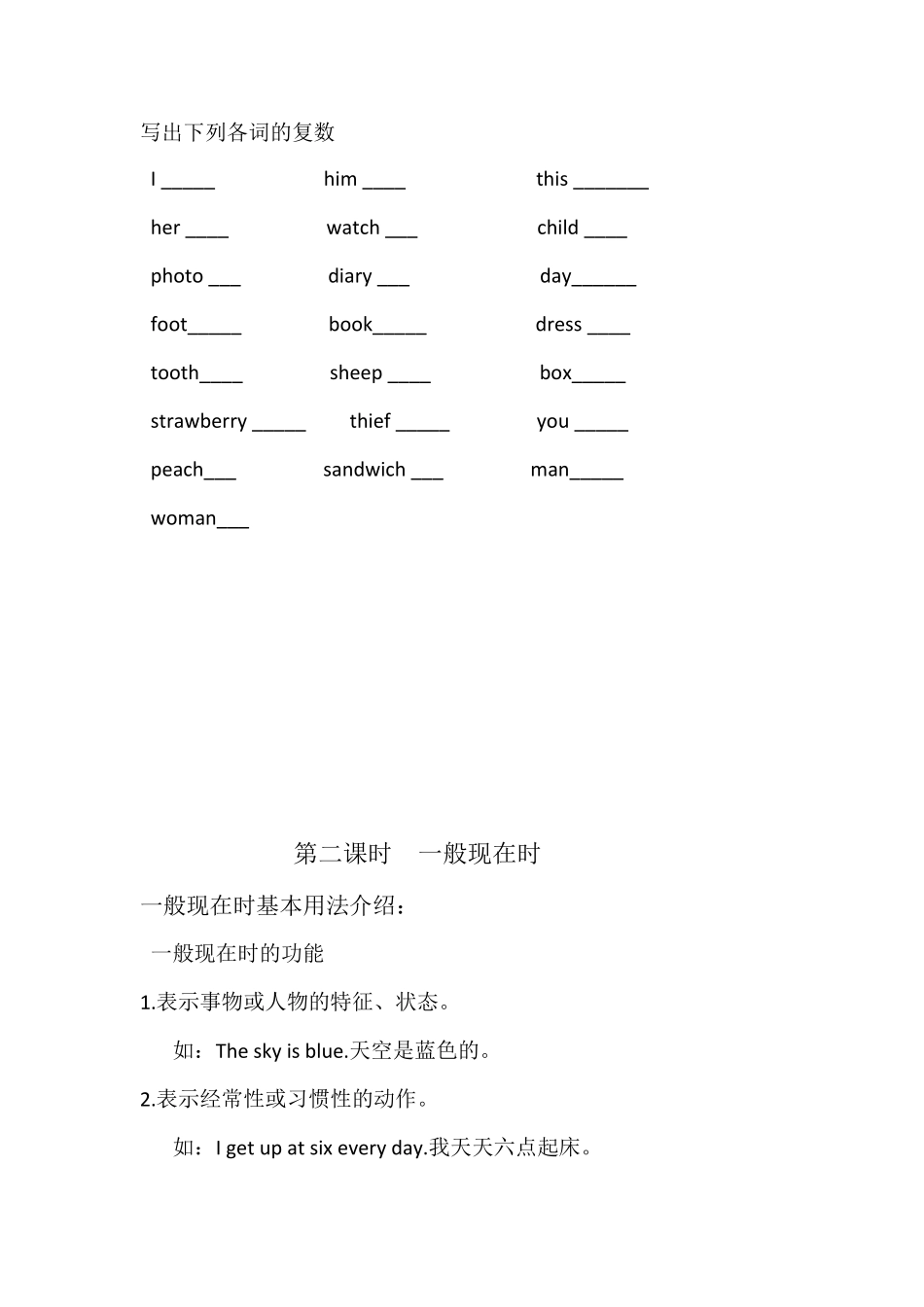
ch 结尾,加-es, 如:bus-buses, box-boxes, brush-brushes, watch-watches3.以“辅音字母 y”结尾,变y 为i, 再加-es, 如:family-families, strawberry-strawberries4.以“f 或fe”结尾,变f 或fe 为v, 再加-es, 如:knife-knives leaf——leaves 5.不规则名词复数: man-men woman-women child-children foot-feet tooth-teeth fish-fish people-people sheep-sheep Chinese-Chinese Japanese-Japanese写出下列各词的复数 I _____ him ____ this _______ her ____ watch ___ child ____ photo ___ diary ___ day______ foot_____ book_____ dress ____ tooth____ sheep ____ box_____ strawberry _____ thief _____ you _____ peach___ sandwich ___ man_____ woman___ 第二课时