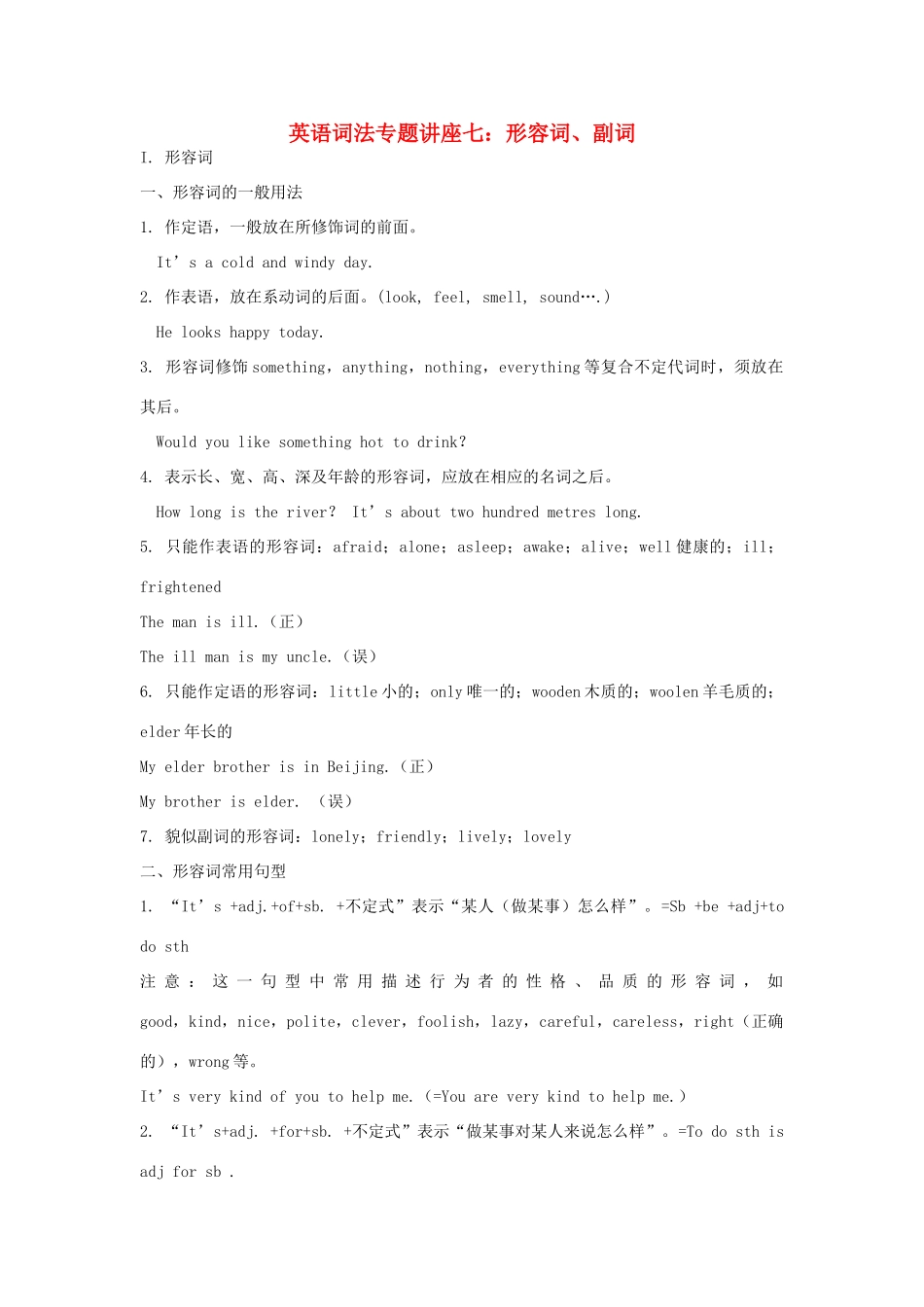
英语词法专题讲座七:形容词、副词I
形容词一、形容词的一般用法1
作定语,一般放在所修饰词的前面
It’s a cold and windy day
作表语,放在系动词的后面
(look, feel, smell, sound…
) He looks happy today
形容词修饰 something,anything,nothing,everything 等复合不定代词时,须放在其后
Would you like something hot to drink
表示长、宽、高、深及年龄的形容词,应放在相应的名词之后
How long is the river
It’s about two hundred metres long
只能作表语的形容词:afraid;alone;asleep;awake;alive;well 健康的;ill;frightenedThe man is ill
(正)The ill man is my uncle
只能作定语的形容词:little 小的;only 唯一的;wooden 木质的;woolen 羊毛质的;elder 年长的My elder brother is in Beijing
(正)My brother is elder
貌似副词的形容词:lonely;friendly;lively;lovely 二、形容词常用句型1
“It’s +adj
+of+sb
+不定式”表示“某人(做某事)怎么样”
=Sb +be +adj+to do sth 注 意 : 这 一 句 型 中 常 用 描 述 行 为 者 的 性 格 、 品 质 的 形 容 词 , 如good,kind,nice,polite,clever,foolish,lazy,careful,careless,ri