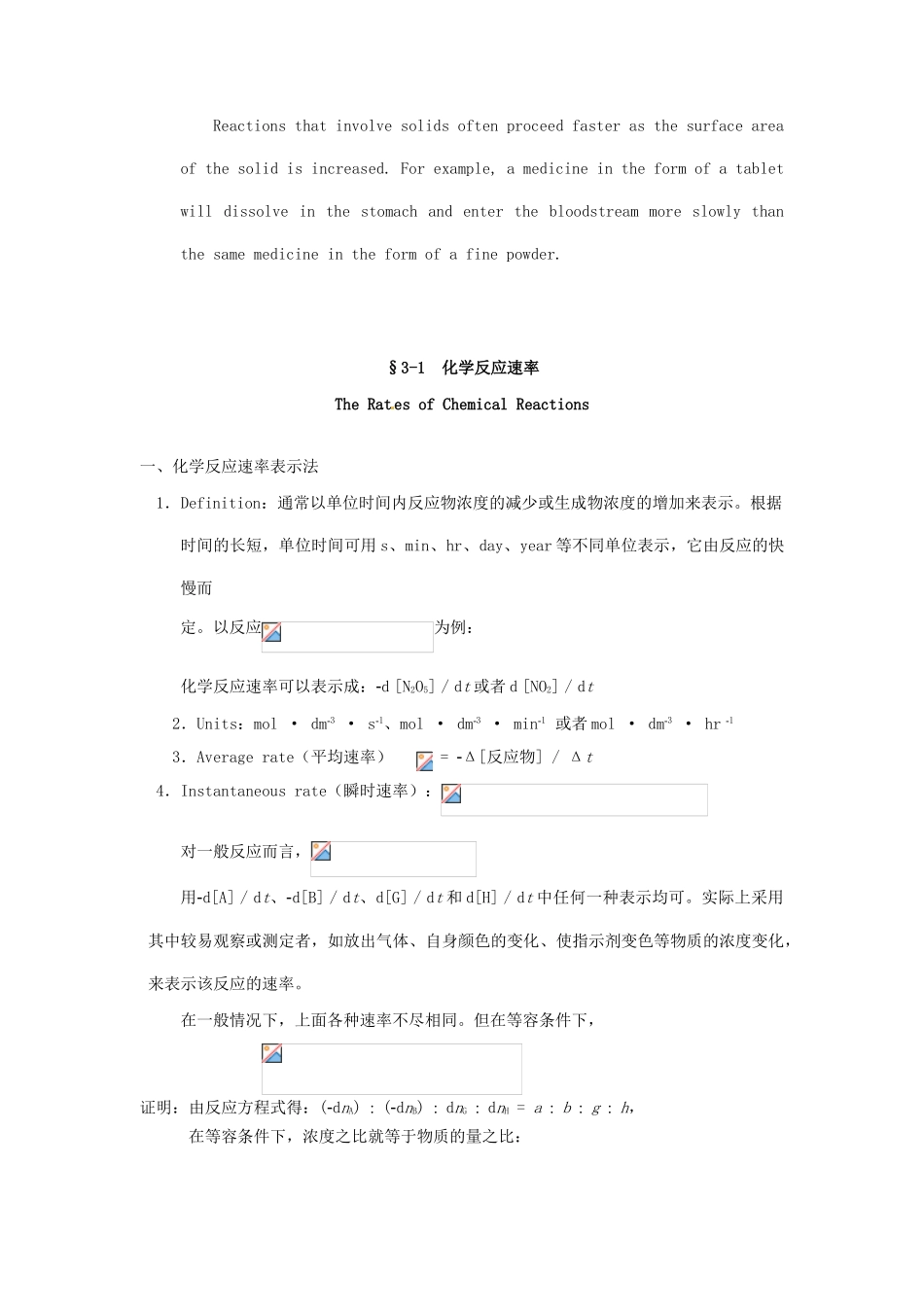
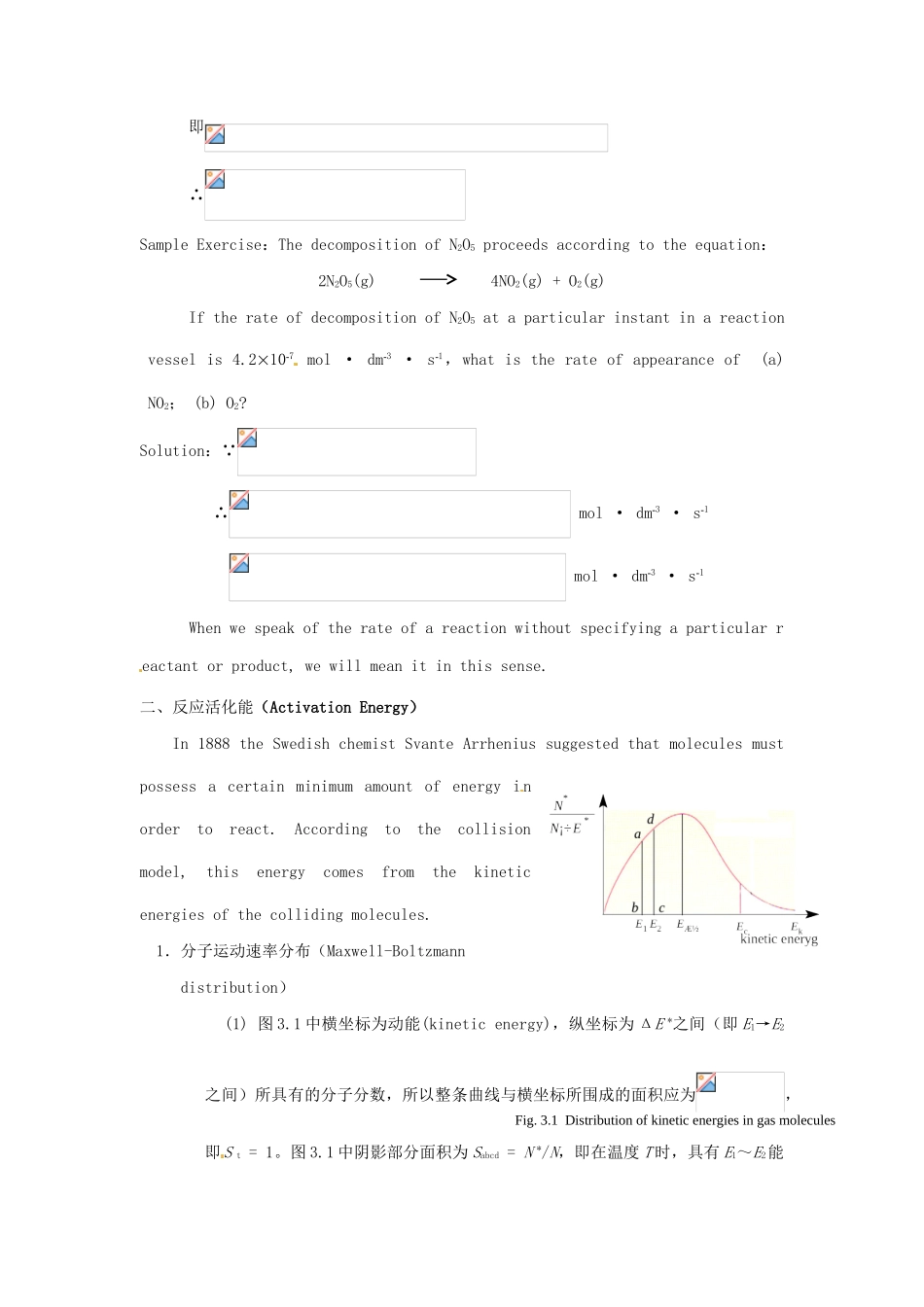
第三章 化学动力学基础Chapter 3 The Basis of Chemical Dynamics化学热力学成功预测了化学反应自发进行的方向,如:2K(s) + 2H2O(l)2K+(aq) + 2OH-(aq) + H2(g) Δ rGm, 298K = 404
82 kJ·mol1 Δ rGm, 298K = 228
59 kJ·mol1 这两个反应的 ΔG298<0,所以此两个反应在 298K 时向正反应方向进行有利,但它们的化学反应速率却相差十万八千里:钾在水中的反应十分迅速剧烈,以至于燃烧;而把 H2和O2的混合物于常温、常压下放置若干年,也观测不出反应的进行
前一类化学反应属于热力学控制的反应;后一类化学反应属于动力学控制的反应
研究化学反应速率有着十分重要的实际意义
若炸药爆炸的速率不快,水泥硬化的速率很慢,那么它们就不会有现在这样大的用途;相反,如果橡胶迅速老化变脆,钢铁很快被腐蚀,那么它们就没有了应用价值
研究反应速率对生产和人类生活都是十分重要的
在中学,我们已学过影响化学反应速率的因素: 1.The concentrations of the reactants:Steel wool burns with difficulty in air, which contains 20 percents O2 , but burst into a brilliant white flame in pure oxygen
2.The temperature at which the reaction occur:The rates of chemical reactions increase as temperature is increased
It’s for this reason that we refrigerate perishable