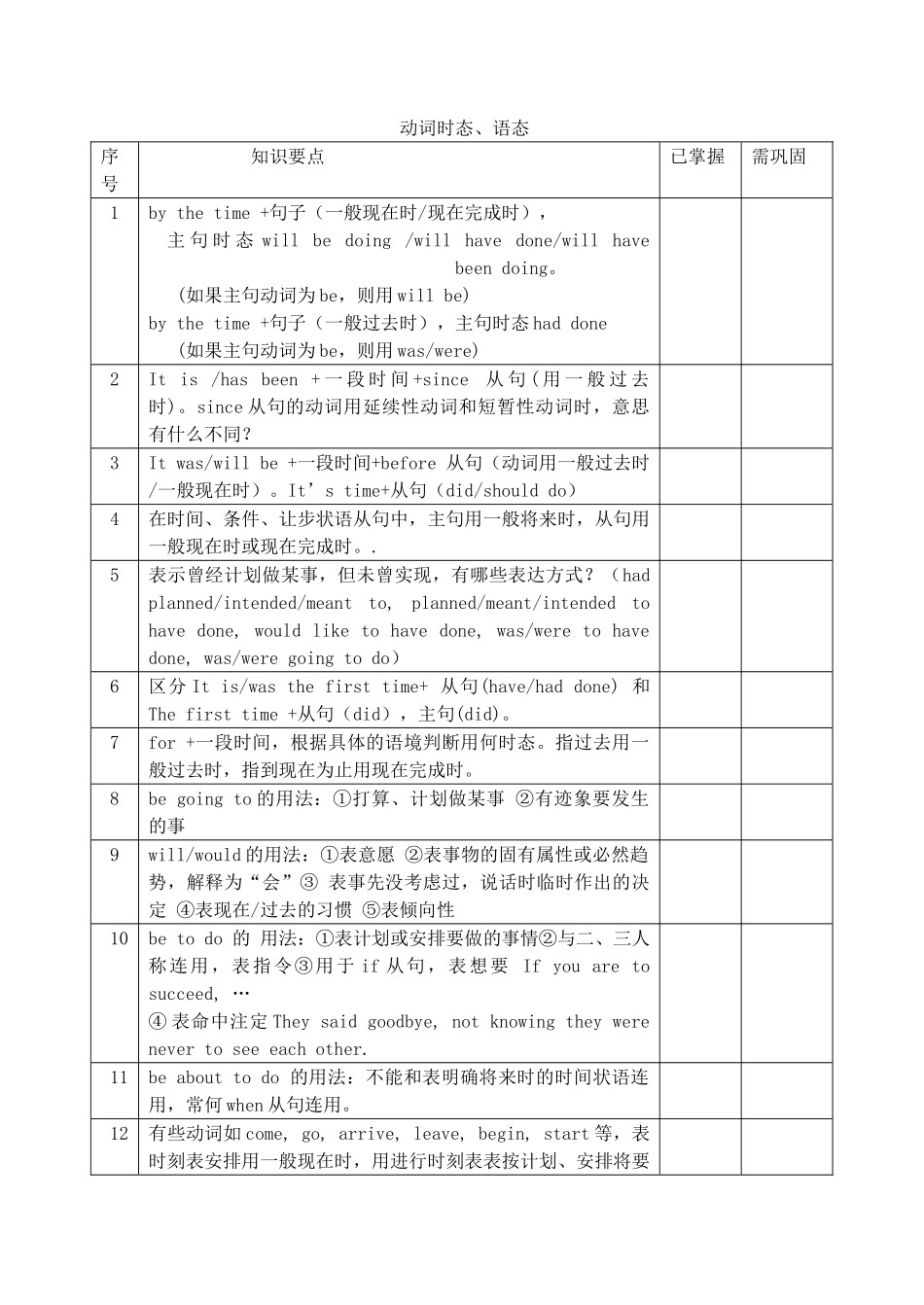
动词时态、语态序号 知识要点已掌握需巩固 1by the time +句子(一般现在时/现在完成时), 主 句 时 态 will be doing /will have done/will have been doing
(如果主句动词为 be,则用 will be)by the time +句子(一般过去时),主句时态 had done(如果主句动词为 be,则用 was/were) 2It is /has been + 一 段 时 间 +since 从 句 ( 用 一 般 过 去时)
since 从句的动词用延续性动词和短暂性动词时,意思有什么不同
3It was/will be +一段时间+before 从句(动词用一般过去时/一般现在时)
It’s time+从句(did/should do) 4在时间、条件、让步状语从句中,主句用一般将来时,从句用一般现在时或现在完成时
5表示曾经计划做某事,但未曾实现,有哪些表达方式
(had planned/intended/meant to, planned/meant/intended to have done, would like to have done, was/were to have done, was/were going to do) 6区分 It is/was the first time+ 从句(have/had done) 和 The first time +从句(did),主句(did)
7for +一段时间,根据具体的语境判断用何时态
指过去用一般过去时,指到现在为止用现在完成时
8be going to 的用法:①打算、计划做某事 ②有迹象要发生的事 9will/would 的用法:①表意愿 ②表事物的固有属性或必然趋势,解释为“会”③ 表事先没考虑过,说话时临时作出的决定 ④表现在/