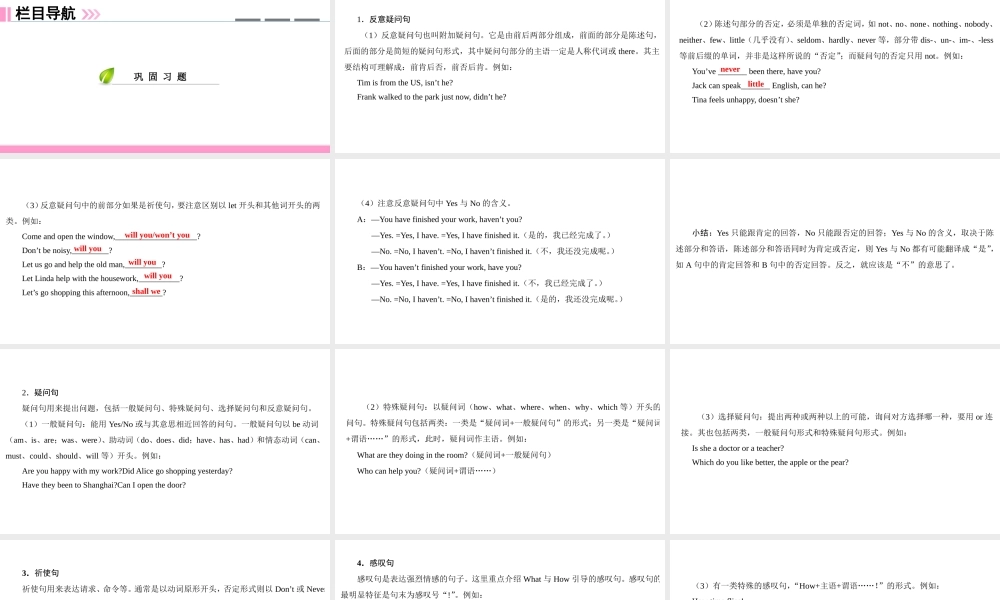
Unit 1 Wise men in history第 3 课时 单元语法讲解栏目导航巩 固 习 题1.反意疑问句 (1)反意疑问句也叫附加疑问句
它是由前后两部分组成,前面的部分是陈述句,后面的部分是简短的疑问句形式,其中疑问句部分的主语一定是人称代词或 there
其主要结构可理解成:前肯后否,前否后肯
例如: Tim is from the US, isn’t he
Frank walked to the park just now, didn’t he
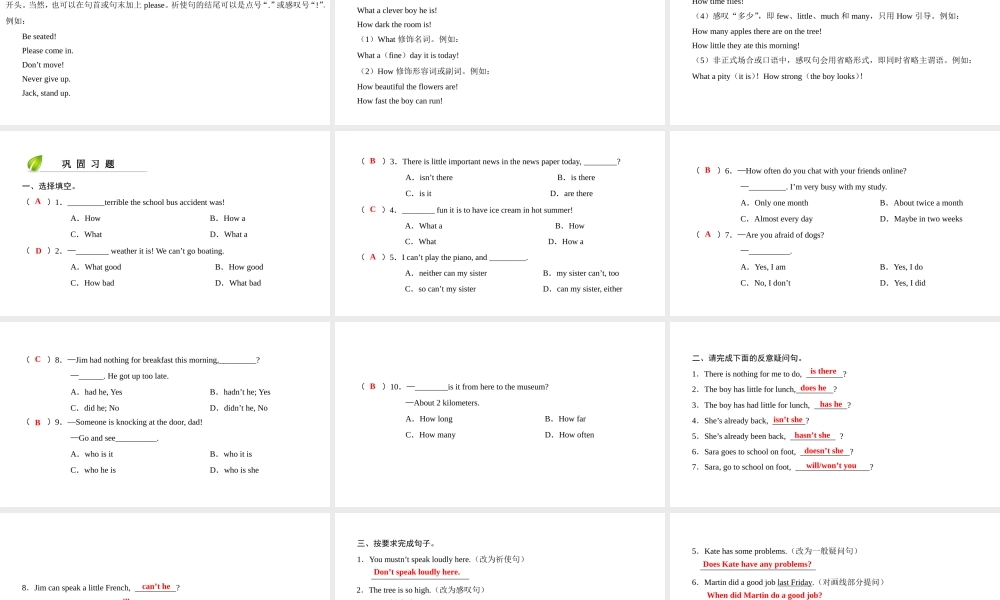
(2)陈述句部分的否定,必须是单独的否定词,如 not、no、none、nothing、nobody、neither、few、little(几乎没有)、seldom、hardly、never 等,部分带 dis-、un-、im-、-less等前后缀的单词,并非是这样所说的“否定”;而疑问句的否定只用 not
例如: You’ve _______ been there, have you
Jack can speak_______ English, can he
Tina feels unhappy, doesn’t she
never little (3)反意疑问句中的前部分如果是祈使句,要注意区别以 let 开头和其他词开头的两类
例如: Come and open the window,____________________
Don’t be noisy,_________
Let us go and help the old man,_________
Let Linda help with the housework,__________
Let’s go shopping this afternoon,________
will you/won’t you will you will