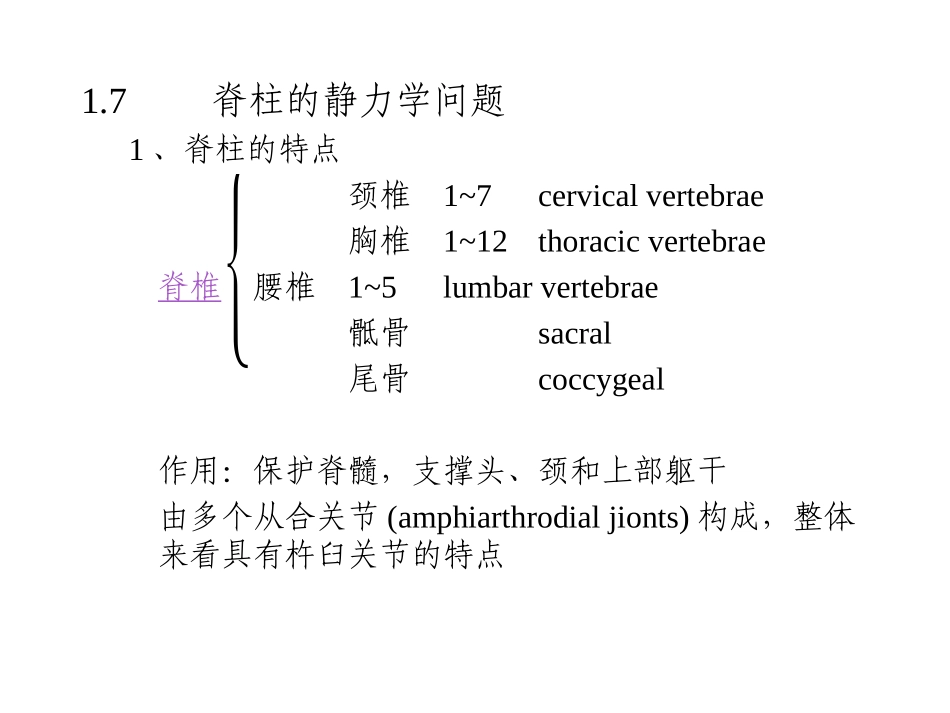
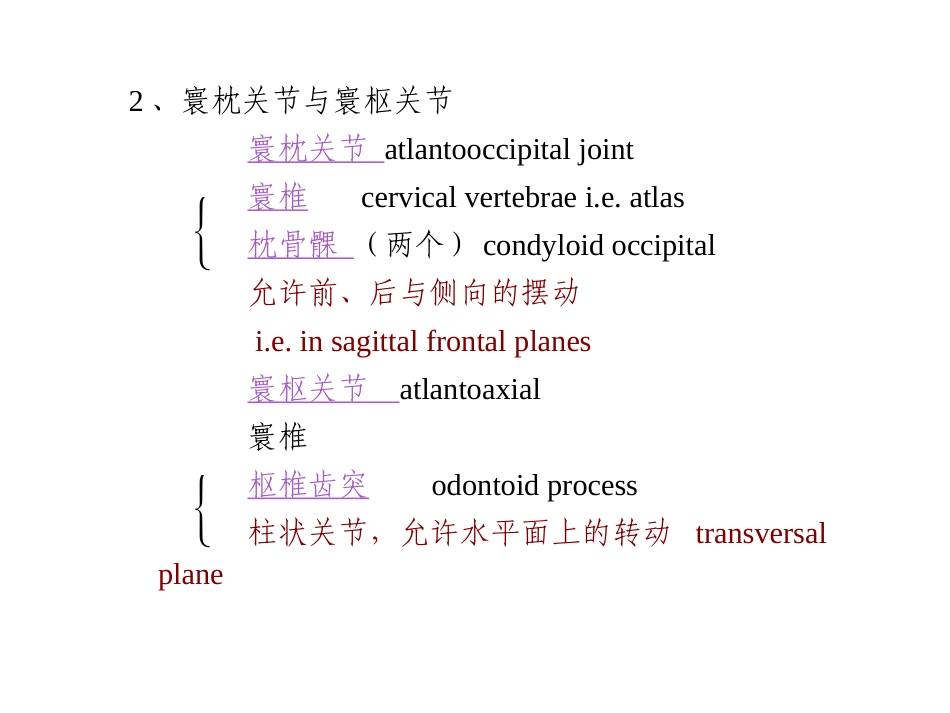
7脊柱的静力学问题1、脊柱的特点颈椎1~7cervicalvertebrae胸椎1~12thoracicvertebrae脊椎腰椎1~5lumbarvertebrae骶骨sacral尾骨coccygeal作用:保护脊髓,支撑头、颈和上部躯干由多个从合关节(amphiarthrodialjionts)构成,整体来看具有杵臼关节的特点2、寰枕关节与寰枢关节寰枕关节atlantooccipitaljoint寰椎cervicalvertebraei
atlas枕骨髁(两个)condyloidoccipital允许前、后与侧向的摆动i
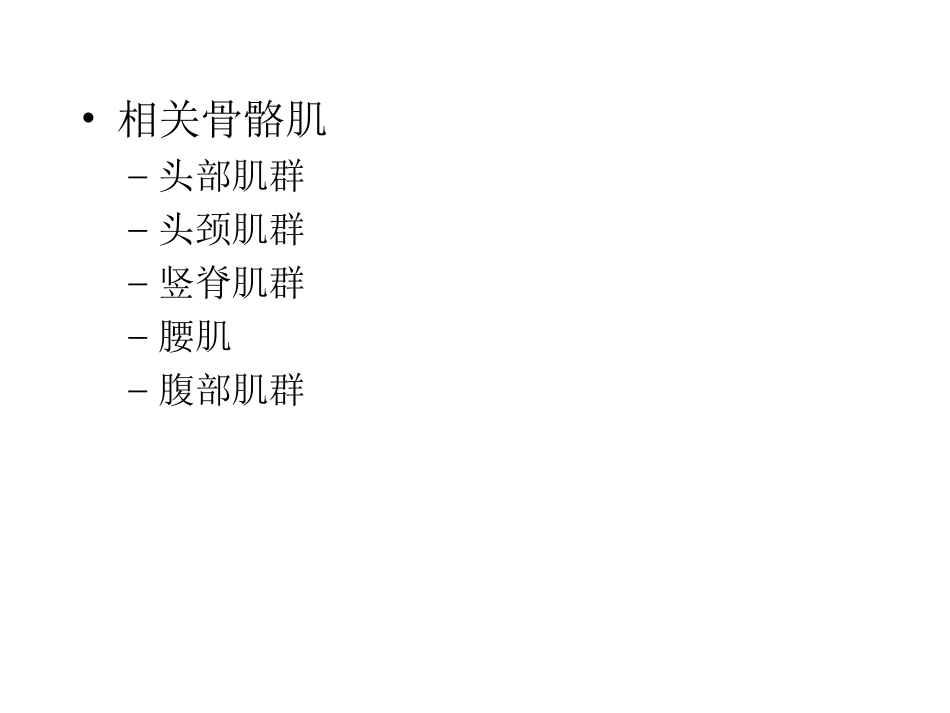
insagittalfrontalplanes寰枢关节atlantoaxial寰椎枢椎齿突odontoidprocess柱状关节,允许水平面上的转动transversalplane•相关骨骼肌–头部肌群–头颈肌群–竖脊肌群–腰肌–腹部肌群3
相关的骨骼肌头部肌肉起点止点功能头夹肌Spleniuscapitus下部颈椎和上部胸椎Spinesofupperthoracicvertebrae乳突后侧和上项线Backofmastoidprocessandsuperiornuchalline使头部伸、旋转和侧弯胸锁乳突肌Sternoclei-domastoid胸骨柄前,锁骨上侧端twoheadsfrommanubriumanduppersurfaceofclavicle乳突和上项线外侧1/3outersurfaceofmastoidprocessandlateral1/3ofsuperiornuchalline旋转、侧弯头颈,提胸骨及肋骨支配头部运动的其他肌群4
舌骨上肌群和舌骨下肌群功能:提升及沉降舌骨suprahyoidmusclesandinfrahyoidmuscles5
肩胛提肌Levatorscapulae(aswehaveknow