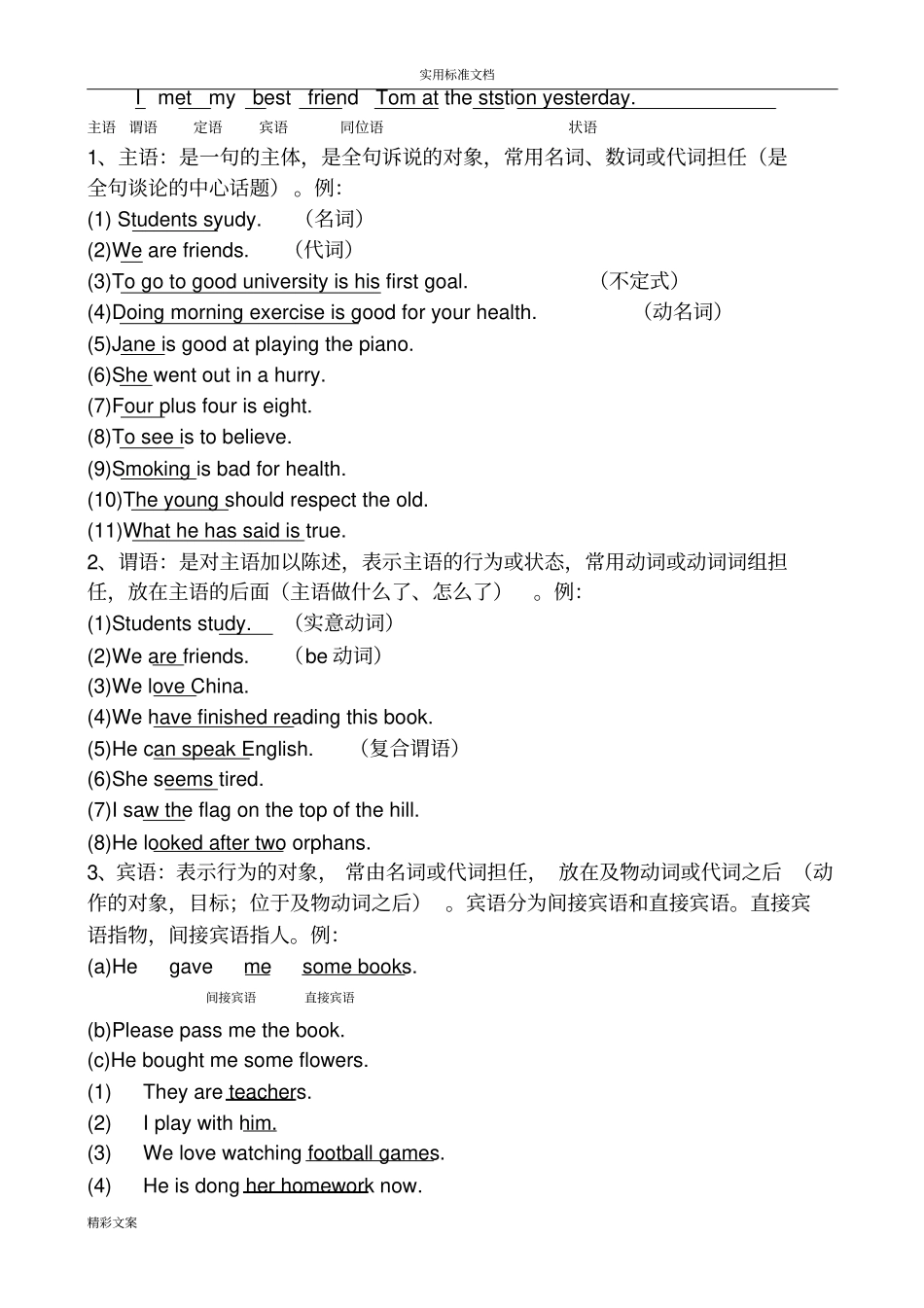
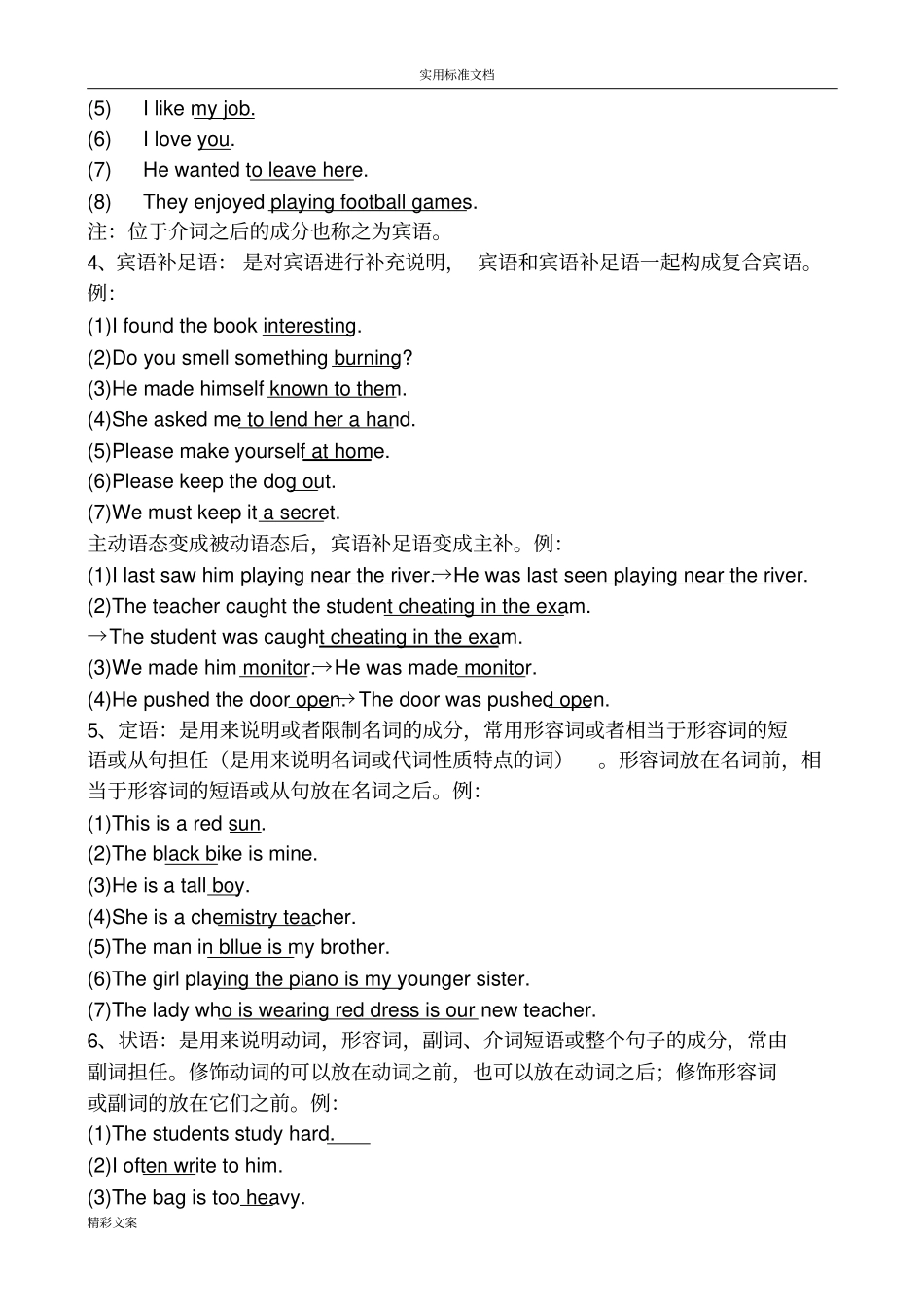
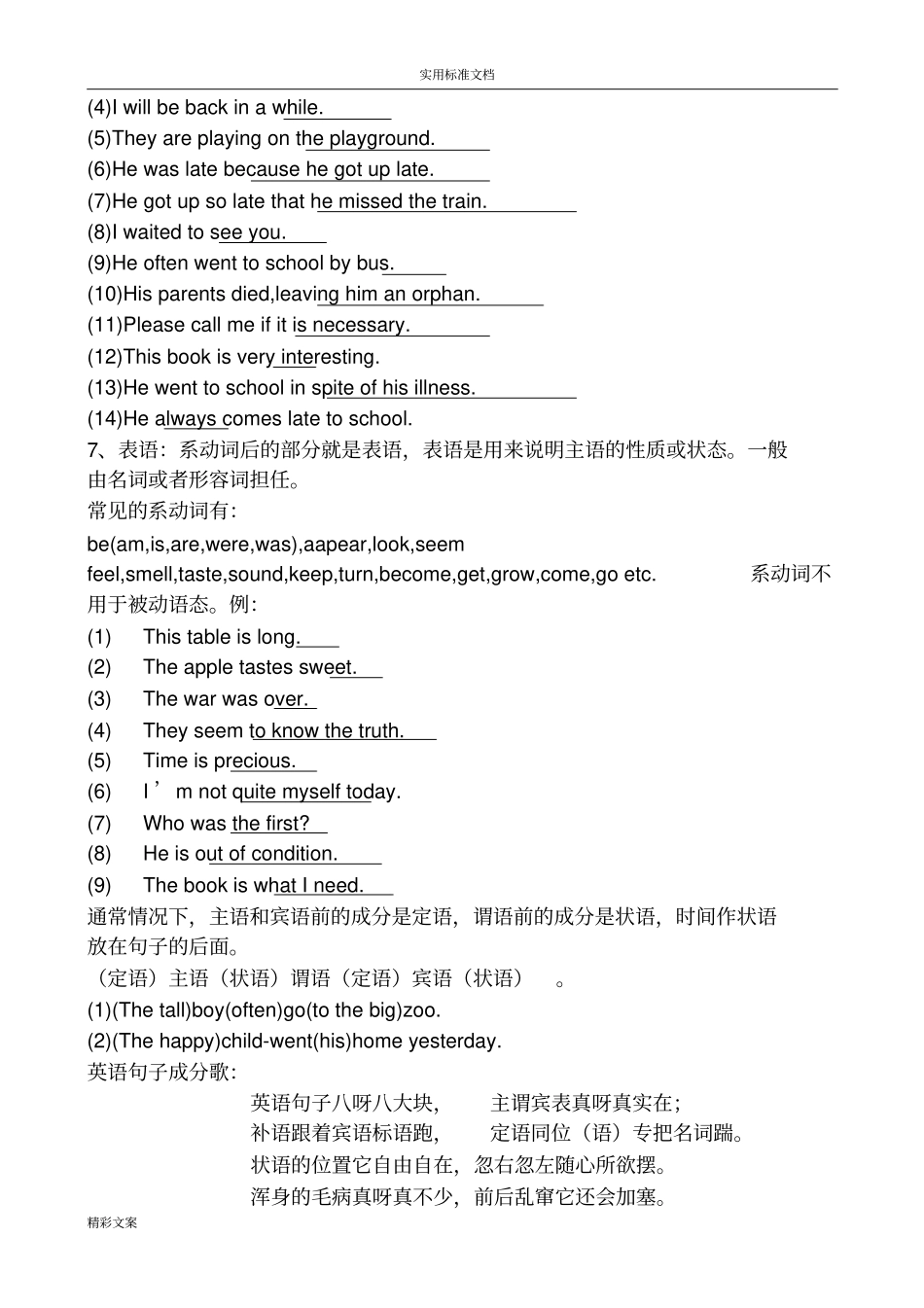
实用标准文档精彩文案ImetmybestfriendTomattheststionyesterday
主语谓语定语宾语同位语状语1、主语:是一句的主体,是全句诉说的对象,常用名词、数词或代词担任(是全句谈论的中心话题)
例:(1)Studentssyudy
(名词)(2)Wearefriends
(代词)(3)Togotogooduniversityishisfirstgoal
(不定式)(4)Doingmorningexerciseisgoodforyourhealth
(动名词)(5)Janeisgoodatplayingthepiano
(6)Shewentoutinahurry
(7)Fourplusfouriseight
(8)Toseeistobelieve
(9)Smokingisbadforhealth
(10)Theyoungshouldrespecttheold
(11)Whathehassaidistrue
2、谓语:是对主语加以陈述,表示主语的行为或状态,常用动词或动词词组担任,放在主语的后面(主语做什么了、怎么了)
例:(1)Studentsstudy
(实意动词)(2)Wearefriends
(be动词)(3)WeloveChina
(4)Wehavefinishedreadingthisbook
(5)HecanspeakEnglish
(复合谓语)(6)Sheseemstired
(7)Isawtheflagonthetopofthehill
(8)Helookedaftertwoorphans
3、宾语:表示行为的对象,常由名词或代词担任,放在及物动词或代词之后(动作的对象,目标;位于及物动词之后)
宾语分为间接宾语和直接宾语
直接宾语指物,间接宾语指人
例:(a)Hegavemesomebooks
间接宾语直接宾语(b)Pleasepa