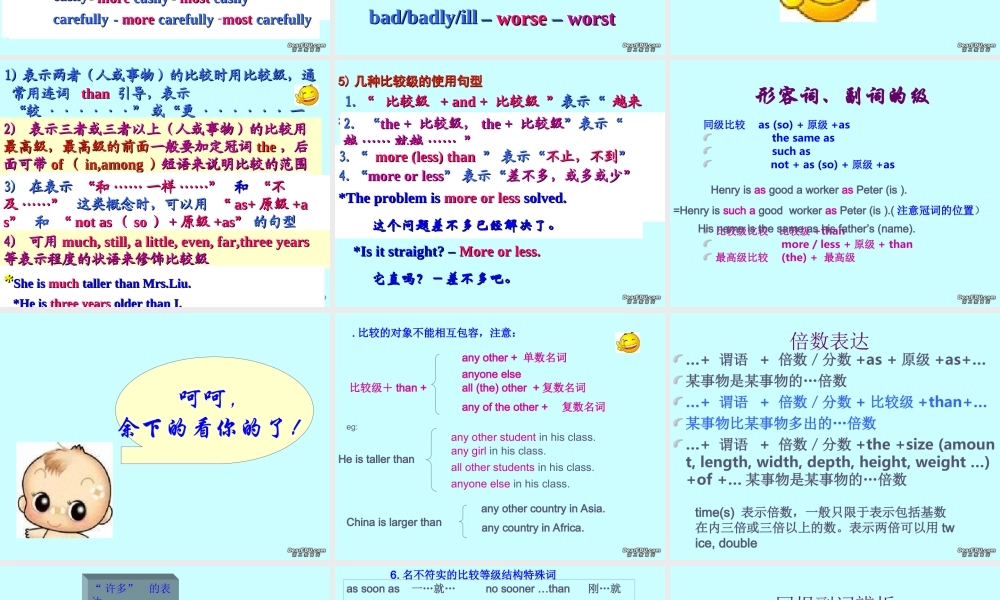
AdjAdjectives and ectives and AdvAdverbserbs形容词、副词形容词、副词区别几组易混淆的副词、形容词区别几组易混淆的副词、形容词 ★★ alreadyalready 常用于常用于 ________________ 、、 yetyet 常用于常用于 ______________________________ * The train has * The train has alreadyalready gone
* They haven’t come back * They haven’t come back yetyet
★★ suchsuch 修饰修饰 __________ soso 修饰修饰 ______________________ *I have never seen *I have never seen suchsuch an interesting film
an interesting film
*This box is *This box is so so heavy that I can’t carry it
heavy that I can’t carry it
肯定句肯定句否定句、疑问句否定句、疑问句名词名词形容词、副词形容词、副词lonely, alone Alone 作表语形容词,“单独的,独自一人的”;alone 作副词,“单独地,独自地”Lonely 作形容词,“寂寞的,孤独的,荒凉的,偏僻的”The old man lived in a _______ house but he didn’t feel _______
It was dreadful to find oneself ______ in such a place
lonelylonelyalone形容词和副词形容