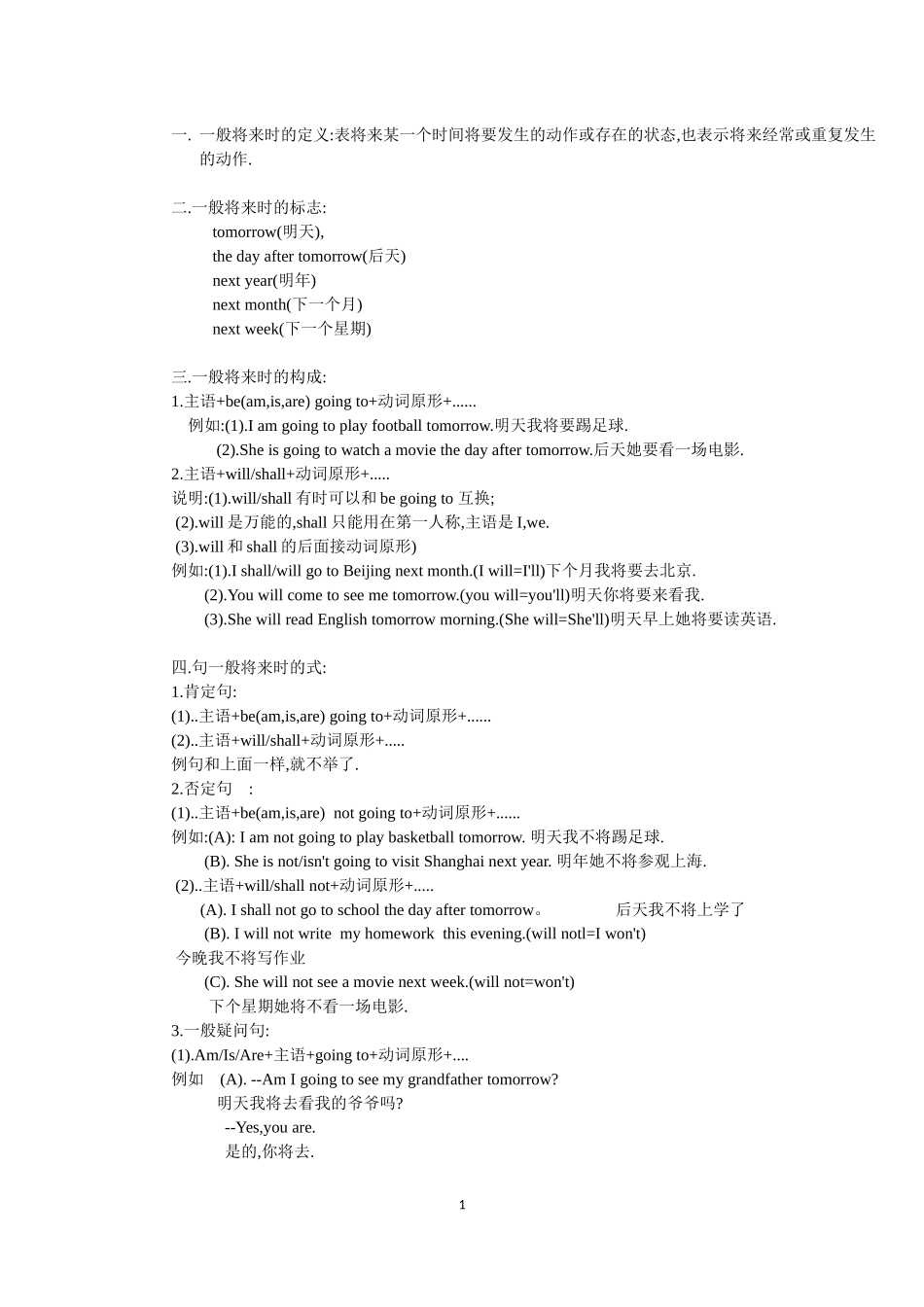
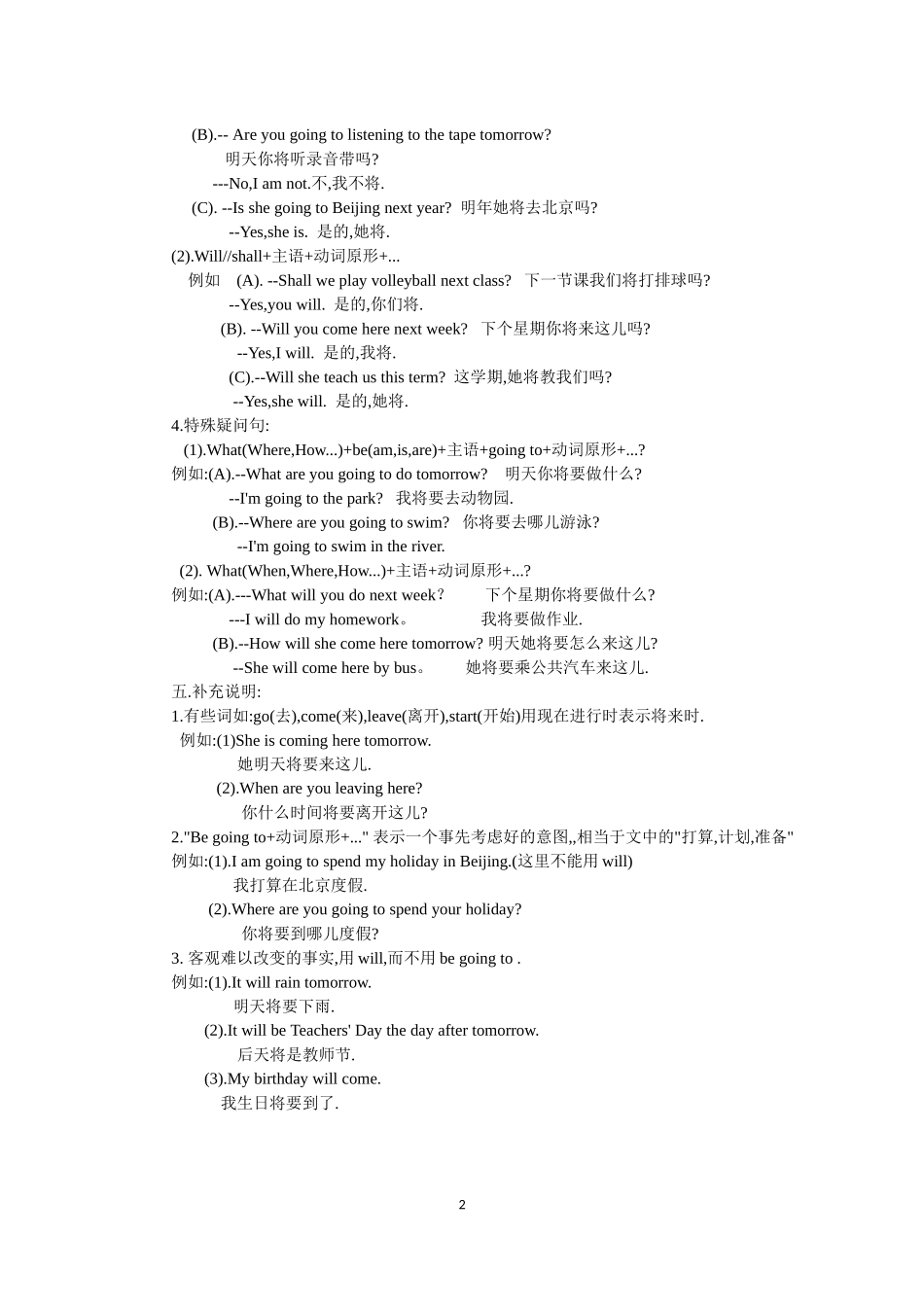
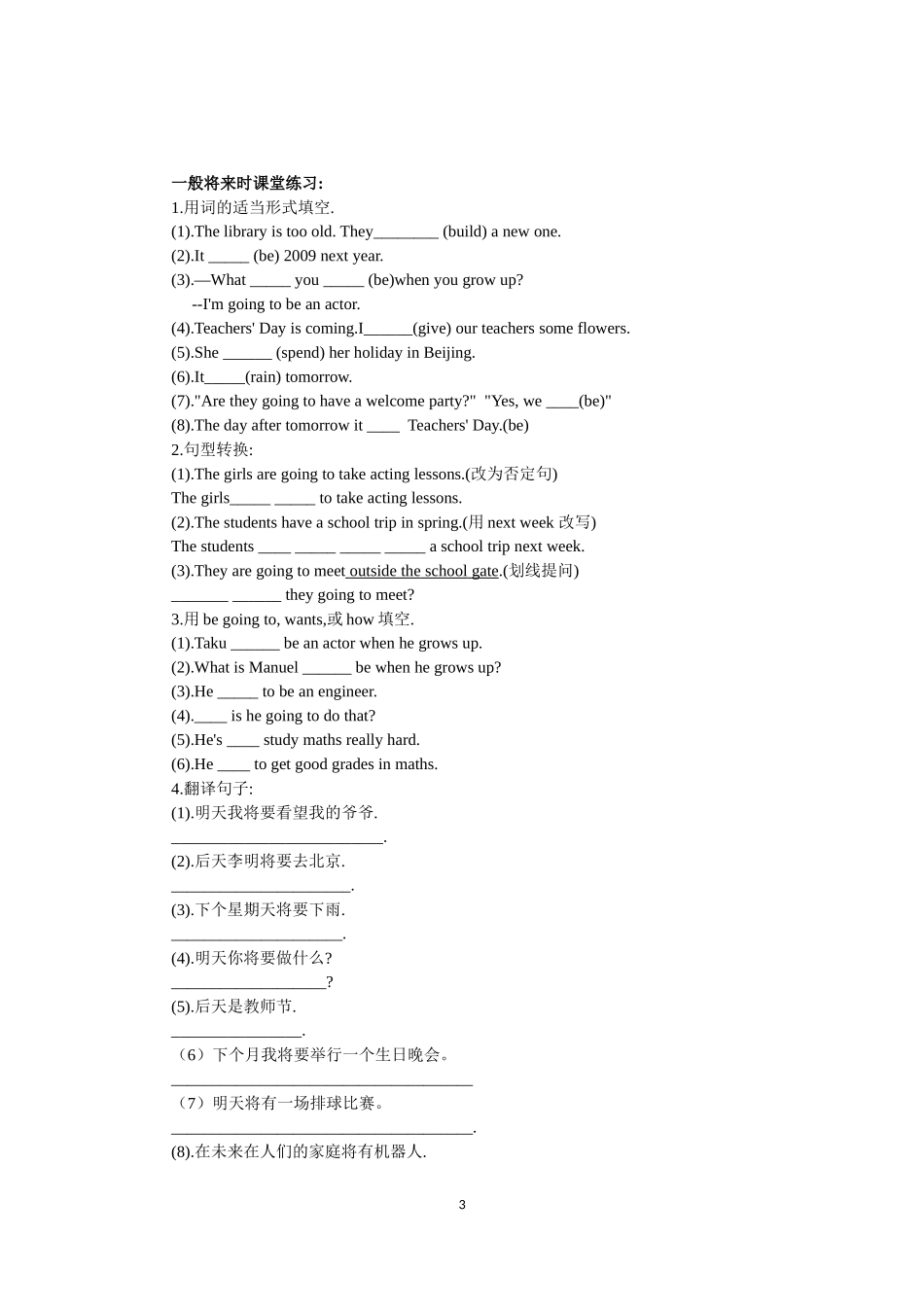
一般将来时的定义:表将来某一个时间将要发生的动作或存在的状态,也表示将来经常或重复发生的动作
一般将来时的标志:tomorrow(明天),thedayaftertomorrow(后天)nextyear(明年)nextmonth(下一个月)nextweek(下一个星期)三
一般将来时的构成:1
主语+be(am,is,are)goingto+动词原形+
例如:(1)
Iamgoingtoplayfootballtomorrow
明天我将要踢足球
Sheisgoingtowatchamoviethedayaftertomorrow
后天她要看一场电影
主语+will/shall+动词原形+
说明:(1)
will/shall有时可以和begoingto互换;(2)
will是万能的,shall只能用在第一人称,主语是I,we
will和shall的后面接动词原形)例如:(1)
Ishall/willgotoBeijingnextmonth
(Iwill=I'll)下个月我将要去北京
Youwillcometoseemetomorrow
(youwill=you'll)明天你将要来看我
ShewillreadEnglishtomorrowmorning
(Shewill=She'll)明天早上她将要读英语
句一般将来时的式:1
肯定句:(1)
主语+be(am,is,are)goingto+动词原形+
主语+will/shall+动词原形+
例句和上面一样,就不举了
否定句:(1)
主语+be(am,is,are)notgoingto+动词原形+
例如:(A):Iamnotgoingtoplaybasketballtomorrow