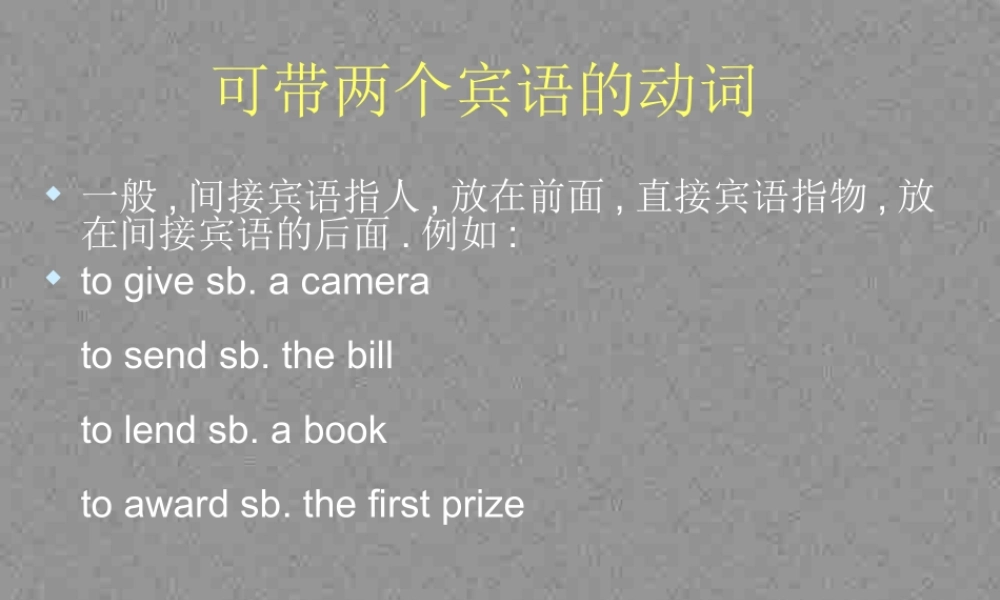
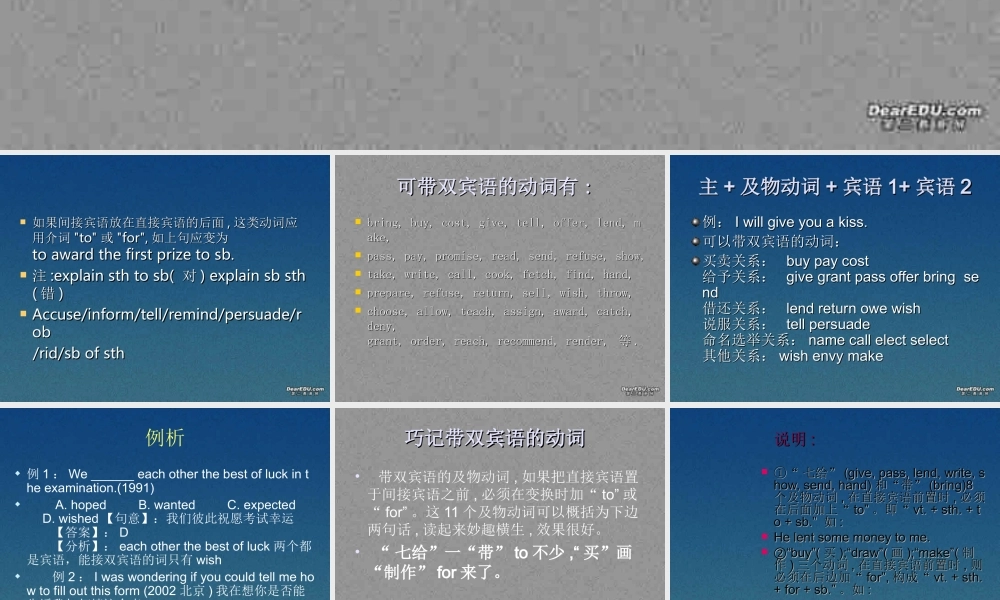
可带两个宾语的动词 一般 , 间接宾语指人 , 放在前面 , 直接宾语指物 , 放在间接宾语的后面 . 例如 : to give sb. a camerato send sb. the billto lend sb. a bookto award sb. the first prize 如果间接宾语放在直接宾语的后面如果间接宾语放在直接宾语的后面 ,, 这类动词应这类动词应用介词用介词 "to""to" 或或 "for","for", 如上句应变为如上句应变为to award the first prize to sb. to award the first prize to sb. 注注 :explain sth to sb( :explain sth to sb( 对对 ) explain sb sth ) explain sb sth (( 错错 )) Accuse/inform/tell/remind/persuade/rAccuse/inform/tell/remind/persuade/robob /rid/sb of sth/rid/sb of sth可带双宾语的动词有可带双宾语的动词有 : : bring, buy, cost, give, tell, offer, lend, mbring, buy, cost, give, tell, offer, lend, make,ake, pass, pay, promise, read, send, refuse, show,pass, pay, promise, read, send, refuse, show, take, write, call, cook, fetch, find, hand,take, write, call, cook, fetch, find, hand, prepare, refuse, return, sell, wish, throw,prepare, refuse, return, sell, wish, throw, choose, allow, teach, assign, award, catch, choose, allow, teach, assign, award, catch, deny,deny,grant, order, reach, recommend, render, grant, order, reach, recommend, render, 等等 . . 主主 ++ 及物动词及物动词 ++ 宾语宾语 1+1+ 宾语宾语 22例:例: I will give you a kiss.I will give you a kiss.可以带双宾语的动词:可以带双宾语的动词:买卖关系: 买卖关系: buy pay costbuy pay cost给予关系: 给予关系: give grant pass offer bring segive grant pass offer bring sendnd借还关系: 借还关系: lend return owe wish lend return owe wish 说服关系: 说服关系: tell persuadetell persuade命名选举关系:命名选举关系: name call elect select name call elect select 其他关系:其他关系: wish envy makewish envy make例析 例 1 : We ______ each other the...