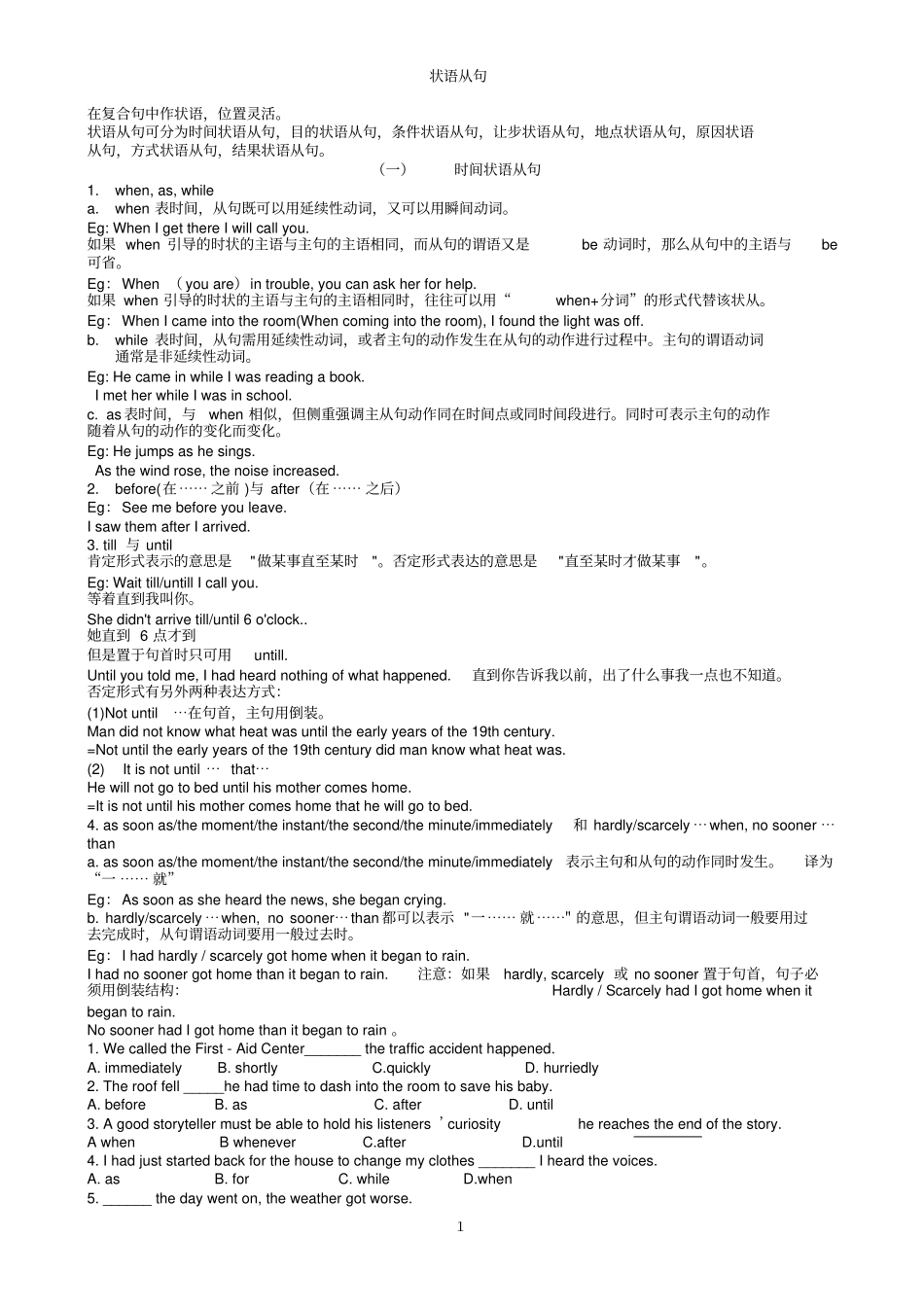
1状语从句在复合句中作状语,位置灵活
状语从句可分为时间状语从句,目的状语从句,条件状语从句,让步状语从句,地点状语从句,原因状语从句,方式状语从句,结果状语从句
(一)时间状语从句1
when, as, while a
when 表时间,从句既可以用延续性动词,又可以用瞬间动词
Eg: When I get there I will call you
如果 when 引导的时状的主语与主句的主语相同,而从句的谓语又是be 动词时,那么从句中的主语与be可省
Eg:When ( you are)in trouble, you can ask her for help
如果 when 引导的时状的主语与主句的主语相同时,往往可以用“when+分词”的形式代替该状从
Eg:When I came into the room(When coming into the room), I found the light was off
while 表时间,从句需用延续性动词,或者主句的动作发生在从句的动作进行过程中
主句的谓语动词通常是非延续性动词
Eg: He came in while I was reading a book
I met her while I was in school
as表时间,与when 相似,但侧重强调主从句动作同在时间点或同时间段进行
同时可表示主句的动作随着从句的动作的变化而变化
Eg: He jumps as he sings
As the wind rose, the noise increased
before(在⋯⋯ 之前 )与 after(在 ⋯⋯ 之后)Eg:See me before you leave
I saw them after I arrived
till 与 until 肯定形式表示的