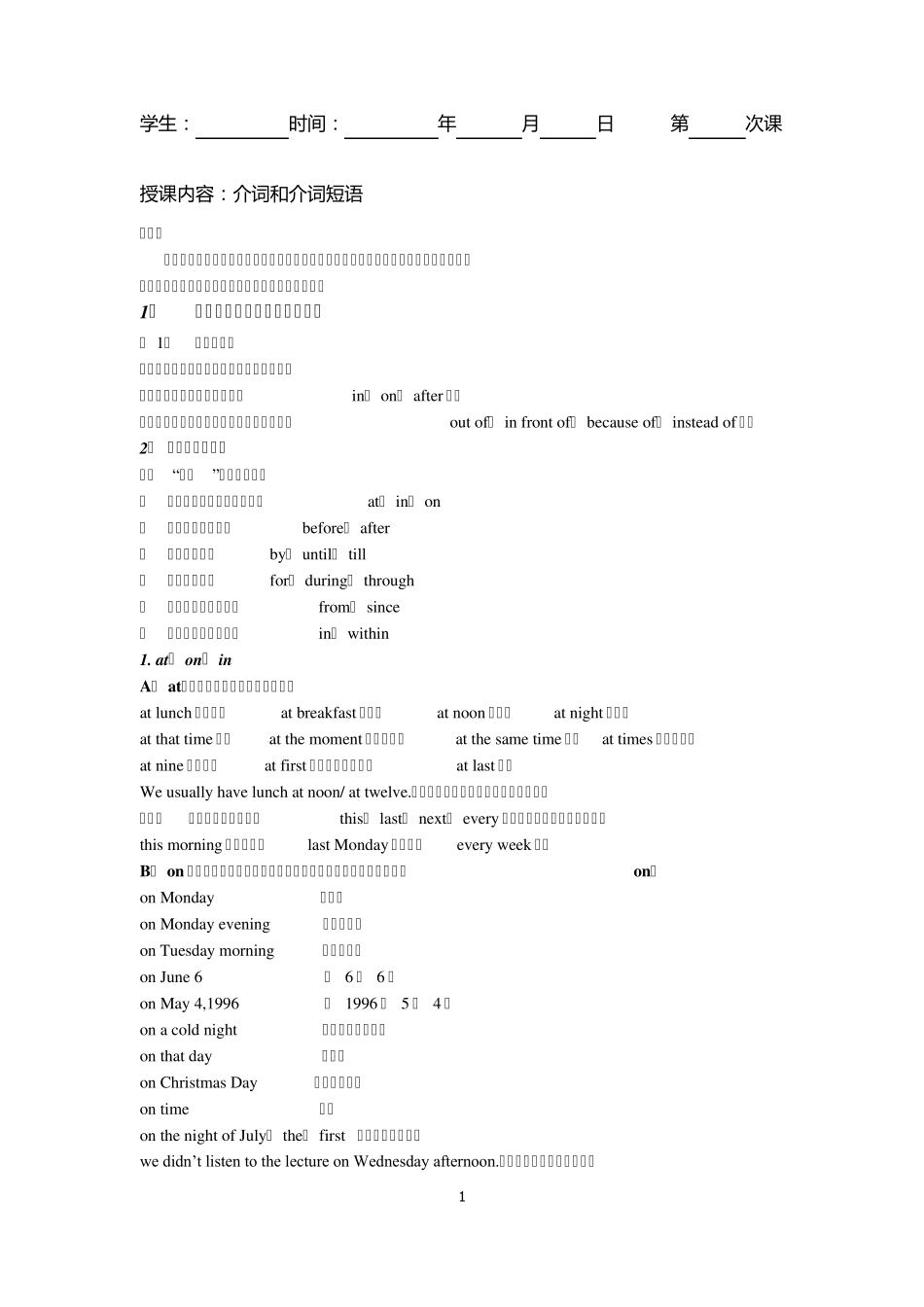
1 学 生 : 时 间 : 年 月 日 第 次 课 授 课 内 容 : 介词和介词短语 概念: 介词是一种虚词,它不能单独担任句子成分,必须与名词或代词或相当于名词的其他词类、短语或从句构成介词短语,才能担任句子成分
1、 介词的种类和介词短语的用法 ( 1) 介词的种类 介词由词形上可分为简单介词和短语介词
简单介词只是一个单词,如:in, on, after 等
短语介词是由两个以上单词集合而成,如:out of, in front of, because of, instead of 等
2、 表示时间的介词 表示“时间” 的介词如下: ① 表示年、月、日、时刻等用at, in, on ② 表示时间的前后用before, after ③ 表示期限等用by, until, till ④ 表示期间等用for, during, through ⑤ 表示时间的起点等用from, since ⑥ 表示时间的经过等用in, within 1
at, on, in A: at:用于表示时刻、时间的某一点 at lunch 在午饭时 at breakfast 早餐时 at noon 正午时 at night 在夜间 at that time 那时 at the moment 此刻,目前 at the same time 同时at times 偶尔,有时 at nine 在九点钟 at first 开始的时候,起初 at last 最后 We usually have lunch at noon/ at twelve
我们通常中午吃午饭(十二点吃午饭) 注意:表示时间的名词前有this, last, next, every等修饰时,其前面不加介词
this morning 今天早上;last Monday上周一;every week 每周 B: on 用于表示某天,某一天的