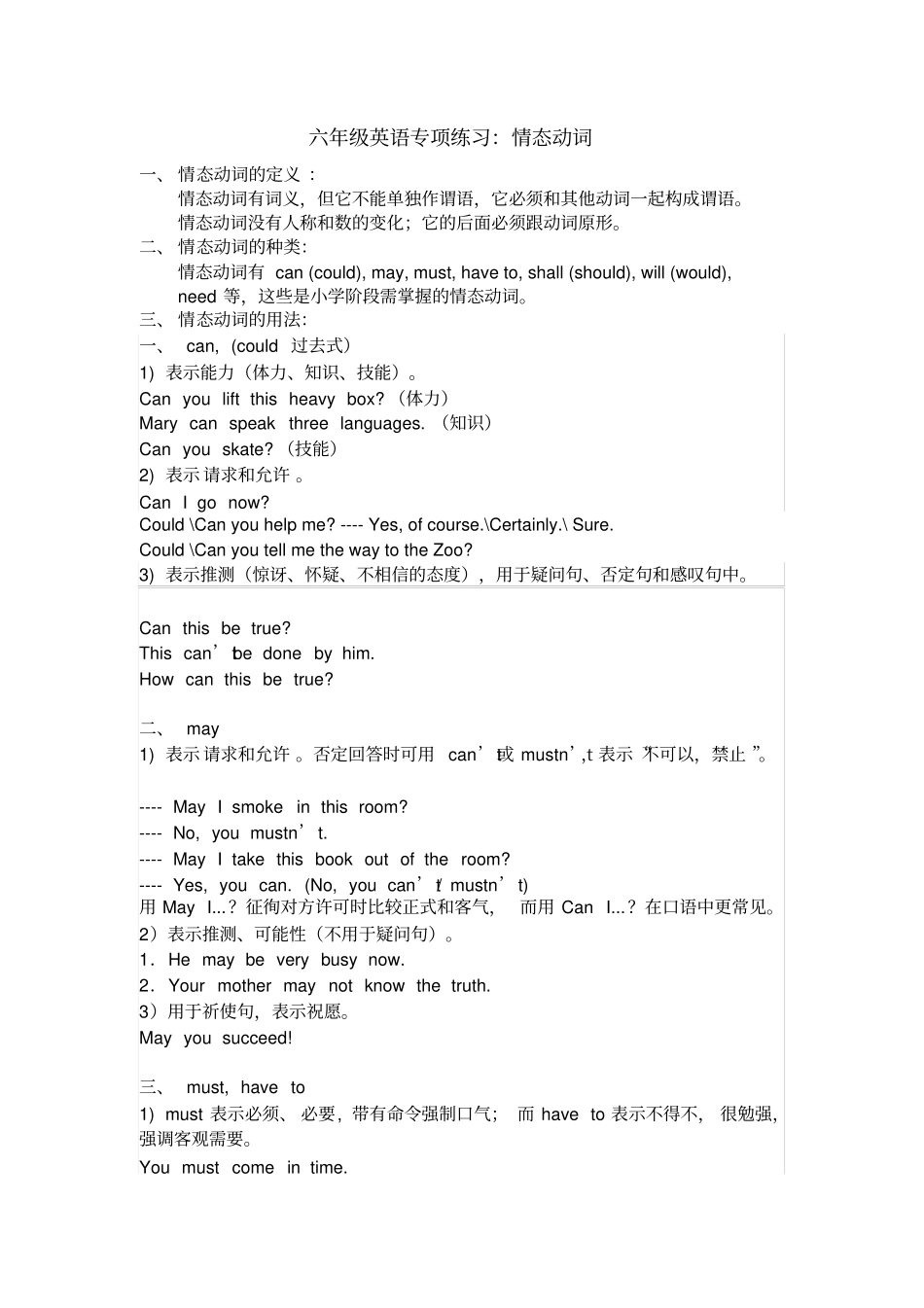
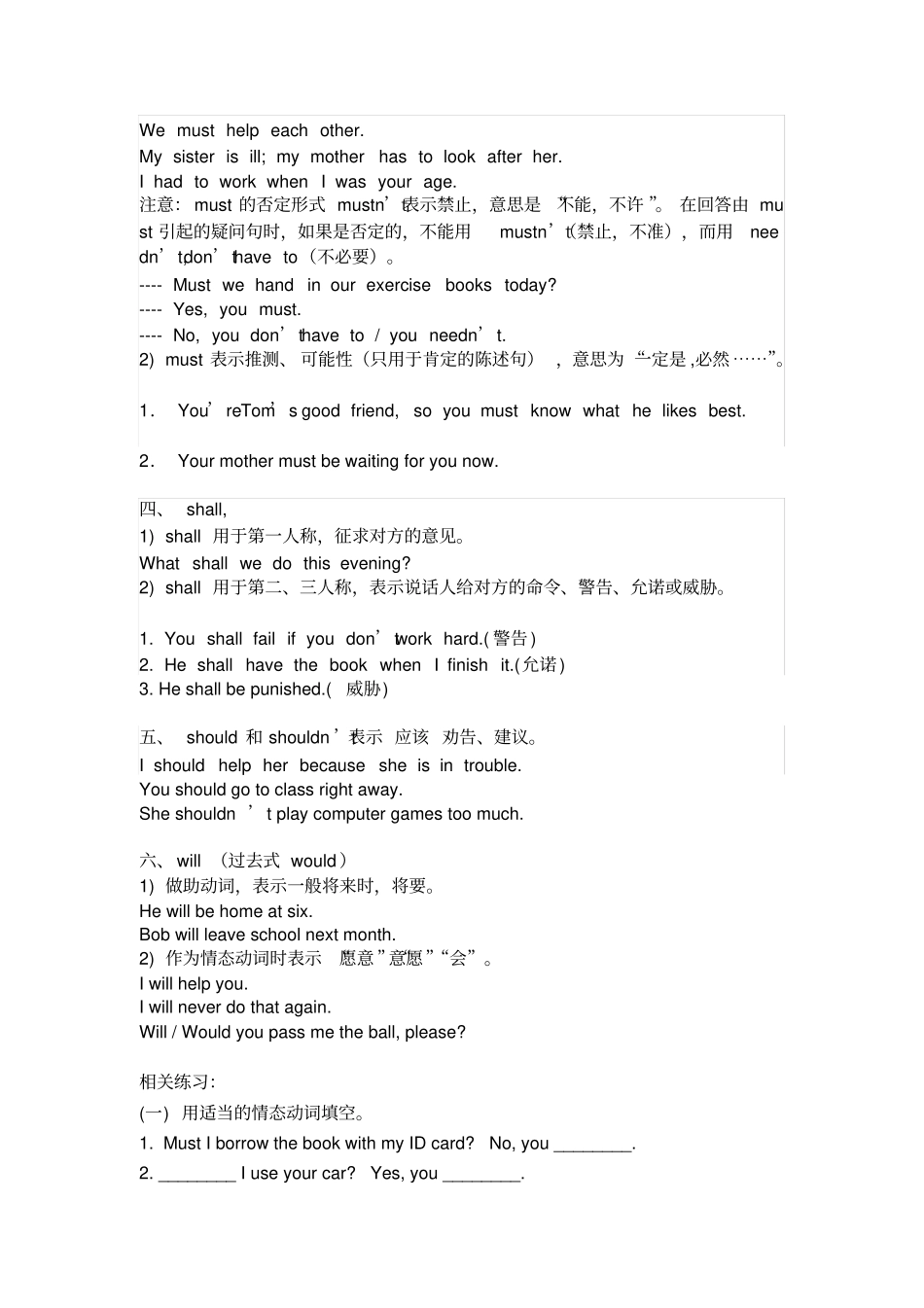
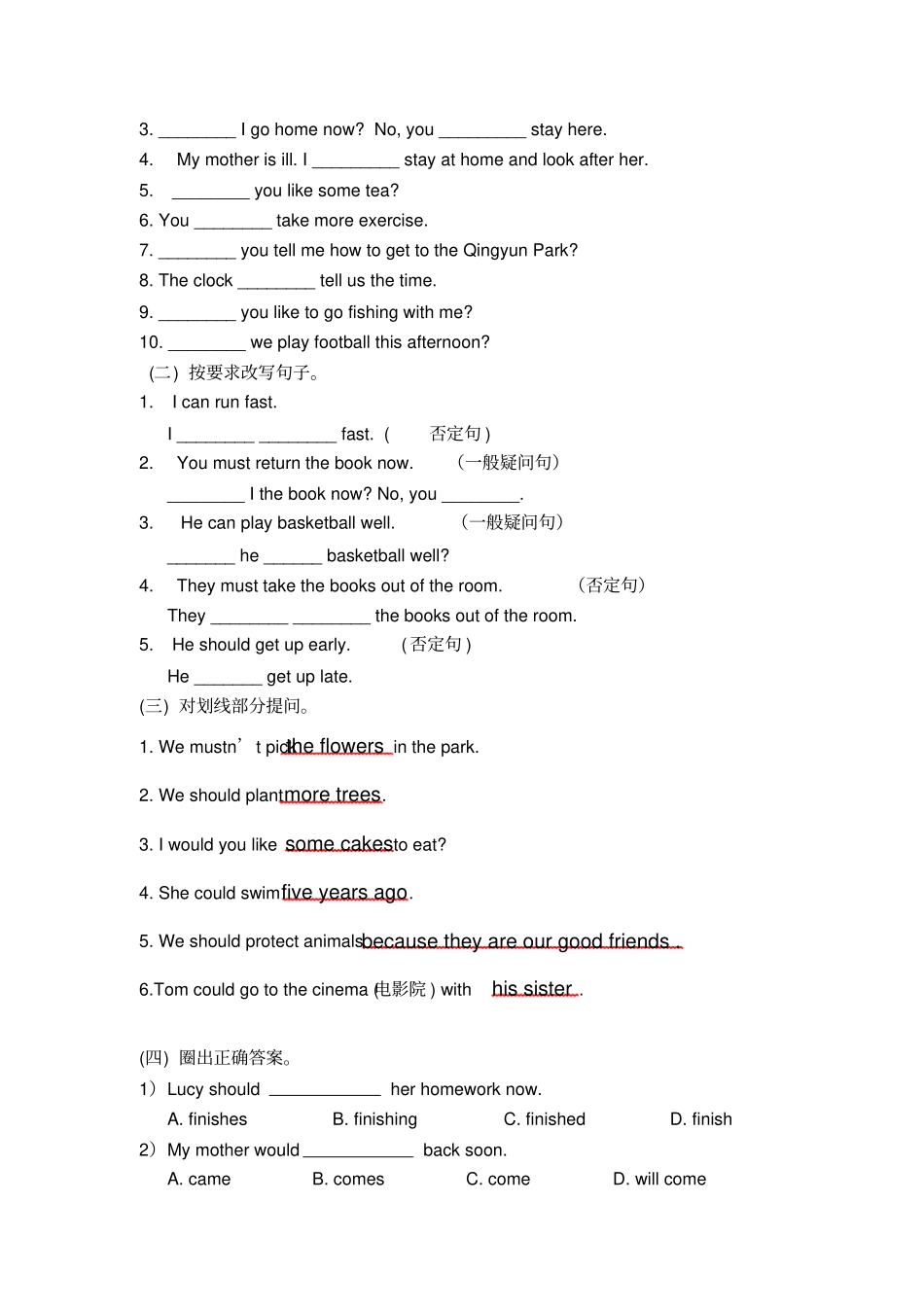
六年级英语专项练习:情态动词一、 情态动词的定义 :情态动词有词义,但它不能单独作谓语,它必须和其他动词一起构成谓语
情态动词没有人称和数的变化;它的后面必须跟动词原形
二、 情态动词的种类:情态动词有 can (could), may, must, have to, shall (should), will (would), need 等,这些是小学阶段需掌握的情态动词
三、 情态动词的用法:一、 can, (could 过去式)1) 表示能力(体力、知识、技能)
Can you lift this heavy box
(体力)Mary can speak three languages
(知识)Can you skate
(技能)2) 表示 请求和允许
Can I go now
Could \Can you help me
---- Yes, of course
\Certainly
\ Sure
Could \Can you tell me the way to the Zoo
3) 表示推测(惊讶、怀疑、不相信的态度),用于疑问句、否定句和感叹句中
Can this be true
This can’t be done by him
How can this be true
二、 may1) 表示 请求和允许
否定回答时可用 can’t 或 mustn’t,表示“不可以,禁止 ”
---- May I smoke in this room
---- No, you mustn’t
---- May I take this book out of the room
---- Yes, you can
(No, you can’t / mustn’t) 用 May I
征徇对方许可时比较正式和客气, 而用 Can I