- 1 - 英语语法动词时态一般现在时态 :用法:1
表示事物或人物的特征、状态
如:The sky is blue
天空是蓝色的
表示经常性或习惯性的动作
如:I get up at six every day
我每天六点起床
表示客观现实
如: The earth goes around the sun
地球绕着太阳转
be 动词:主语 +be(am,is,are)+其它
如: I am a boy
我是一个男孩
行为动词:主语 +行为动词 (+其它 )
如: We study English
我们学习英语
当主语为第三人称单数 (he, she,it)时,要在动词后加 "-s" 或"-es"
如:Mary likes Chinese
玛丽喜欢汉语
否定句、一般疑问句、特殊疑问句:1
be 动词的变化
否定句:主语 + be + not +其它
如:He is not a worker
一般疑问句: Be +主语 +其它
如:-Are you a student
/ No, I'm not
特殊疑问句:疑问词 +一般疑问句
如: Where is my bike
行为动词的变化
否定句:主语 + don't( doesn't ) +动词原形 (+其它 )
如:I don't like bread
当主语为第三人称单数时,要用doesn't构成否定句
如:He doesn't often play
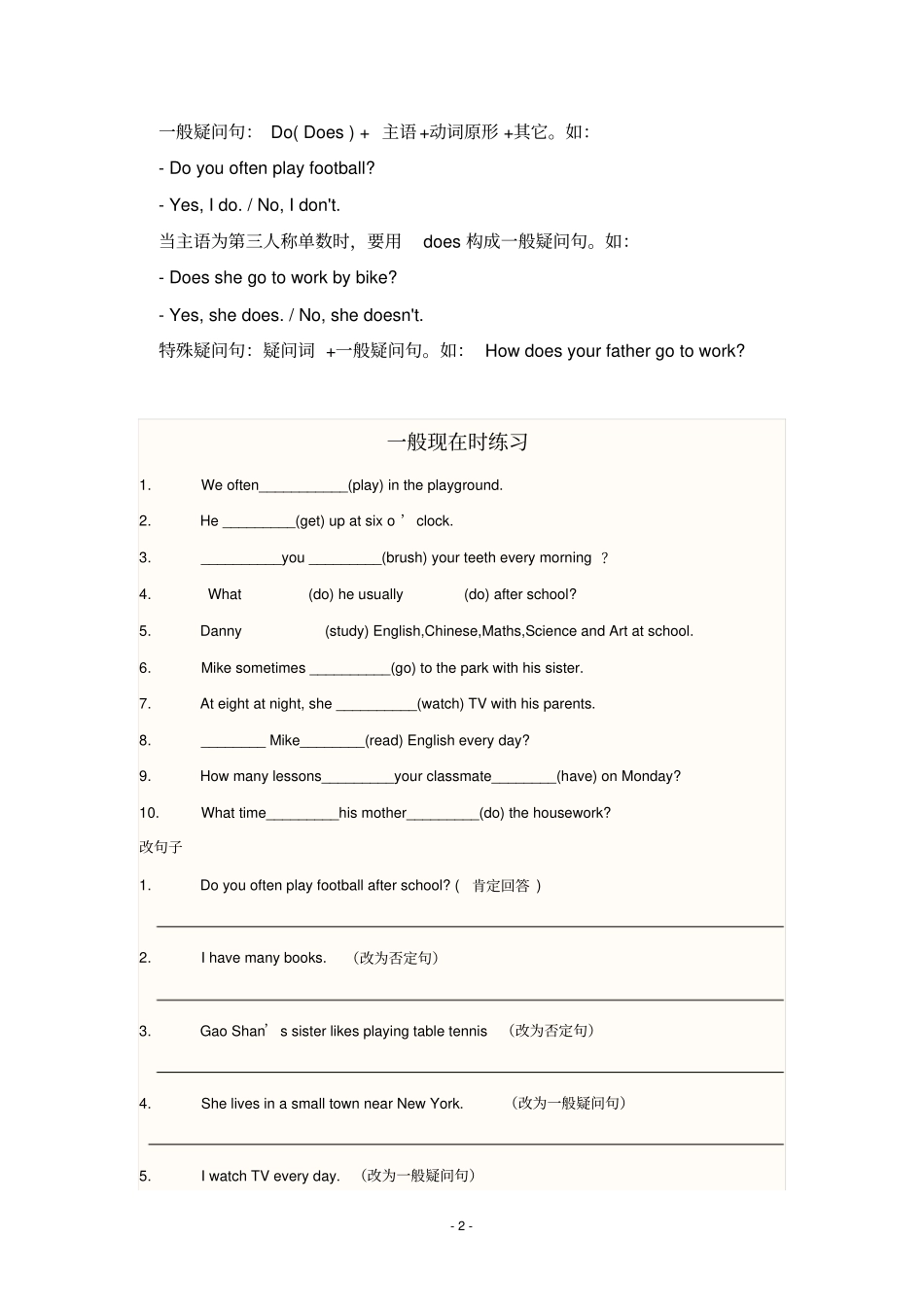
- 2 - 一般疑问句: Do( Does ) + 主语 +动词原形 +其它
如:- Do you often play football
- Yes, I do
/ No, I don't
当主语为第三人称单数