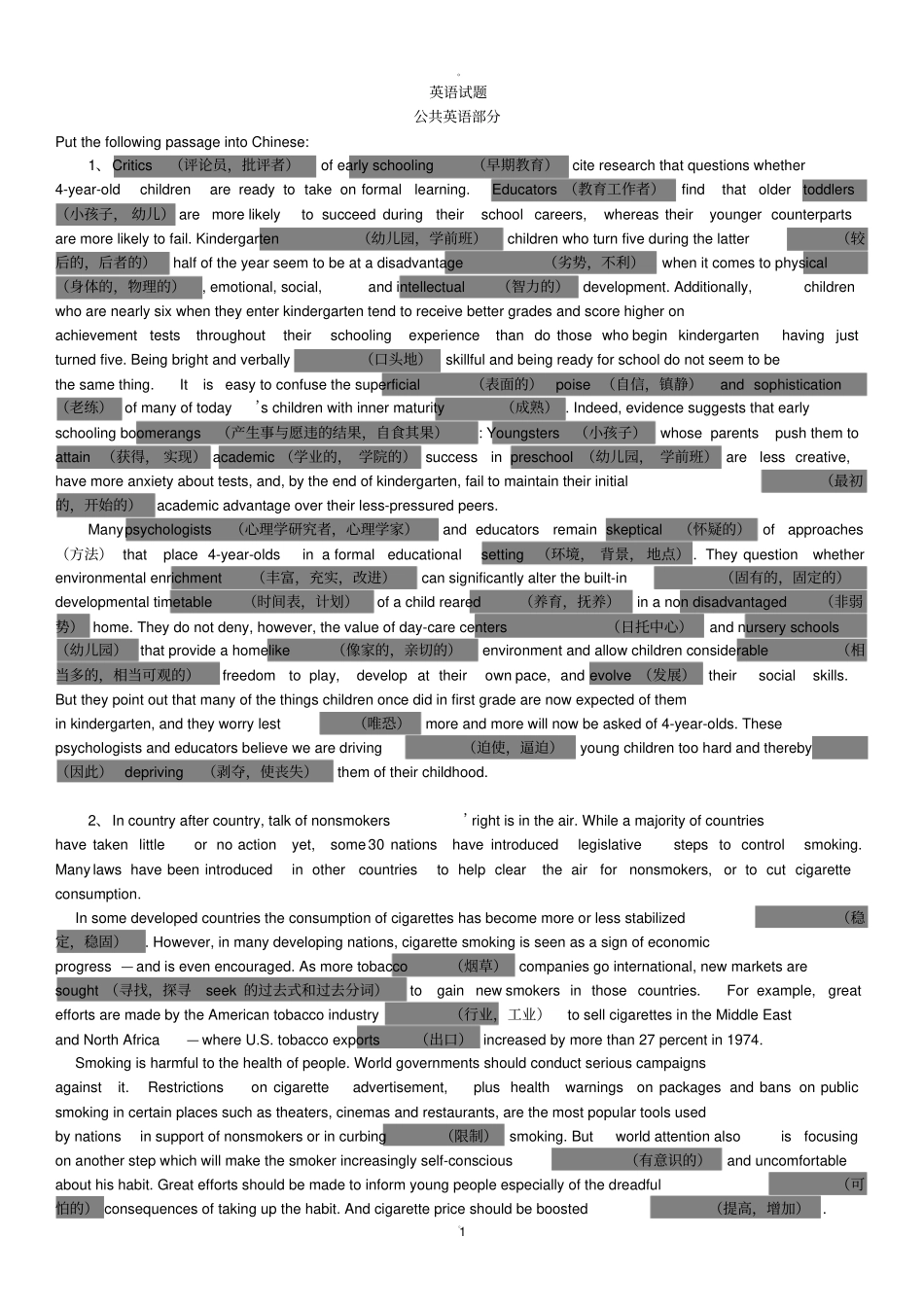
1 英语试题公共英语部分Put the following passage into Chinese: 1、Critics(评论员,批评者) of early schooling(早期教育) cite research that questions whether 4-year-old children are ready to take on formal learning
Educators (教育工作者) find that older toddlers(小孩子, 幼儿) are more likely to succeed during their school careers, whereas their younger counterparts are more likely to fail
Kindergarten(幼儿园,学前班) children who turn five during the latter(较后的,后者的) half of the year seem to be at a disadvantage(劣势,不利) when it comes to physical(身体的,物理的), emotional, social, and intellectual(智力的) development
Additionally, children who are nearly six when they enter kindergarten tend to receive better grades and score higher on achievement tests throughout their schooling experience than do those who begin kindergarten having jus