语法专项:形容词、副词的最高级【语法专项聚焦】【形容词和副词的最高级】【语法全解】1
形容词和副词的最高级的用法形容词、副词的最高级用于三者或者三者以上的人或事(物)之间的比较,意为“最…”
Tom is the tallest in my class
Li Ming runs fastest in my school
形容词、副词的最高级的构成(1)规则变化①a
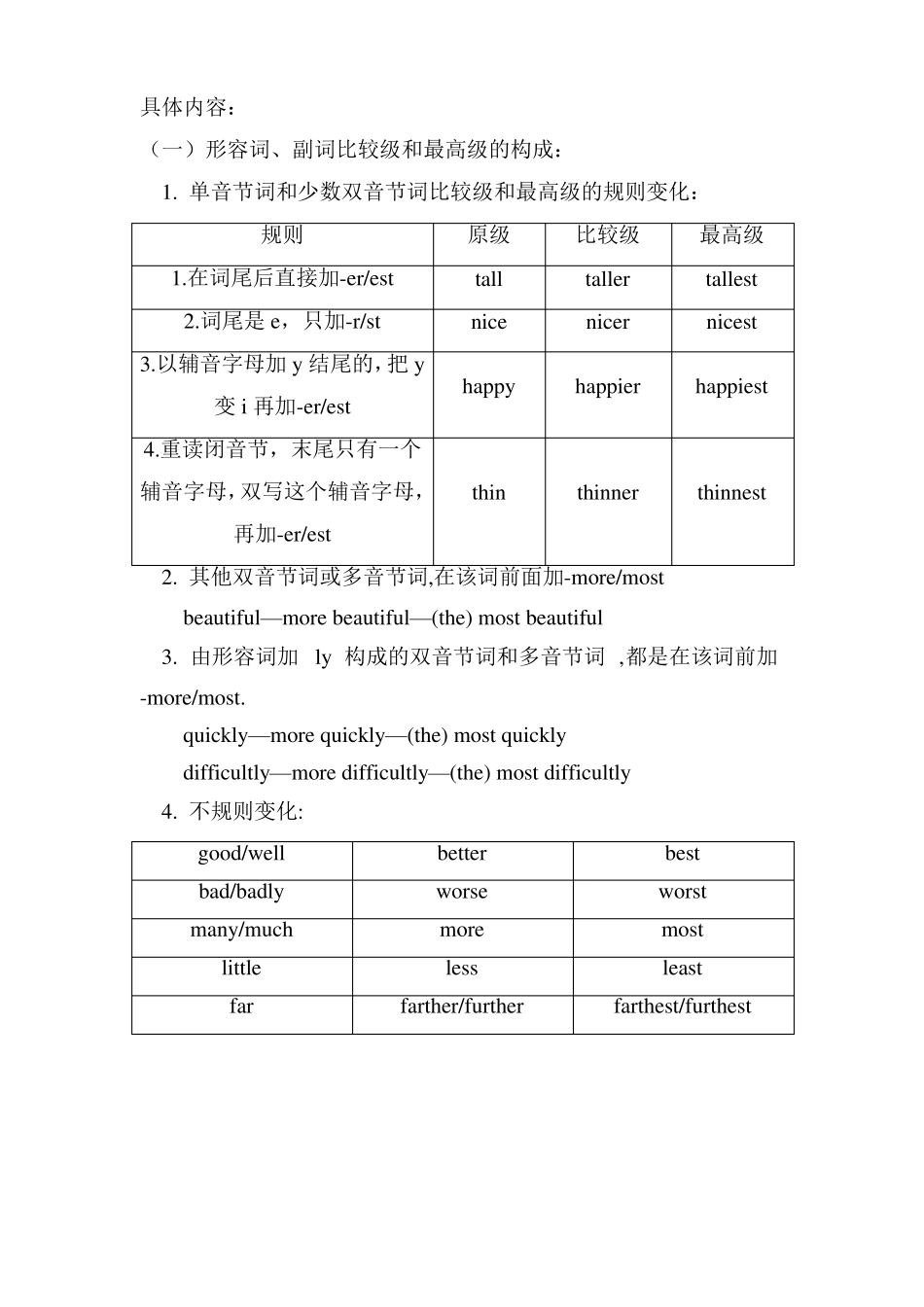
一般情况下,单音节和部分双音节形容词、副词,在原级后加-est构成最高级
long→longestclever→cleveresthigh→highestfast→fastestb
以字母 e 结尾,直接加-st 构成最高级
nice→nicestcute→cutestlate→latestc
以“辅音字母+y”结尾的双音节形容词、副词,变y 为 i,再加-est 构成最高级
heavy→heaviestfriendly→friendliestearly→earliestd
重读闭音节词尾只有一个辅音字母时,双写这个辅音字母,再加-est构成最高级
big→biggestthin→thinnesthot→hottestfat→fattest②多音节和部分双音节形容词、副词,在原级前加 most 构成最高级
creative→ most creativepopular→ most popularquickly→ most quickly③由“动词+-ed 或-ing”构成的形容词,其后最高级形式常在该形容词前加 most
relaxed→ most relaxedinteresting→ most interestingexcited→ most excitedboring→ most boring④由“形容词 +后缀-ly”构成的副词,其最