c 语言中的#号的作用 宏中"#"和"##"的用法 一、一般用法 我们使用#把宏参数变为一个字符串,用##把两个宏参数贴合在一起
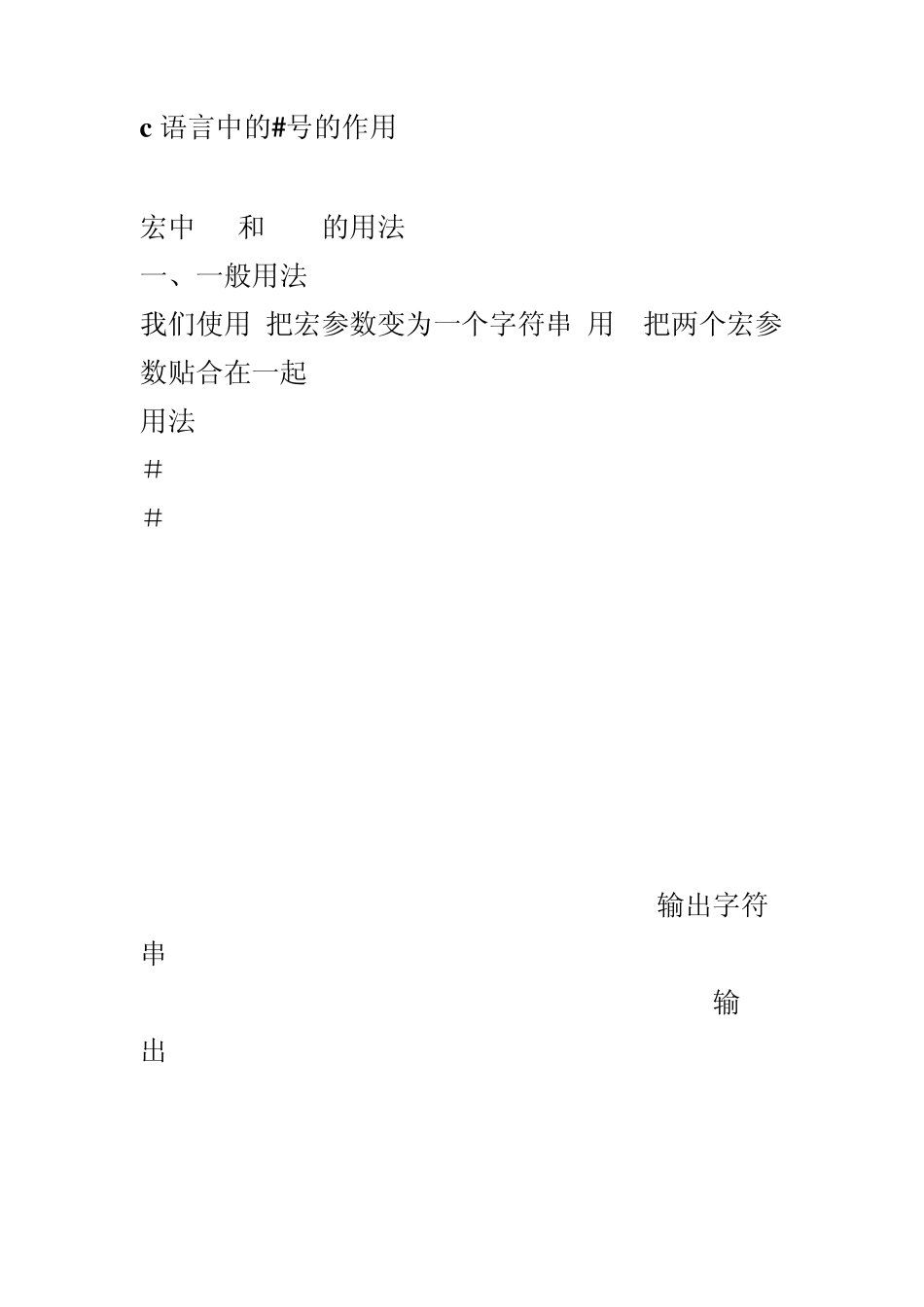
用法: #i nclude #i nclude using namespace std; #define STR(s) #s #define CONS(a,b) int(a##e##b) int main() { printf(STR(vck)); // 输出字符串"vck" printf("%d\n", CONS(2,3)); // 2e3 输出:2000 return 0; } 二、当宏参数是另一个宏的时候 需要注意的是凡宏定义里有用'#'或'##'的地方宏参数是不会再展开
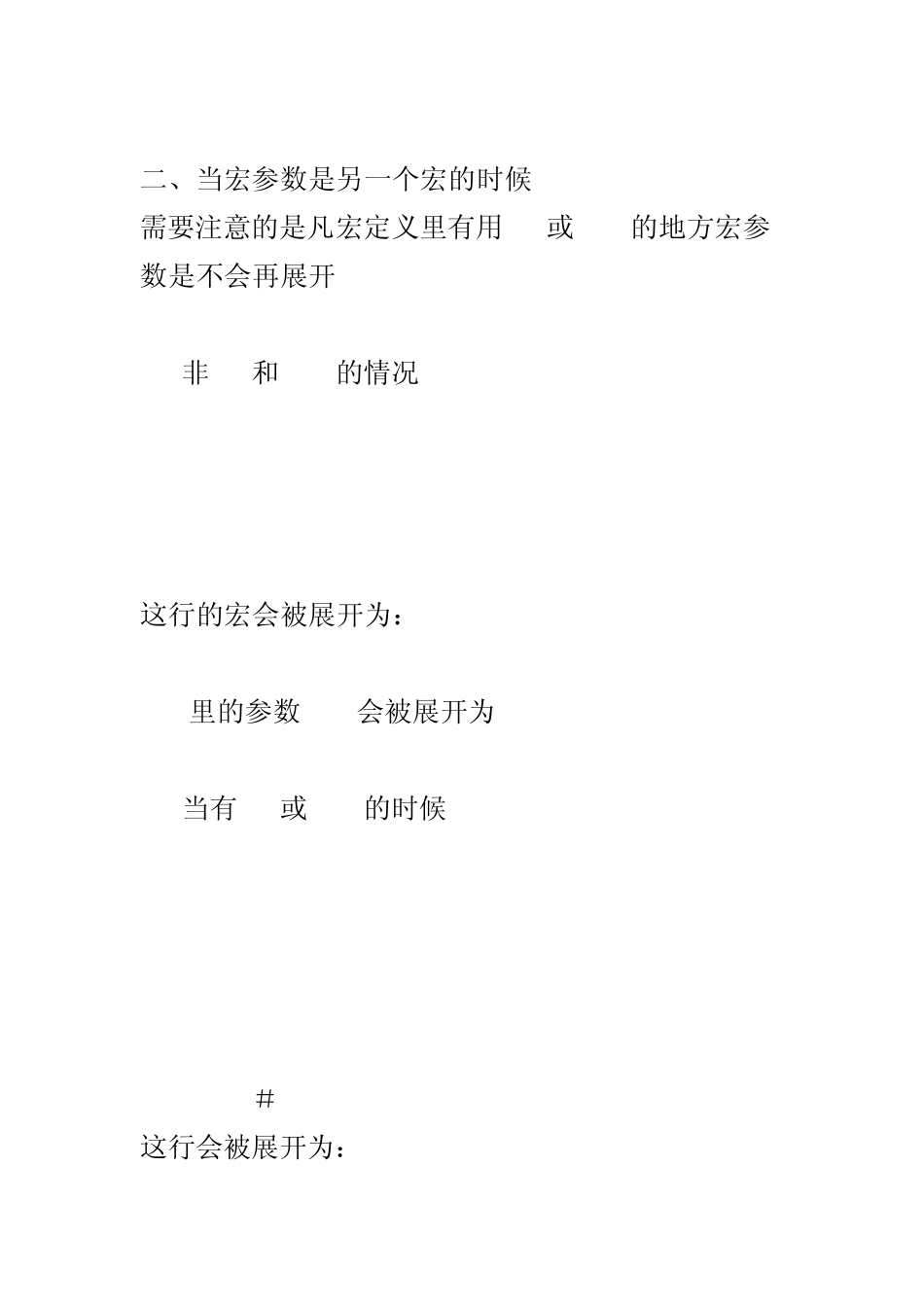
1, 非'#'和'##'的情况 #define TOW (2) #define MUL(a,b) (a*b) printf("%d*%d=%d\n", TOW, TOW, MUL(TOW,TOW)); 这行的宏会被展开为: printf("%d*%d=%d\n", (2), (2), ((2)*(2))); MUL里的参数 TOW会被展开为(2)
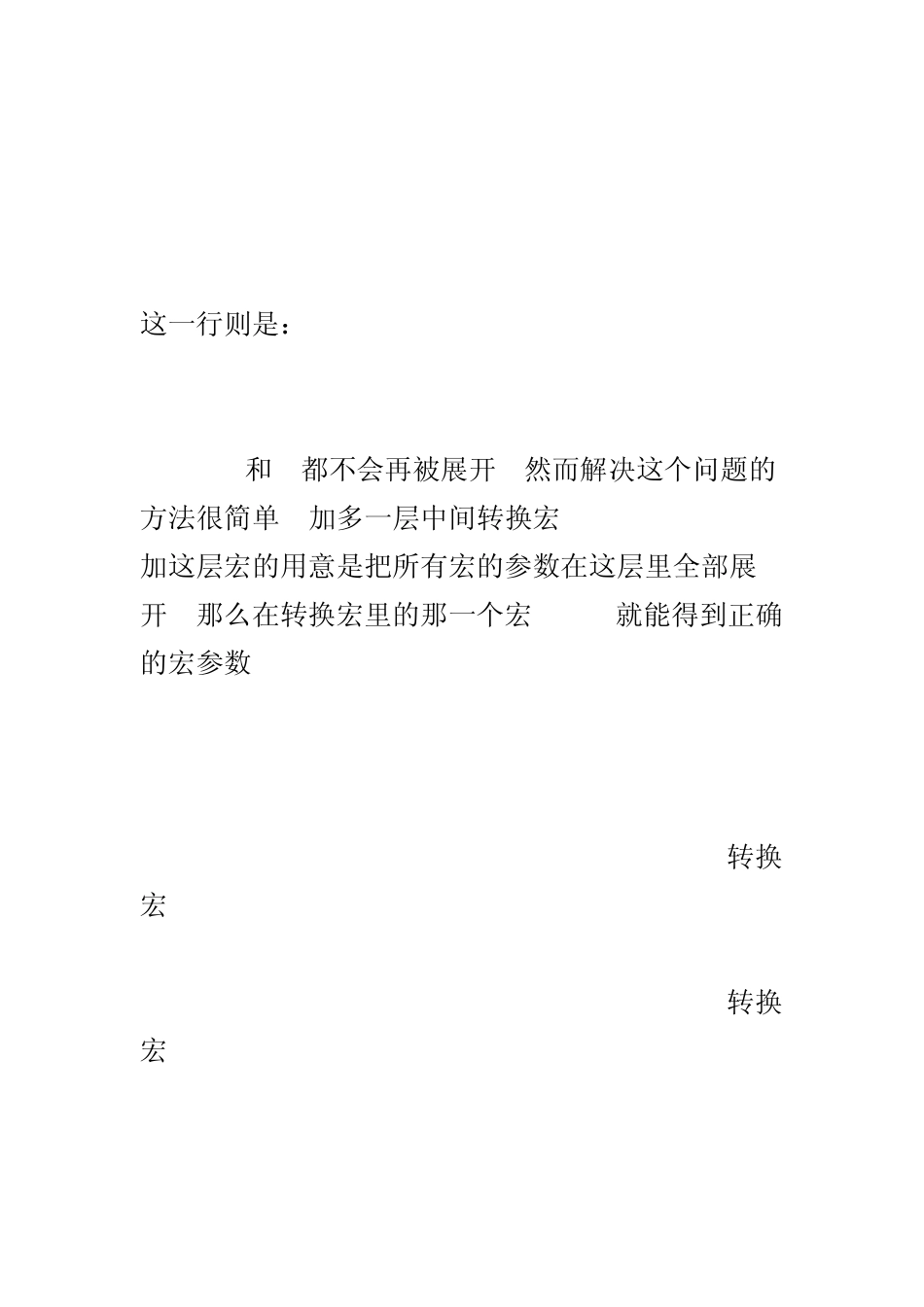
2, 当有'#'或'##'的时候 #define A (2) #define STR(s) #s #define CONS(a,b) int(a##e##b) printf("int max: %s\n", STR(INT_MAX)); // INT_MAX #i nclude 这行会被展开为: printf("int max: %s\n", "INT_MAX"); printf("%s\n", CONS(A, A)); // compile error 这一行则是: printf("%s\n", int