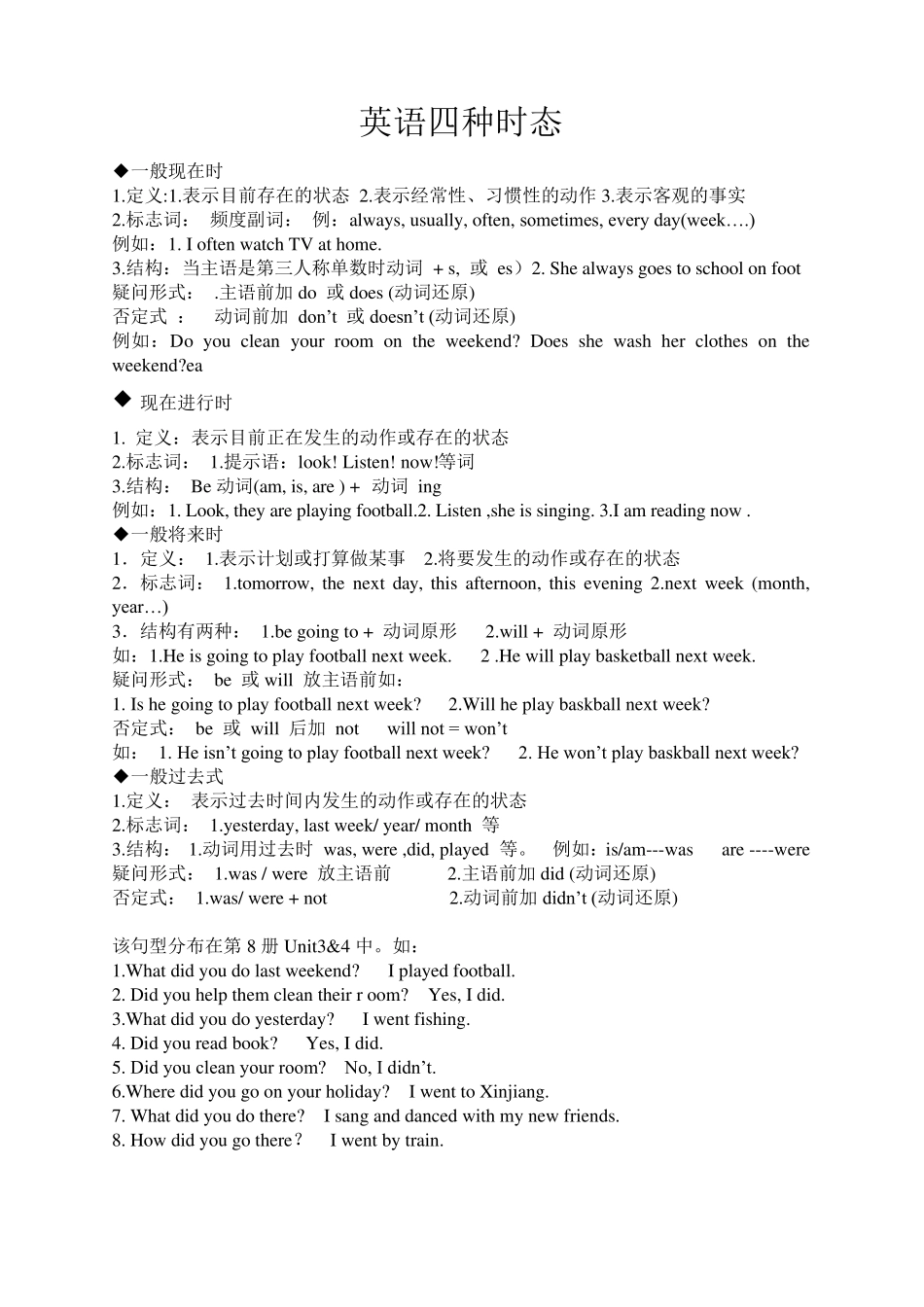
英语四种时态 ◆一般现在时 1
表示目前存在的状态 2
表示经常性、习惯性的动作 3
表示客观的事实 2
标志词: 频度副词: 例:always, usually, often, sometimes, every day(week…
) 例如:1
I often watch TV at home
结构:当主语是第三人称单数时动词 + s, 或 es)2
She always goes to school on foot 疑问形式:
主语前加 do 或 does (动词还原) 否定式 : 动词前加 don’t 或 doesn’t (动词还原) 例如:Do you clean your room on the weekend
Does she wash her clothes on the weekend
ea ◆ 现在进行时 1
定义:表示目前正在发生的动作或存在的状态 2
标志词: 1
提示语:look
Listen
结构: Be 动词(am, is, are ) + 动词 ing 例如:1
Look, they are playing football
Listen ,she is singing
I am reading now
◆一般将来时 1.定义: 1
表示计划或打算做某事 2
将要发生的动作或存在的状态 2.标志词: 1
tomorrow, the next day, this afternoon, this evening 2
next week (month, year…) 3.结构有两种: 1
be going to + 动词原形 2
will + 动词原形 如:1
He is going to play football next week
He will play basketb