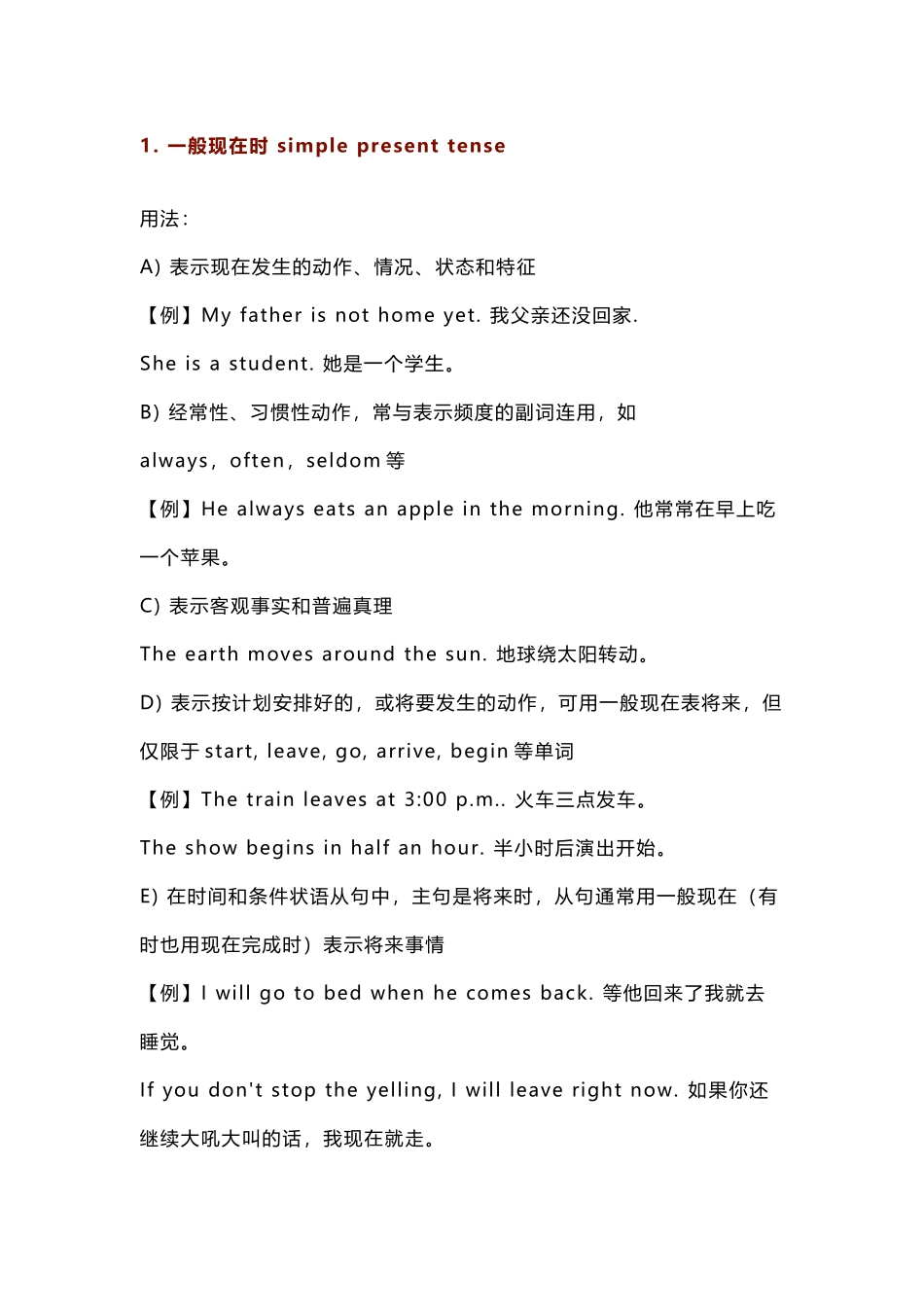
一般现在时 simple present tense用法:A) 表示现在发生的动作、情况、状态和特征【例】My father is not home yet
我父亲还没回家
She is a student
她是一个学生
B) 经常性、习惯性动作,常与表示频度的副词连用,如always,often,seldom 等【例】He always eats an apple in the morning
他常常在早上吃一个苹果
C) 表示客观事实和普遍真理The earth moves around the sun
地球绕太阳转动
D) 表示按计划安排好的,或将要发生的动作,可用一般现在表将来,但仅限于 start, leave, go, arrive, begin 等单词【例】The train leaves at 3:00 p
火车三点发车
The show begins in half an hour
半小时后演出开始
E) 在时间和条件状语从句中,主句是将来时,从句通常用一般现在(有时也用现在完成时)表示将来事情【例】I will go to bed when he comes back
等他回来了我就去睡觉
If you don't stop the yelling, I will leave right now
如果你还继续大吼大叫的话,我现在就走
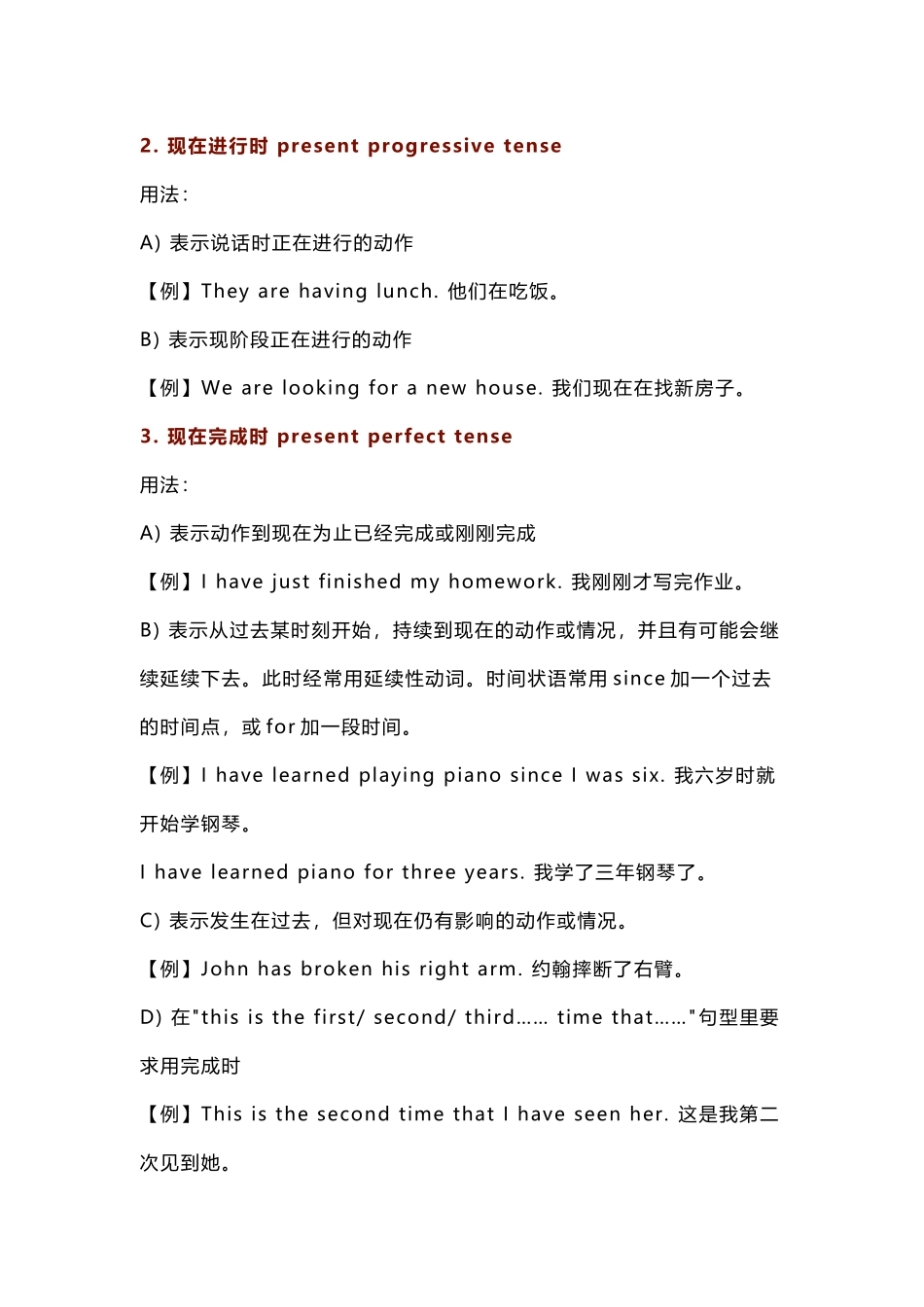
现在进行时 present progressive tense用法:A) 表示说话时正在进行的动作【例】They are having lunch
B) 表示现阶段正在进行的动作【例】We are looking for a new house
我们现在在找新房子
现在完成时 present perfect tense用法:A) 表示动作到现在为止已经完成或刚