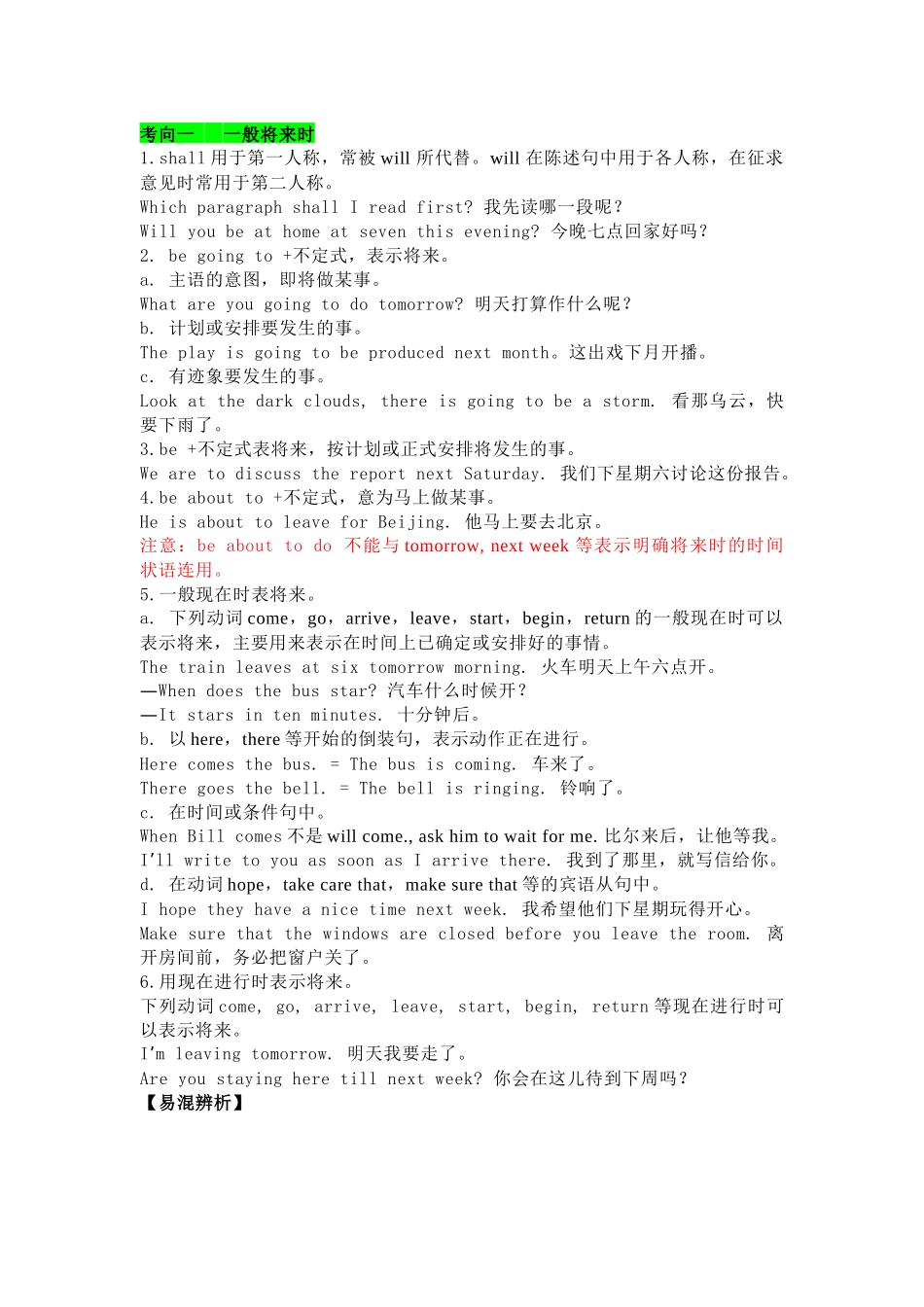
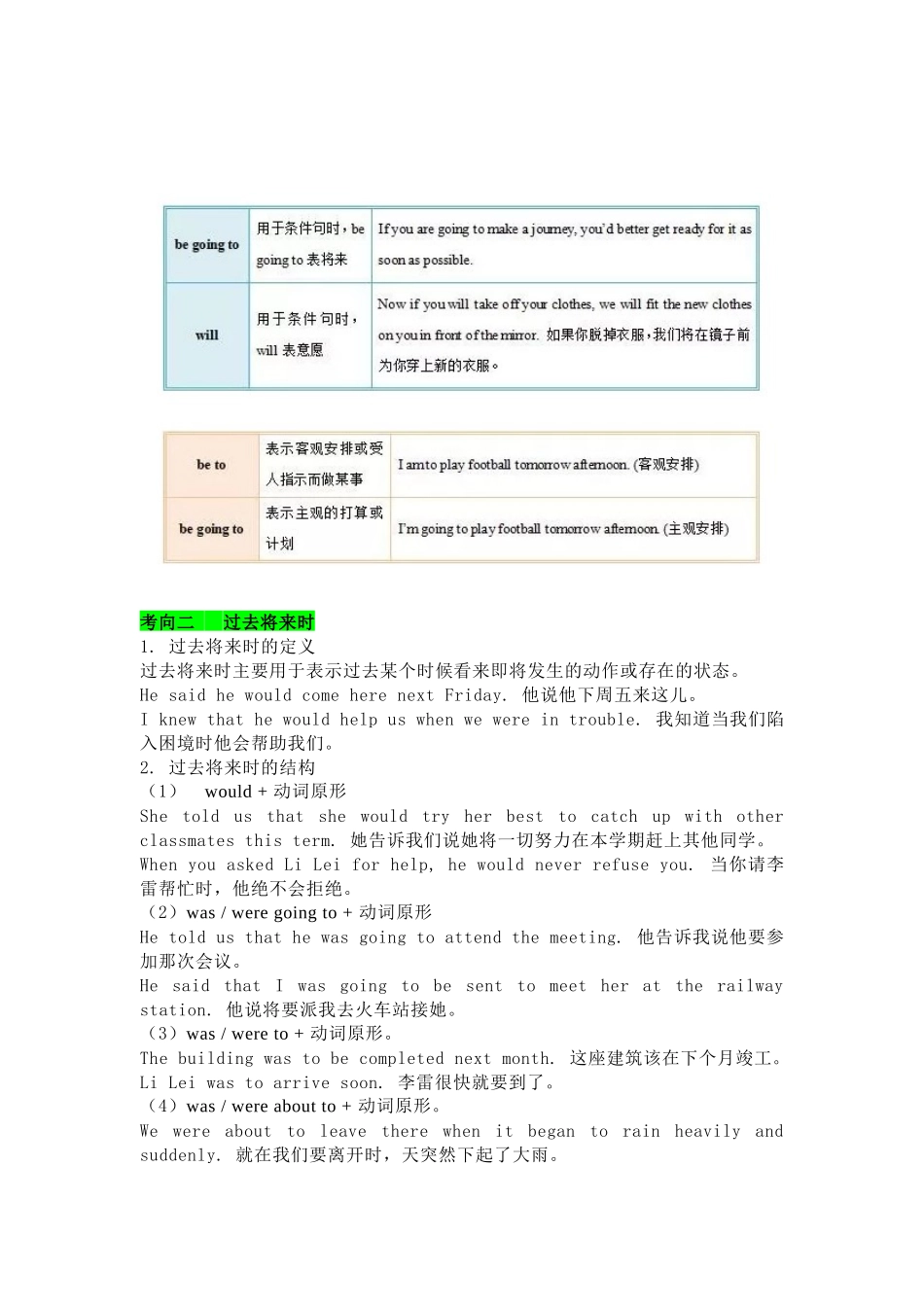
考向一 一般将来时1
shall 用于第一人称,常被 will 所代替
will 在陈述句中用于各人称,在征求意见时常用于第二人称
Which paragraph shall I read first
我先读哪一段呢
Will you be at home at seven this evening
今晚七点回家好吗
be going to +不定式,表示将来
主语的意图,即将做某事
What are you going to do tomorrow
明天打算作什么呢
计划或安排要发生的事
The play is going to be produced next month
这出戏下月开播
有迹象要发生的事
Look at the dark clouds, there is going to be a storm
看那乌云,快要下雨了
be +不定式表将来,按计划或正式安排将发生的事
We are to discuss the report next Saturday
我们下星期六讨论这份报告
be about to +不定式,意为马上做某事
He is about to leave for Beijing
他马上要去北京
注意:be about to do 不能与 tomorrow, next week 等表示明确将来时的时间状语连用
一般现在时表将来
下列动词 come,go,arrive,leave,start,begin,return 的一般现在时可以表示将来,主要用来表示在时间上已确定或安排好的事情
The train leaves at six tomorrow morning
火车明天上午六点开
—When does the bus star
汽车什么时候开
—It stars in ten minu