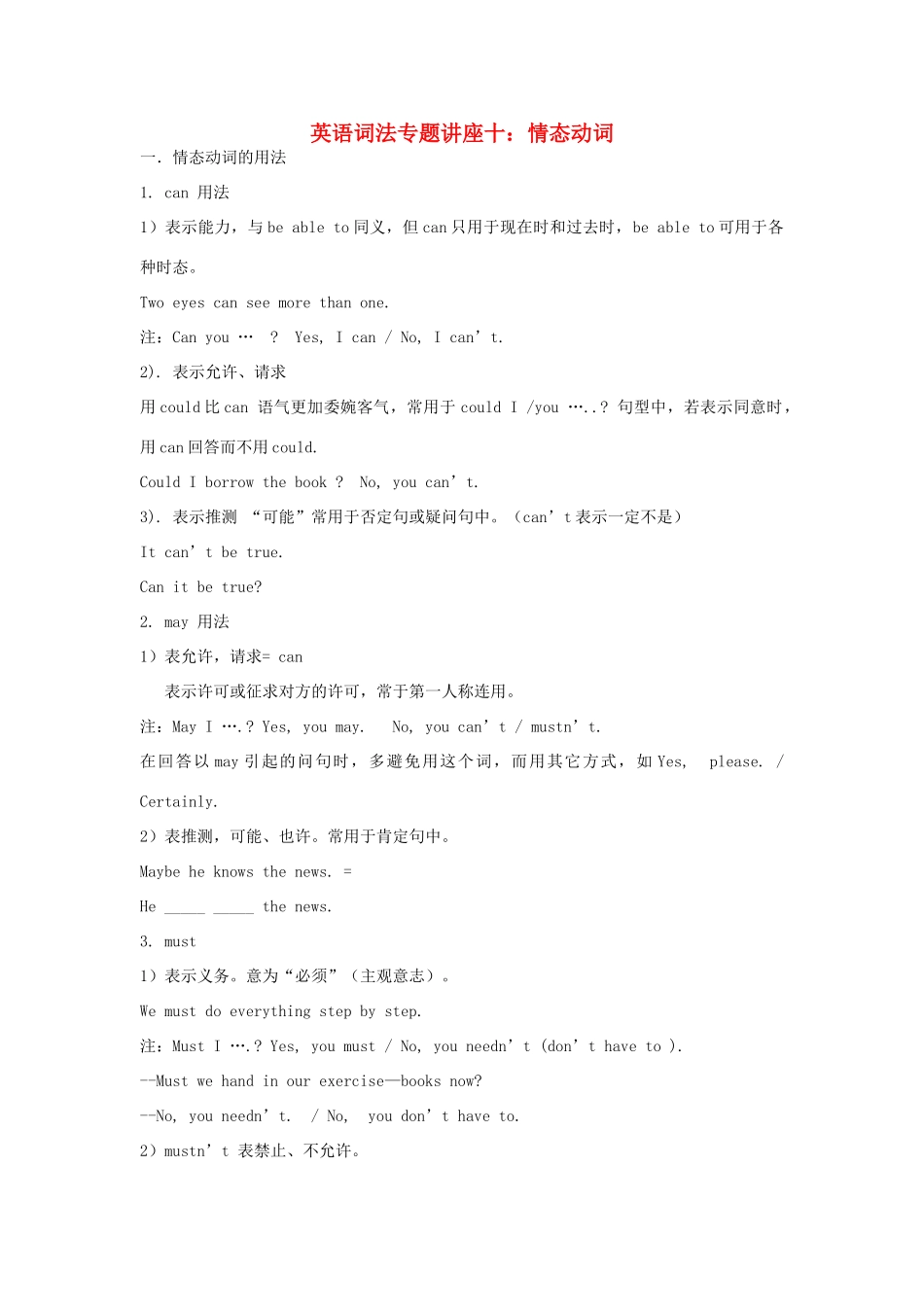
英语词法专题讲座十:情态动词一.情态动词的用法1
can 用法1)表示能力,与 be able to 同义,但 can 只用于现在时和过去时,be able to 可用于各种时态
Two eyes can see more than one
注:Can you …
Yes, I can / No, I can’t
表示允许、请求用 could 比 can 语气更加委婉客气,常用于 could I /you …
句型中,若表示同意时,用 can 回答而不用 could
Could I borrow the book
No, you can’t
表示推测 “可能”常用于否定句或疑问句中
(can’t 表示一定不是)It can’t be true
Can it be true
may 用法1)表允许,请求= can 表示许可或征求对方的许可,常于第一人称连用
注:May I …
Yes, you may
No, you can’t / mustn’t
在回答以 may 引起的问句时,多避免用这个词,而用其它方式,如 Yes, please
/ Certainly
2)表推测,可能、也许
常用于肯定句中
Maybe he knows the news
=He _____ _____ the news
must1)表示义务
意为“必须”(主观意志)
We must do everything step by step
注:Must I …
Yes, you must / No, you needn’t (don’t have to )
--Must we hand in our exercise—books now
--No, you needn’t
/ No, you don’t have to
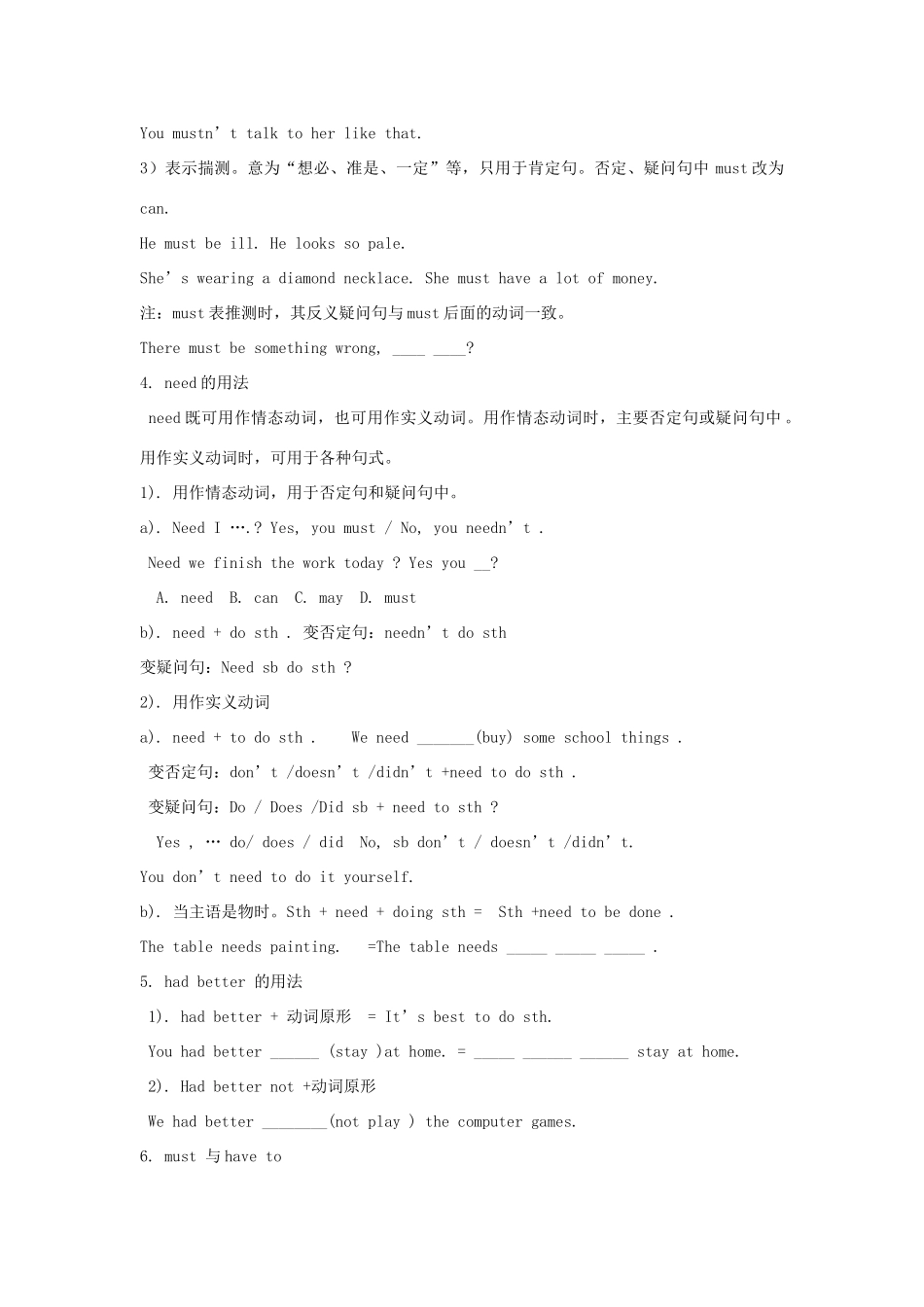
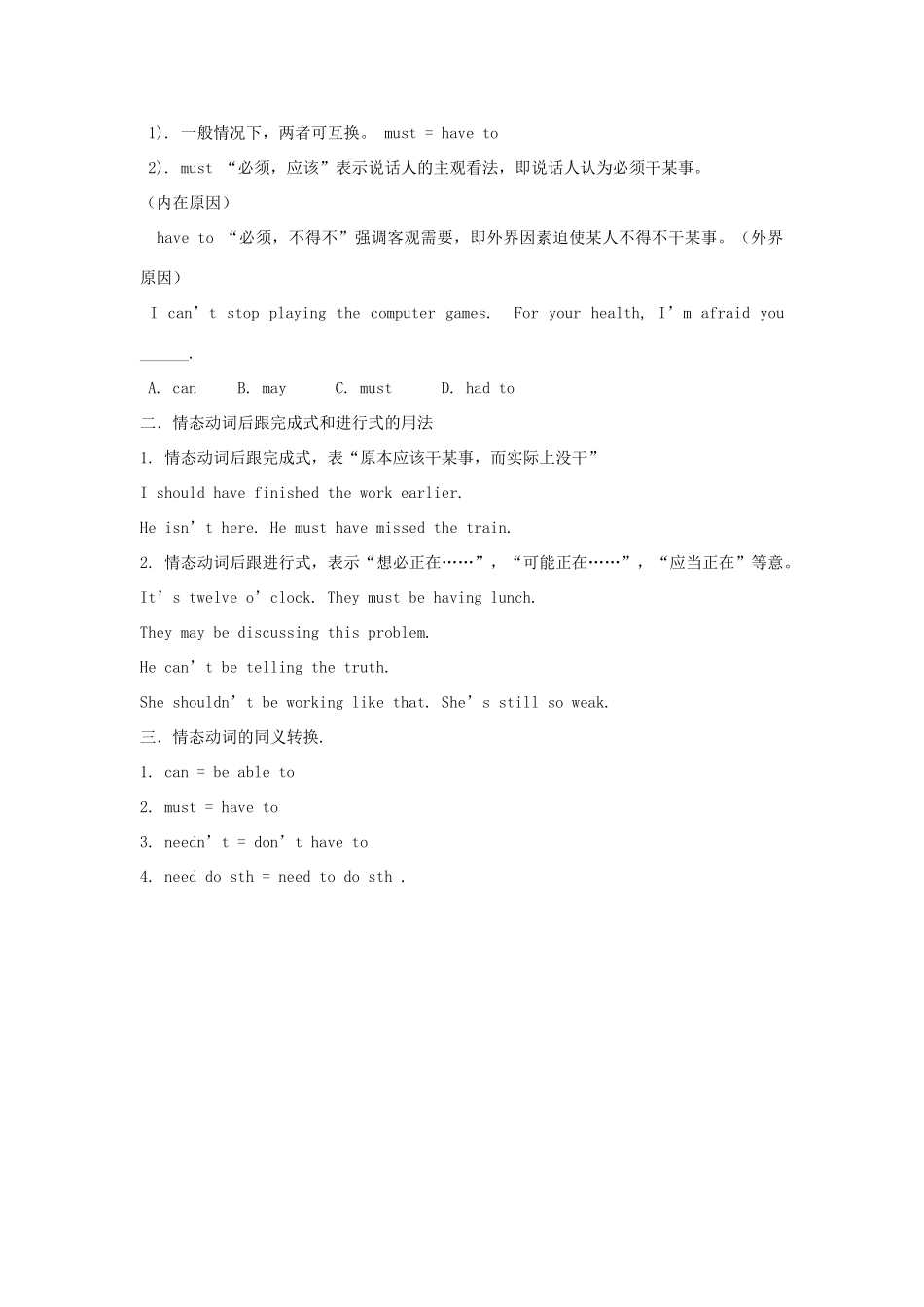
2)mustn