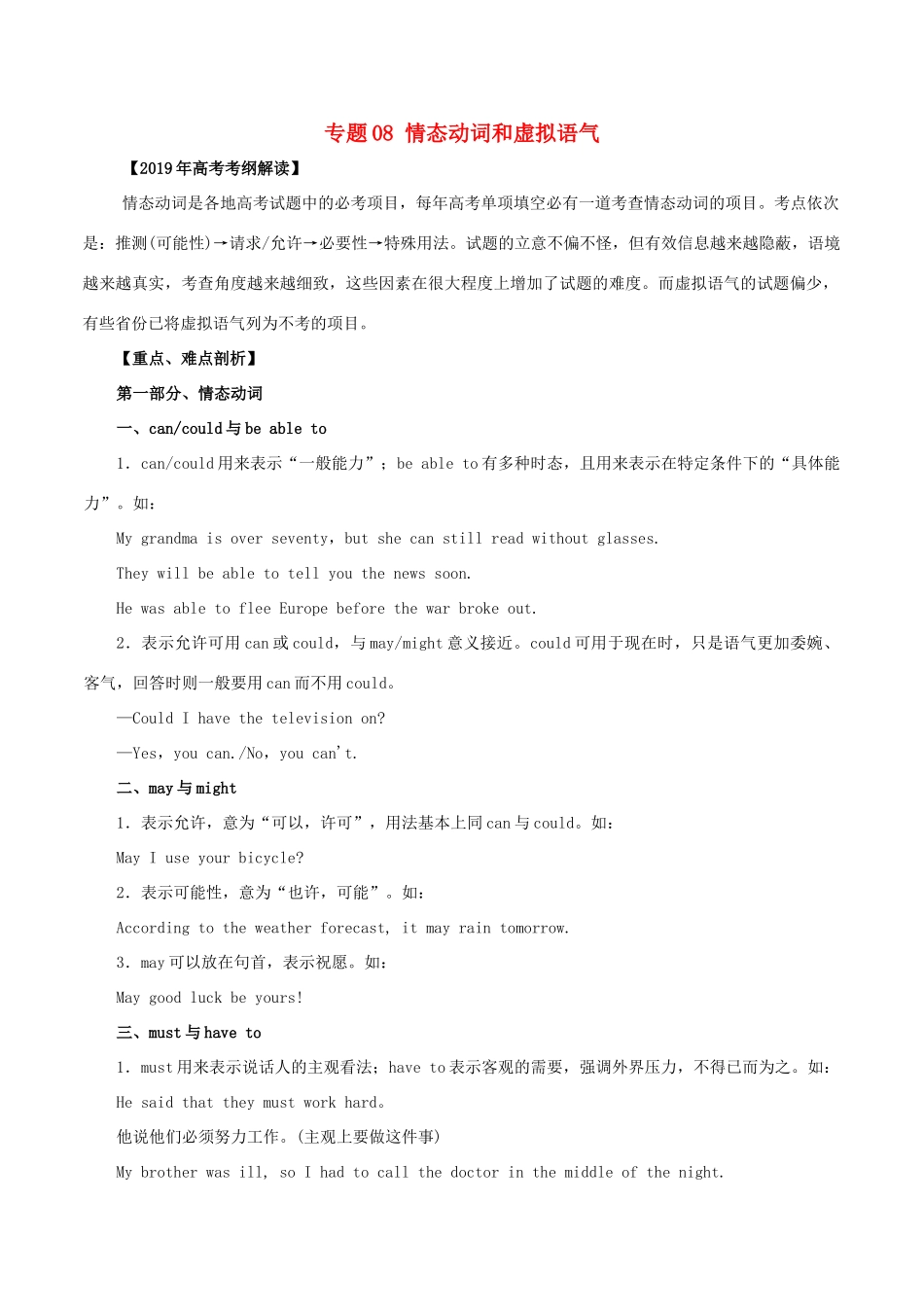
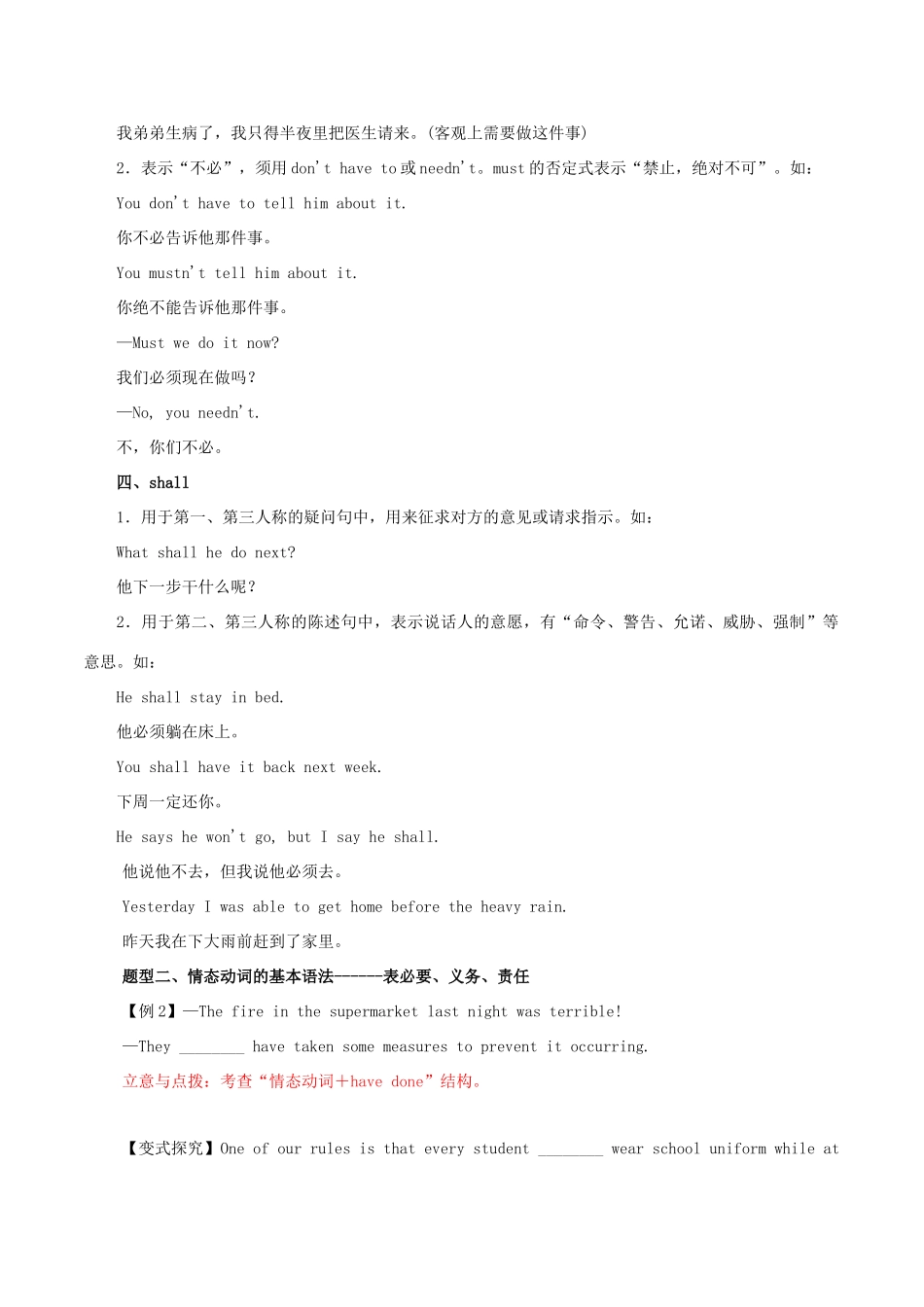
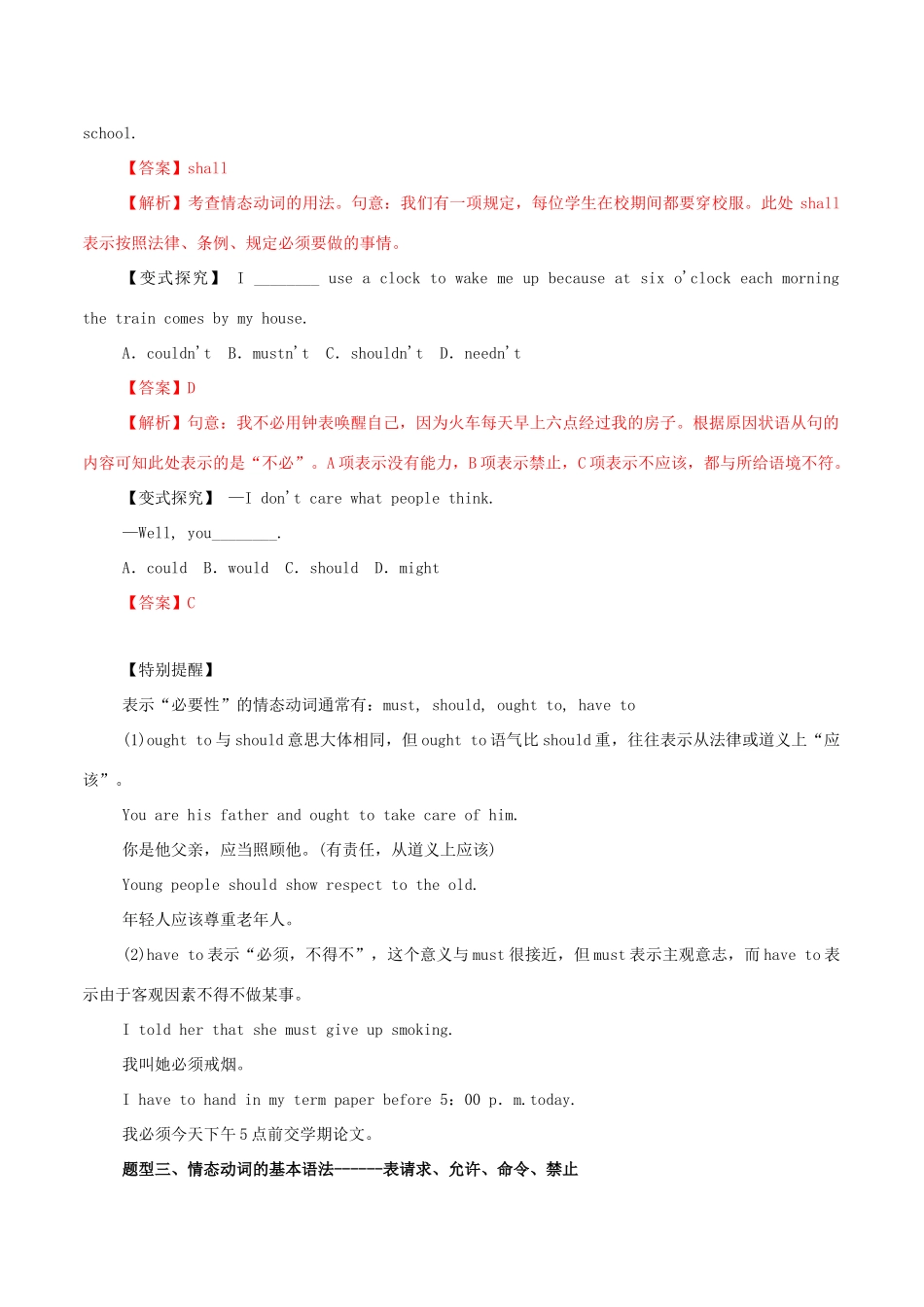
专题 08 情态动词和虚拟语气【2019 年高考考纲解读】情态动词是各地高考试题中的必考项目,每年高考单项填空必有一道考查情态动词的项目
考点依次是:推测(可能性)→请求/允许→必要性→特殊用法
试题的立意不偏不怪,但有效信息越来越隐蔽,语境越来越真实,考查角度越来越细致,这些因素在很大程度上增加了试题的难度
而虚拟语气的试题偏少,有些省份已将虚拟语气列为不考的项目
【重点、难点剖析】第一部分、情态动词一、can/could 与 be able to1.can/could 用来表示“一般能力”;be able to 有多种时态,且用来表示在特定条件下的“具体能力”
如:My grandma is over seventy,but she can still read without glasses
They will be able to tell you the news soon
He was able to flee Europe before the war broke out
2.表示允许可用 can 或 could,与 may/might 意义接近
could 可用于现在时,只是语气更加委婉、客气,回答时则一般要用 can 而不用 could
—Could I have the television on
—Yes,you can
/No,you can't
二、may 与 might1.表示允许,意为“可以,许可”,用法基本上同 can 与 could
如:May I use your bicycle
2.表示可能性,意为“也许,可能”
如:According to the weather forecast, it may rain tomorrow
3.may 可以放在句首,表示祝愿
如:May good luck be yours
三、must