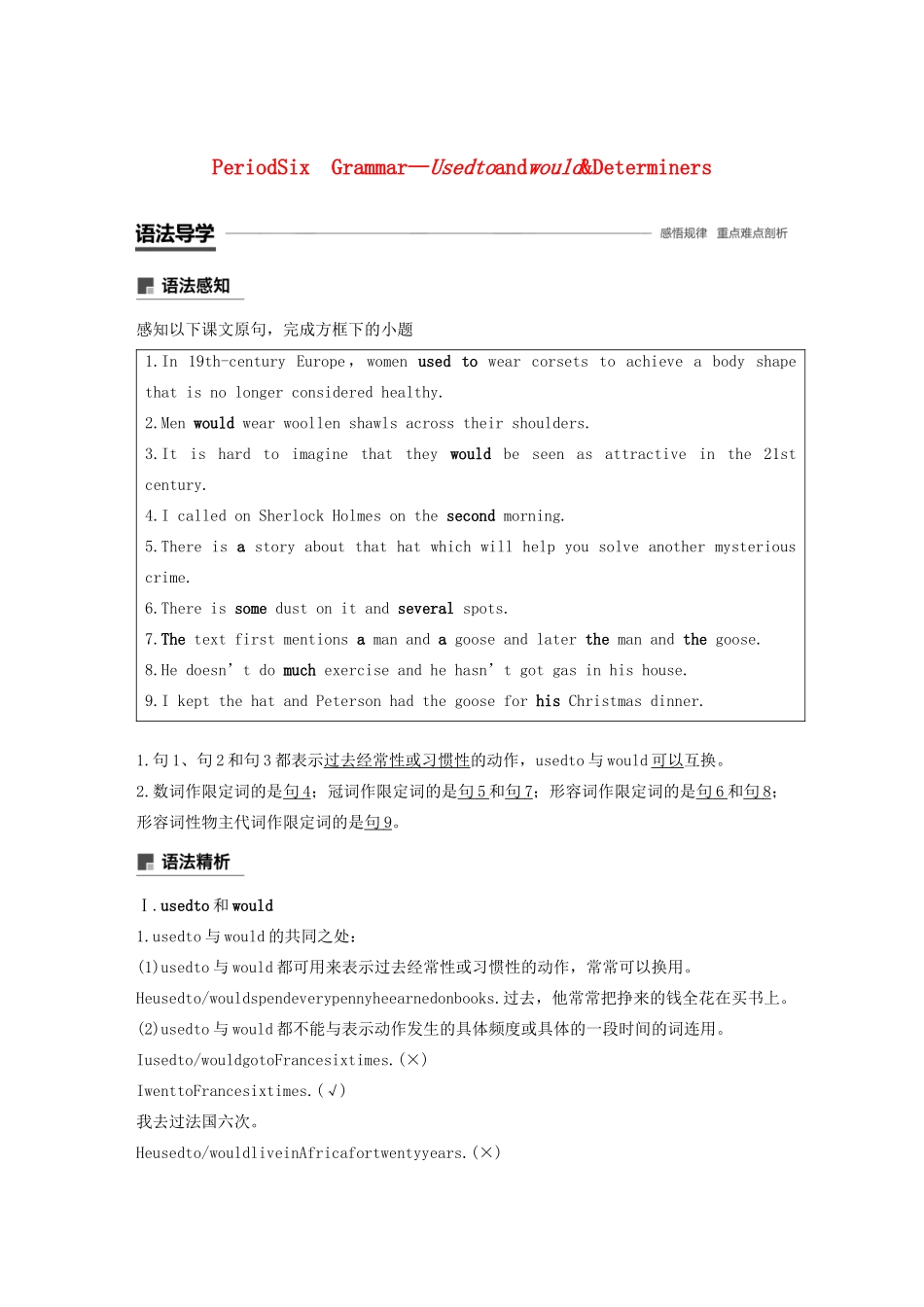
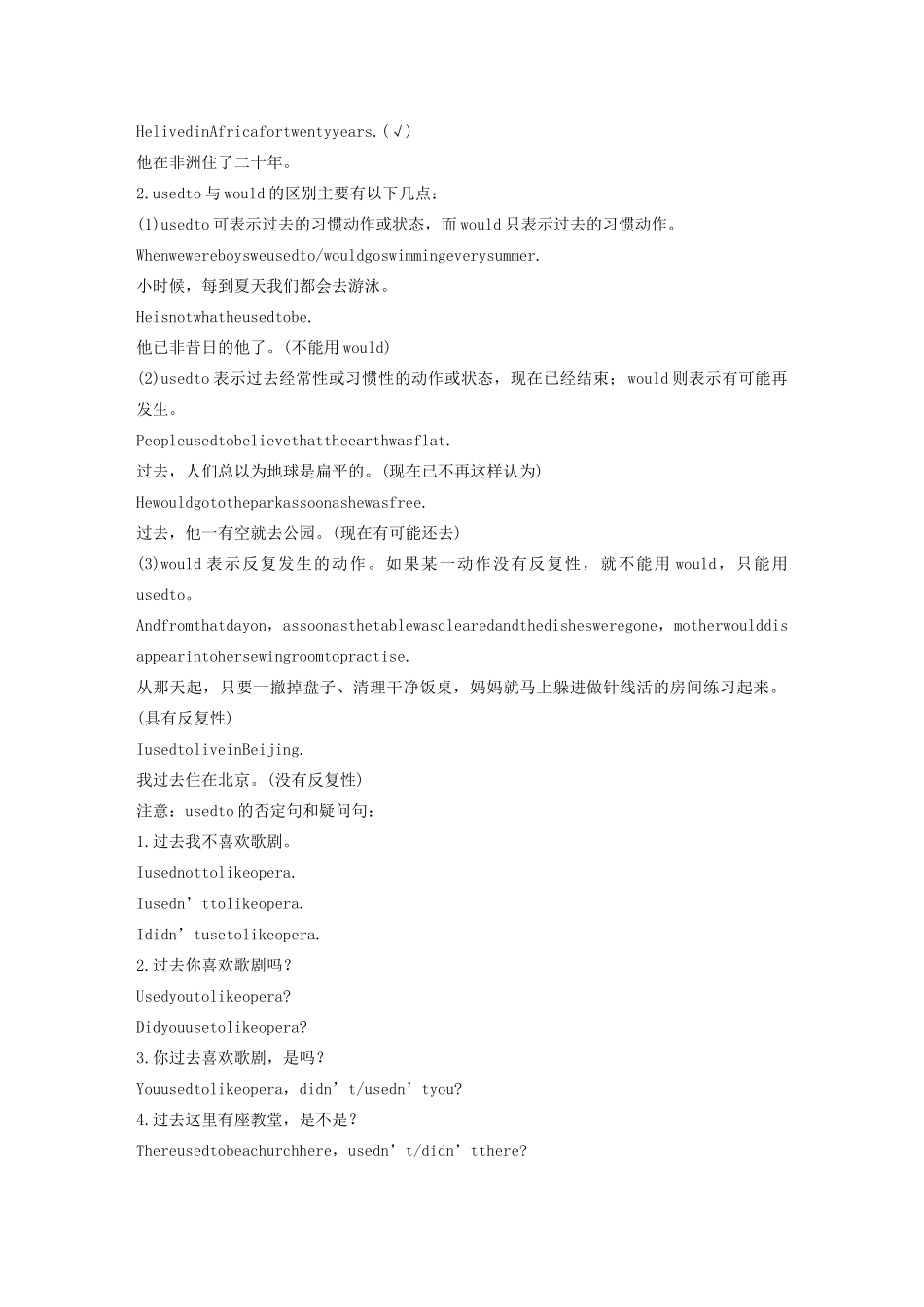
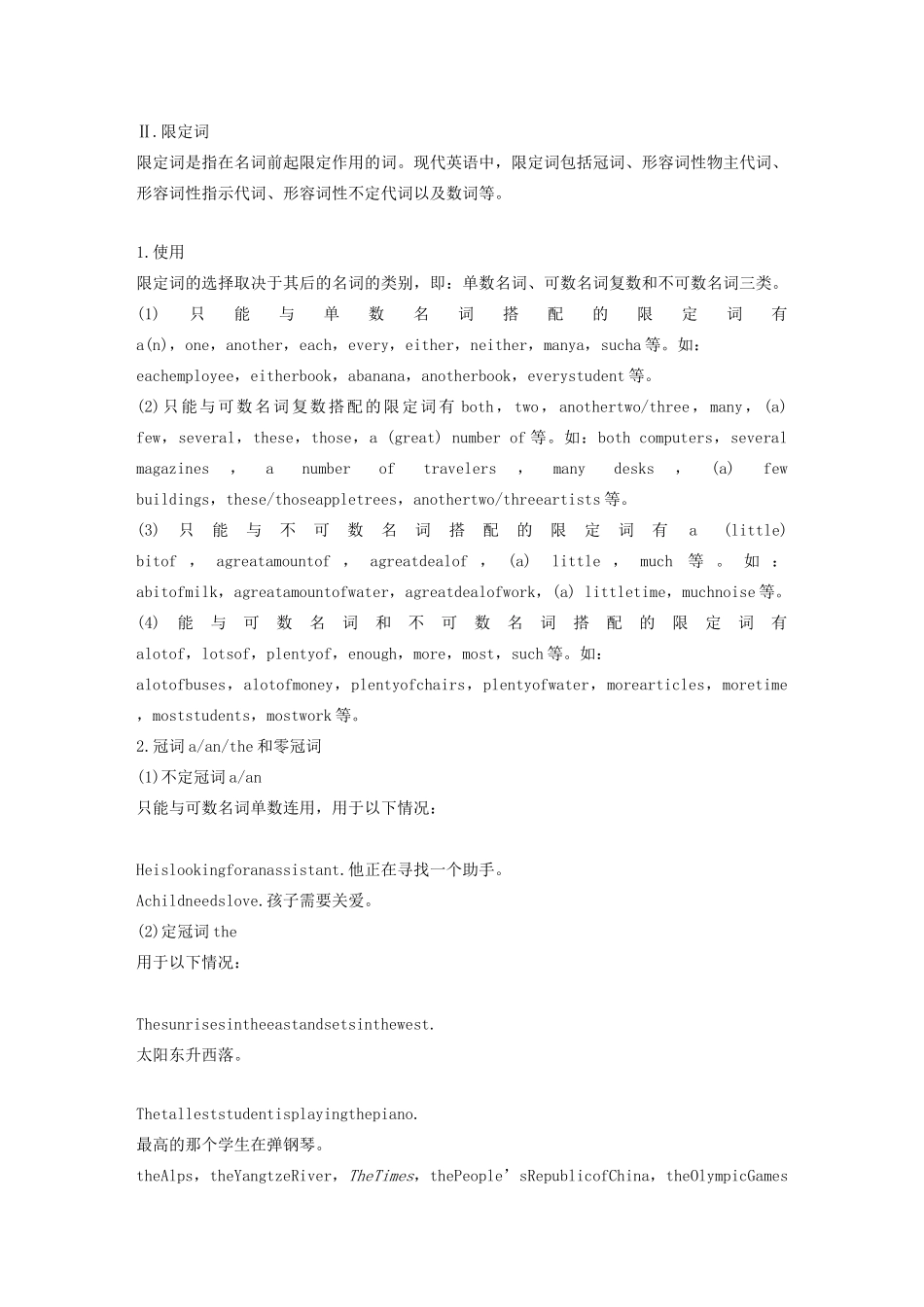
PeriodSixGrammar—Usedtoandwould&Determiners感知以下课文原句,完成方框下的小题1.In19th-centuryEurope,womenusedtowearcorsetstoachieveabodyshapethatisnolongerconsideredhealthy.2.Menwouldwearwoollenshawlsacrosstheirshoulders.3.Itishardtoimaginethattheywouldbeseenasattractiveinthe21stcentury.4.IcalledonSherlockHolmesonthesecondmorning.5.Thereisastoryaboutthathatwhichwillhelpyousolveanothermysteriouscrime.6.Thereissomedustonitandseveralspots.7.Thetextfirstmentionsamanandagooseandlaterthemanandthegoose.8.Hedoesn’tdomuchexerciseandhehasn’tgotgasinhishouse.9.IkeptthehatandPetersonhadthegooseforhisChristmasdinner.1.句1、句2和句3都表示过去经常性或习惯性的动作,usedto与would可以互换。2.数词作限定词的是句4;冠词作限定词的是句5和句7;形容词作限定词的是句6和句8;形容词性物主代词作限定词的是句9。Ⅰ.usedto和would1.usedto与would的共同之处:(1)usedto与would都可用来表示过去经常性或习惯性的动作,常常可以换用。Heusedto/wouldspendeverypennyheearnedonbooks.过去,他常常把挣来的钱全花在买书上。(2)usedto与would都不能与表示动作发生的具体频度或具体的一段时间的词连用。Iusedto/wouldgotoFrancesixtimes.(×)IwenttoFrancesixtimes.(√)我去过法国六次。Heusedto/wouldliveinAfricafortwentyyears.(×)HelivedinAfricafortwentyyears.(√)他在非洲住了二十年。2.usedto与would的区别主要有以下几点:(1)usedto可表示过去的习惯动作或状态,而would只表示过去的习惯动作。Whenwewereboysweusedto/wouldgoswimmingeverysummer.小时候,每到夏天我们都会去游泳。Heisnotwhatheusedtobe.他已非昔日的他了。(不能用would)(2)usedto表示过去经常性或习惯性的动作或状态,现在已经结束;would则表示有可能再发生。Peopleusedtobelievethattheearthwasflat.过去,人们总以为地球是扁平的。(现在已不再这样认为)Hewouldgototheparkassoonashewasfree.过去,他一有空就去公园。(现在有可能还去)(3)would表示反复发生的动作。如果某一动作没有反复性,就不能用would,只能用usedto。Andfromthatdayon,assoonasthetablewasclearedandthedishesweregone,motherwoulddisappearintohersewingroomtopractise.从那天起,只要一撤掉盘子、清理干净饭桌,妈妈就马上躲进做针线活的房间练习起来。(具有反复性)IusedtoliveinBeijing.我过去住在北京。(没有反复性)注意:usedto的否定句和疑问句:1.过去我不喜欢歌剧。Iusednottolikeopera.Iusedn’ttolikeopera.Ididn’tusetolikeopera.2.过去你喜欢歌剧吗?Usedyoutolikeopera?Didyouusetolikeopera?3.你过去喜欢歌剧,是吗?Youusedtolikeopera,didn’t/usedn’tyou?4.过去这里有座教堂,是不是?Thereusedtobeachurchhere,usedn’t/didn’tthere?Ⅱ.限定词限定词是指在名词前起限定作用的词。现代英语中,限定词包括冠词、形容词性物主代词、形容词性指示代词、形容词性不定代词以及数词等。1.使用限定词的选择取决于其后的名词的类别,即:单数名词、可数名词复数和不可数名词三类。(1)只能与单数名词搭配的限定词有a(n),one,another,each,every,either,neither,manya,sucha等。如:eachemployee,eitherbook,abanana,anotherbook,everystudent等。(2)只能与可数名词复数搭配的限定词有both,two,anothertwo/three,many,(a)few,several,these,those,a(great)numberof等。如:bothcomputers,severalmagazines,anumberoftravelers,manydesks,(a)fewbuildings,these/thoseappletrees,anothertwo/threeartists等。(3)只能与不可数名词搭配的限定词有a(little)bitof,agreatamountof,agreatdealof,(a)little,much等。如:abitofmilk,agreatamountofwater,agreatdealofwork,(a)littletime,muchnoise等。(4)能与可数名词和不可数名词搭配的限定词有alotof,lotsof,plentyof,enough,more,most,such等。如:alotofbuses,alotofmoney,plentyofcha...