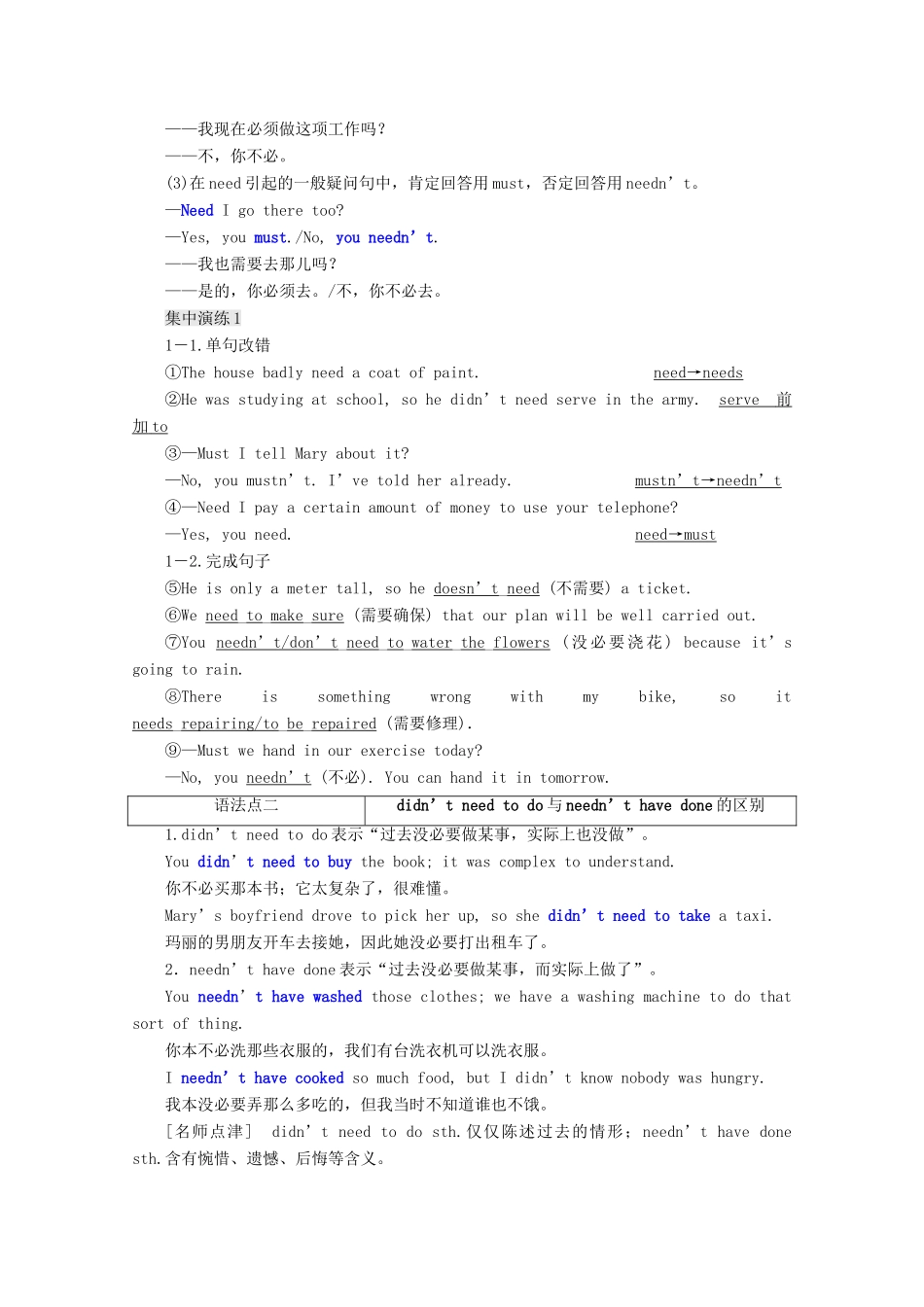
SectionⅢGrammar—need的用法[语法初识]原句感知自主探究①Insomecountries,forexample,youhavetoarriveontimeataparty;inothercountries,youdon’tneedto(不必).②MyfriendspokegoodMandarin,soIdidn’tneedtotranslate(没必要翻译)thespeechforhim
③Somehostsexpectflowersorasmallgift,butinotherplaces,youcantakethings,butyouneedn’t(不必)ifyoudon’twantto
④Igottothepartyat6p.m
buttherewasnoonethere,soIneedn’thavearrived(本不必到达)soearly
①②句中的need为实义动词,③④句中的need为情态动词
2.②句中didn’t_need_to_do表示“过去没必要,实际上也没做某事”;④句中needn’t_have_done表示“过去虽然没必要,但已经做了某事”
[语法剖析]语法点一need的用法1.用作实义动词(1)有人称和数的变化,其第三人称单数形式为needs,变为否定句或疑问句时要用助动词do/does/did
(2)后跟名词、代词、不定式或动名词作宾语,当need的主语与need后面的动词之间是被动关系时,need后面接不定式的被动形式或动名词的主动形式
Youdon’tneedtoworryaboutme
你不必担心我
Theroomneedscleaning/tobecleaned,butIonlyhavetimeonSunday
房间需要打扫,但是我只有星期天有空
2.用作情态动词(1)need表示“需要”或“必须”,通常用于否定句