一般过去时1
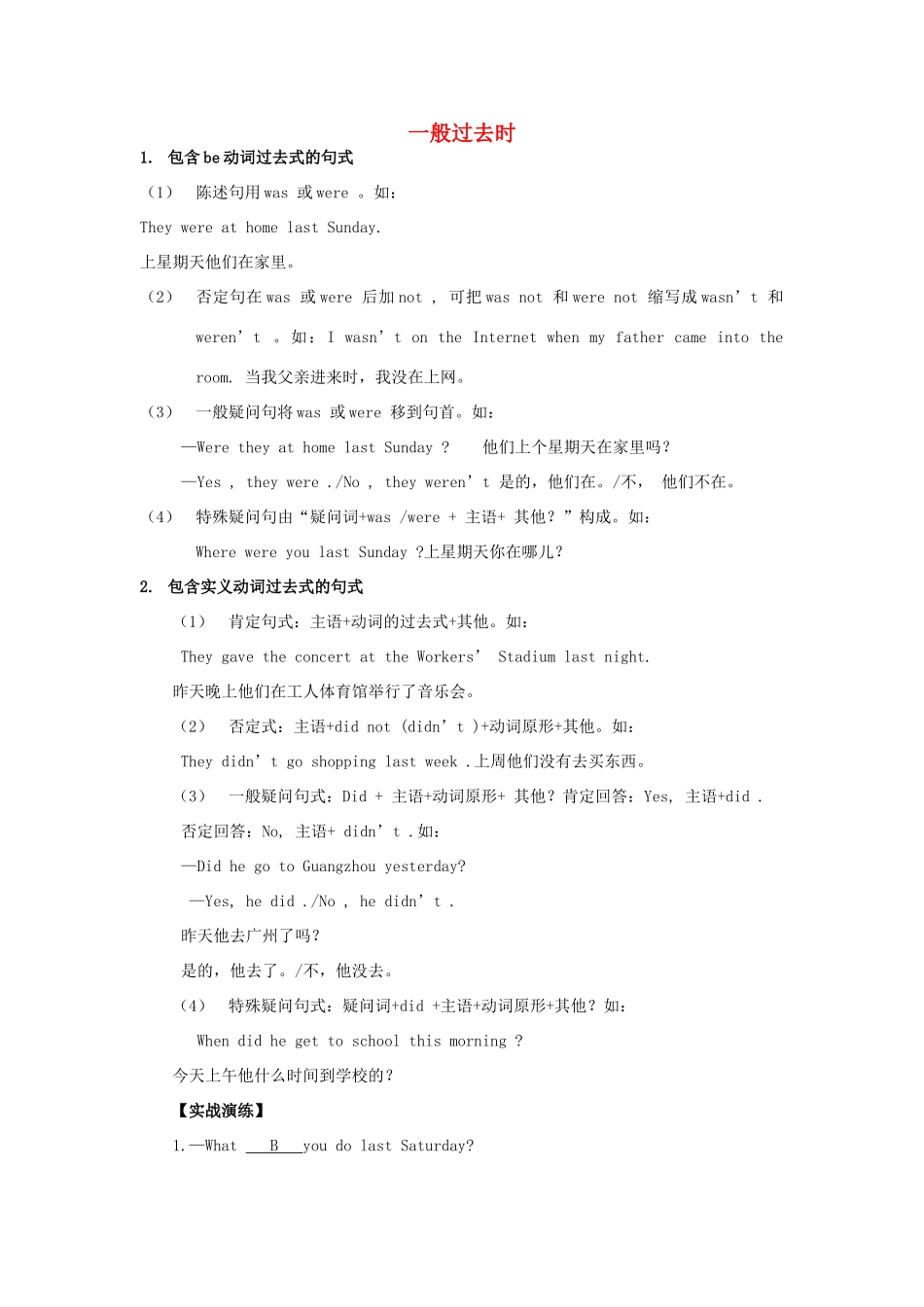
包含be动词过去式的句式(1)陈述句用was或were
如:TheywereathomelastSunday
上星期天他们在家里
(2)否定句在was或were后加not,可把wasnot和werenot缩写成wasn’t和weren’t
如:Iwasn’tontheInternetwhenmyfathercameintotheroom
当我父亲进来时,我没在上网
(3)一般疑问句将was或were移到句首
如:—WeretheyathomelastSunday
他们上个星期天在家里吗
—Yes,theywere
/No,theyweren’t是的,他们在
/不,他们不在
(4)特殊疑问句由“疑问词+was/were+主语+其他
如:WherewereyoulastSunday
上星期天你在哪儿
包含实义动词过去式的句式(1)肯定句式:主语+动词的过去式+其他
如:TheygavetheconcertattheWorkers’Stadiumlastnight
昨天晚上他们在工人体育馆举行了音乐会
(2)否定式:主语+didnot(didn’t)+动词原形+其他
如:Theydidn’tgoshoppinglastweek
上周他们没有去买东西
(3)一般疑问句式:Did+主语+动词原形+其他
肯定回答:Yes,主语+did
否定回答:No,主语+didn’t
如:—DidhegotoGuangzhouyesterday
—Yes,hedid
/No,hedidn’t
昨天他去广州了吗
是的,他去了
/不,他没去
(4)特殊疑问句式:疑问词+did+主语+动词原形+其他
如:Whendidhegettoschoolthismorning
今天上午他什么时间到学校的
【实战演练】1
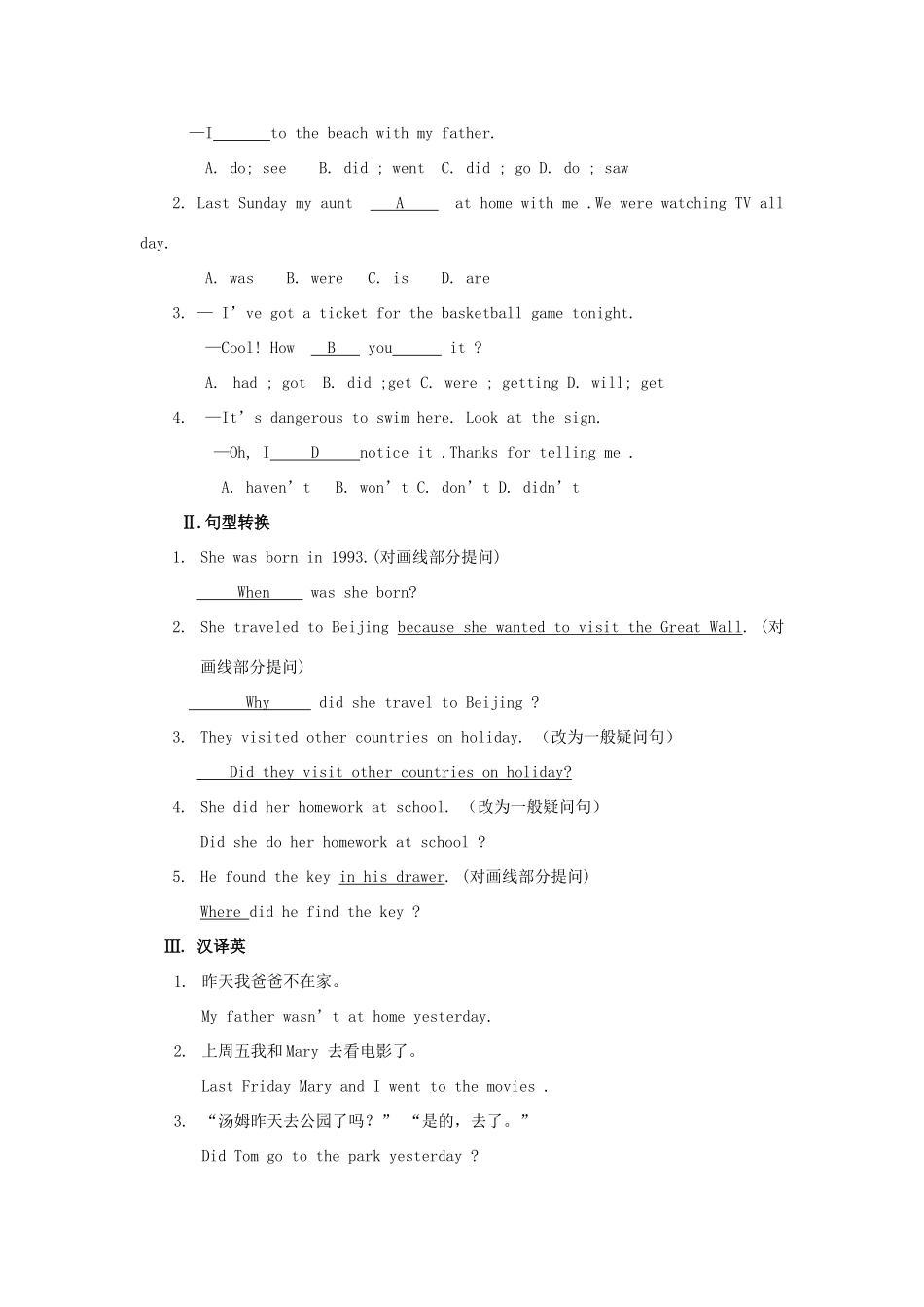
—WhatByoudolastSaturday
—Itothebeac